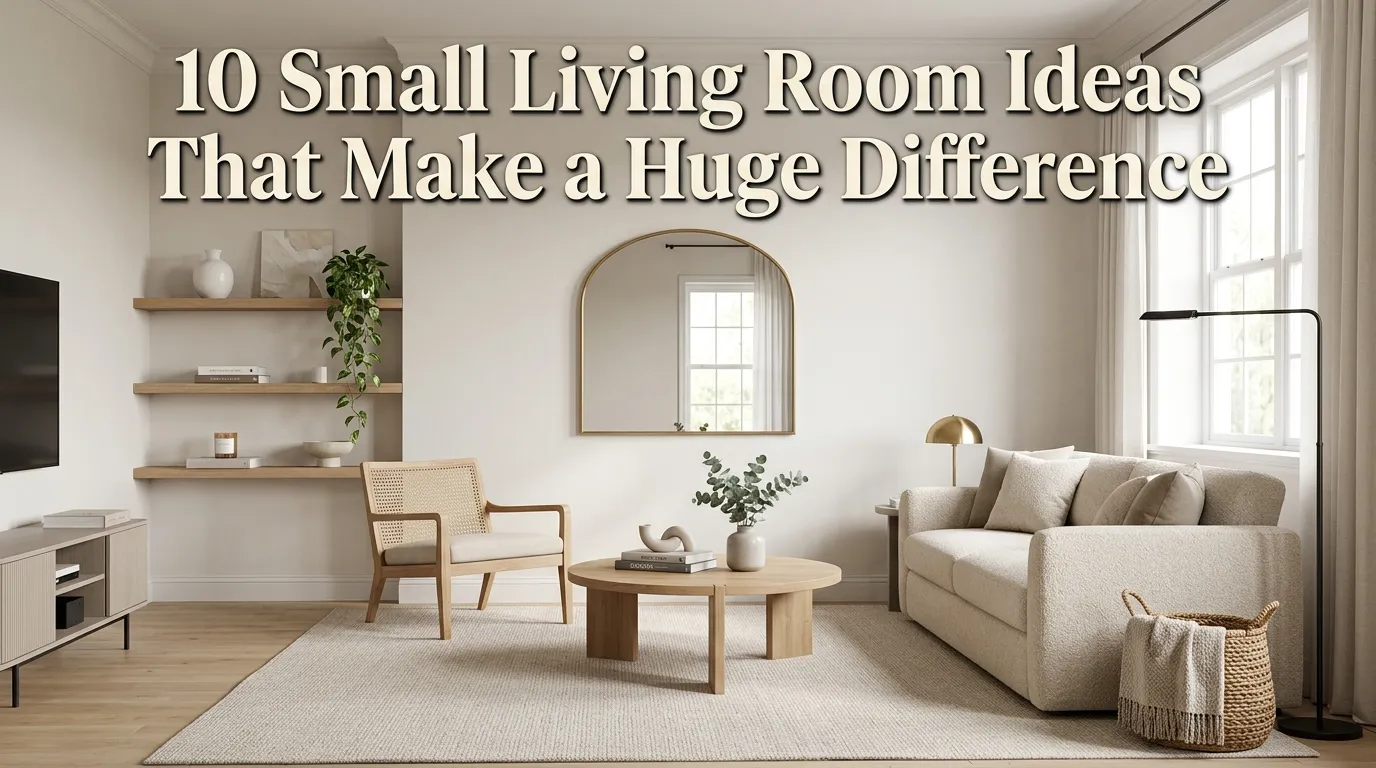
10 Small Living Room Ideas That Make a Huge Difference
A small living room doesn’t have to feel cramped, unfinished, or difficult to decorate. In fact, some of the most comfortable living spaces are small because every piece of furniture and every decorative detail has a purpose.
The challenge is knowing what to prioritize.
When square footage is limited, a sofa that’s slightly too large can make the entire room feel crowded. Too many small accessories can create visual clutter, while a dark color scheme may make the space feel even more enclosed. But the opposite is also true: a thoughtful layout, the right proportions, and a few well-placed design choices can make a compact room feel surprisingly spacious.
I’ve noticed that the biggest transformations often come from relatively simple changes. Moving furniture away from a wall, choosing a coffee table with an open base, adding a large mirror, or replacing several tiny pieces with one substantial statement can completely change how the room feels.
The goal isn’t necessarily to make your living room look bigger at all costs. It’s to make the available space work harder while keeping it comfortable, attractive, and personal.
Whether you’re decorating a small apartment, a compact family room, a narrow living room, or a cozy home with limited square footage, these ideas can help you create a space that feels open without sacrificing warmth. You’ll find practical furniture arrangements, storage solutions, color ideas, lighting tricks, and decorating techniques that are easy to adapt to your own home.
Table of Contents
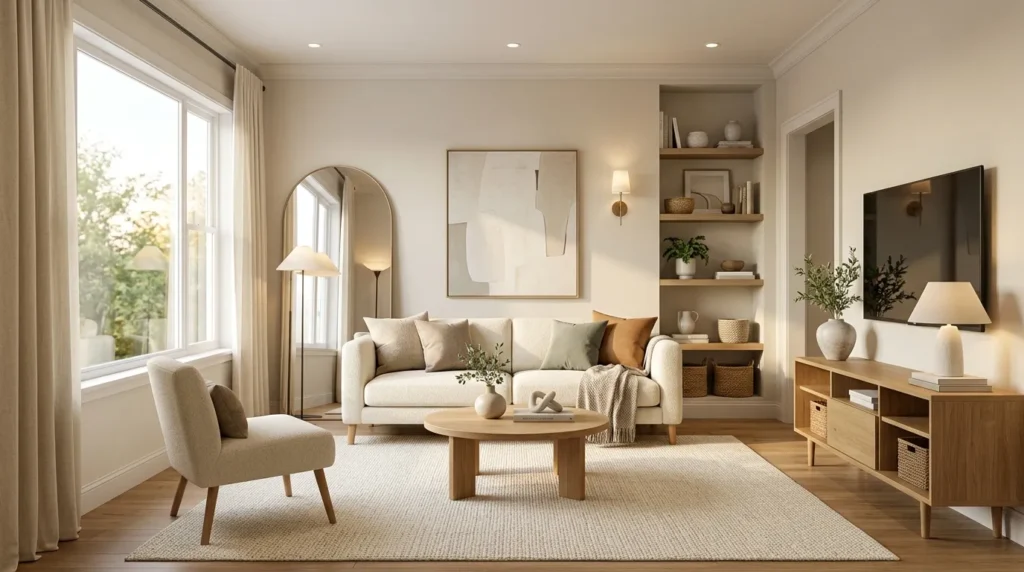
1. Light Color Palette
Use soft, light colors to create an airy backdrop that helps a compact room feel more open.
2. Slimline Furniture
Choose appropriately scaled furniture with streamlined profiles to preserve valuable floor space.
3. Large Area Rug
Use one properly sized rug to visually connect the seating and make the room feel cohesive.
4. Strategic Mirrors
Place mirrors thoughtfully to reflect light and create a greater sense of depth.
5. Vertical Storage
Take advantage of wall height to add storage without consuming valuable floor space.
6. Floating Furniture
Pull key furniture pieces slightly away from walls to create a more balanced layout.
7. Multiuse Pieces
Choose furniture that performs more than one function when every square foot matters.
8. Layered Lighting
Combine different light sources to make the room feel warmer, brighter, and more dimensional.
9. Open Coffee Table
Choose a visually lighter coffee table that provides function without making the seating area feel heavy.
10. Minimal Clutter
Edit accessories and belongings so the room feels intentional rather than overcrowded.
1. Light Color Palette
Quick Benefits
- Creates a brighter atmosphere
- Makes walls feel less visually heavy
- Works with many decorating styles
- Provides a versatile foundation
- Makes natural light feel more noticeable
Why It Works
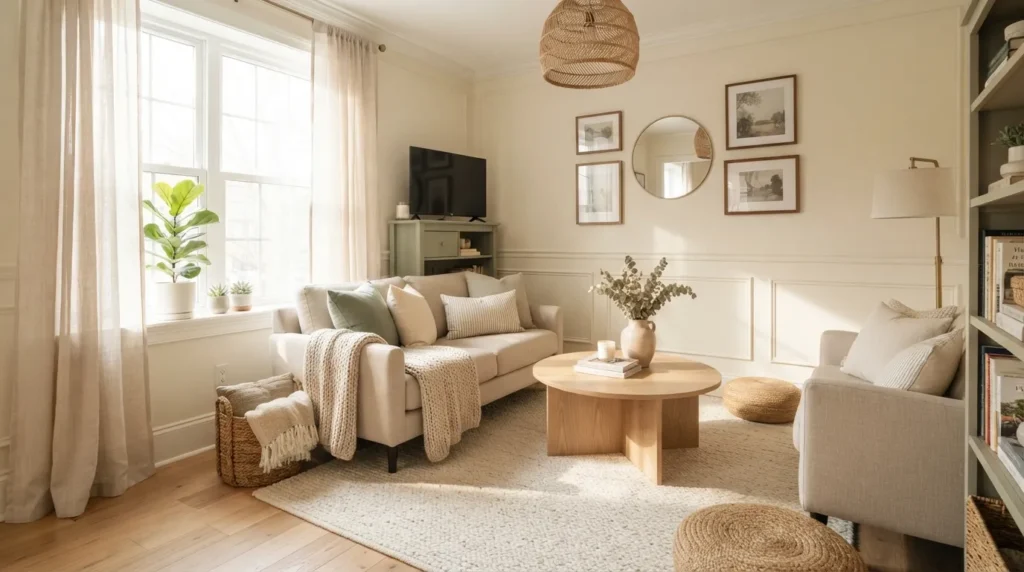
Color can dramatically affect how a small living room feels. Light shades reflect more available light and tend to create a softer visual transition between walls, furniture, and surrounding surfaces.
That doesn’t mean everything has to be stark white. Warm ivory, soft beige, pale greige, muted sage, dusty blue, and light taupe can all create an airy backdrop while still giving the room personality.
A common mistake is assuming that a small room needs to be completely neutral. What matters more is controlling the overall visual weight. A consistent palette can make separate elements feel connected, which reduces the chopped-up appearance that sometimes makes compact rooms feel smaller.
How To Style It
Start with the largest surfaces: walls, curtains, sofa, and rug. Keeping these pieces within a related tonal family can create continuity throughout the room.
For example, pair warm white walls with a beige sofa, ivory rug, and light wood furniture. Then introduce contrast through artwork, pillows, greenery, or a darker accent chair.
If you love color, use it selectively. A muted blue sofa or olive-green accent chair can become a beautiful focal point without overwhelming the room.
Use natural textures—linen, cotton, woven baskets, light wood, and wool-like textiles—to keep a light palette from feeling flat.
2. Slimline Furniture
Quick Benefits
- Preserves walking space
- Reduces visual bulk
- Makes furniture easier to arrange
- Works particularly well in apartments
- Creates a more open appearance
Why It Works
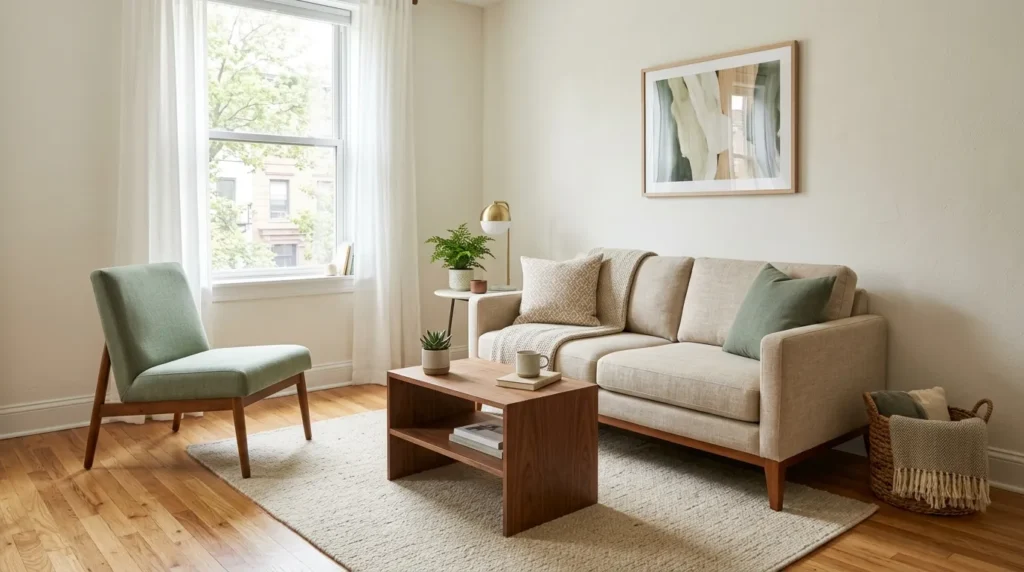
Furniture scale matters enormously in a small living room. A large sectional or deep sofa may technically fit, but fitting something into a room isn’t the same as making the room function well.
Slimline furniture has a lighter visual footprint. Narrow arms, exposed legs, shallower depths, and simple silhouettes allow more of the floor to remain visible.
That visible floor space can make a significant difference. The room doesn’t necessarily become physically larger, but it can feel less obstructed.
I’ve found that choosing fewer appropriately sized pieces is often more effective than trying to squeeze full-sized furniture into every available corner.
How To Style It
Measure the room before buying anything, including doorways and pathways needed to access other areas. Pay attention to sofa depth as well as width.
Look for sofas with relatively narrow arms and raised legs. A chair with an open base can also feel lighter than a large upholstered armchair sitting directly on the floor.
Avoid automatically choosing the smallest furniture available, though. Pieces that are too tiny can make the room feel awkward rather than spacious.
Instead, prioritize proportion. A comfortable apartment-sized sofa, one compact chair, and a small table may be all you need.
3. Large Area Rug
Quick Benefits
- Defines the seating area
- Connects furniture visually
- Makes the room feel cohesive
- Adds warmth and texture
- Can make furniture placement feel intentional
Why It Works
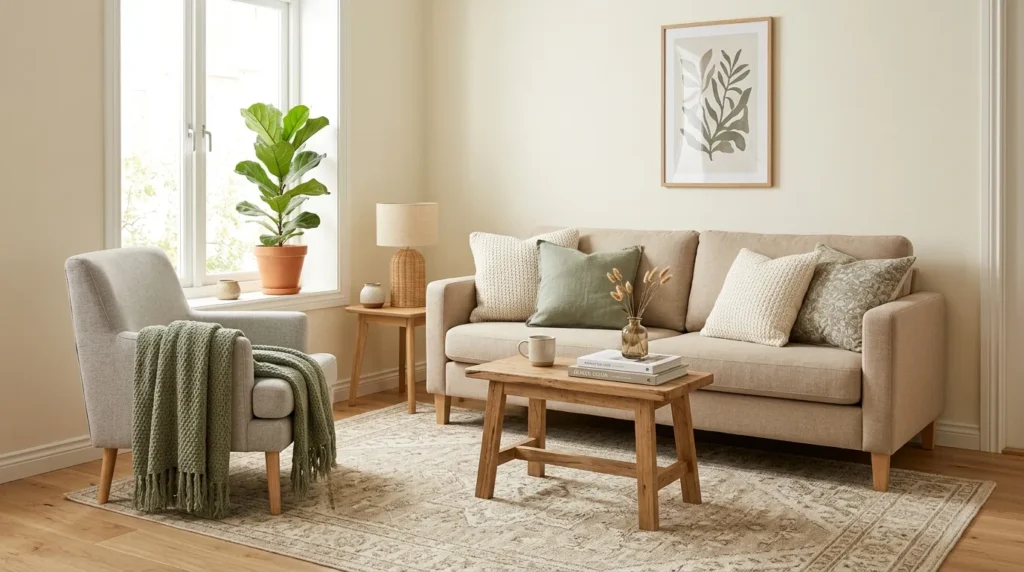
A properly sized area rug can have a surprisingly powerful effect in a small living room. Instead of visually separating each piece of furniture, the rug creates one connected zone.
This is particularly useful when your living room shares space with a dining area, entryway, or kitchen. The rug helps establish where the living area begins and ends.
One mistake I see often is using a rug that’s too small. A tiny rug floating underneath the coffee table can actually make the seating arrangement feel disconnected.
A larger rug usually creates a stronger foundation and can make the room feel more thoughtfully designed.
How To Style It
Choose a rug large enough for at least the front legs of your main seating pieces to sit comfortably on it. If space allows, placing all major seating on the rug can create an even more cohesive appearance.
For a small room, low-pile rugs are often practical because they’re easier to maintain and don’t visually add too much bulk.
Choose subtle patterns if your furniture already has strong shapes or colors. If the rest of the room is simple, a patterned rug can introduce personality.
Natural-looking textures and neutral patterns are particularly versatile for changing decor over time.
4. Strategic Mirrors
Quick Benefits
- Reflects natural light
- Adds visual depth
- Creates a focal point
- Works without taking floor space
- Complements many styles
Why It Works
Mirrors are a classic decorating tool for compact rooms because they can reflect light and surrounding views, creating a greater sense of openness.
But simply putting a mirror on the wall isn’t enough. Placement matters.
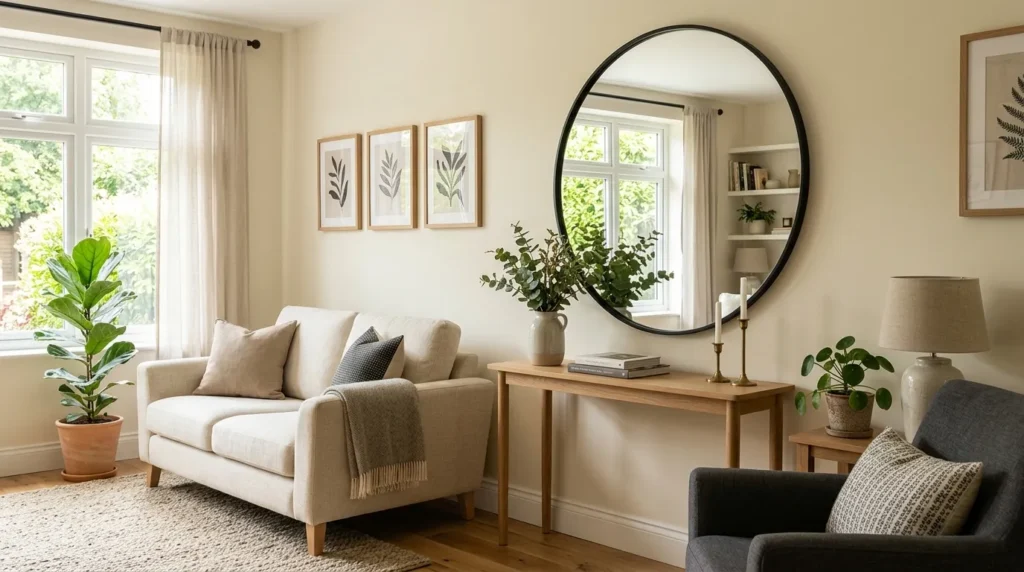
A mirror facing a window can reflect daylight into the room, while one positioned opposite an attractive architectural feature or artwork can visually repeat that element.
The goal is to reflect something useful or beautiful rather than simply adding another decorative surface.
How To Style It
A large mirror can often have more impact than several small ones. Consider placing one above a console, behind a sofa, or on a wall opposite a window.
Choose the frame based on your decorating style. A thin black frame can complement modern interiors, while natural wood works beautifully with farmhouse, Scandinavian, or organic styles.
If you’re using a particularly large mirror, secure it properly to the wall rather than relying on a precarious leaning arrangement.
Avoid positioning a mirror where it reflects visual clutter. A beautiful reflection can enhance the room; a reflection of an overflowing shelf can have the opposite effect.
5. Vertical Storage
Quick Benefits
- Uses unused wall space
- Reduces floor clutter
- Creates additional storage
- Draws the eye upward
- Works in apartments and small homes
Why It Works
When floor space is limited, look upward.
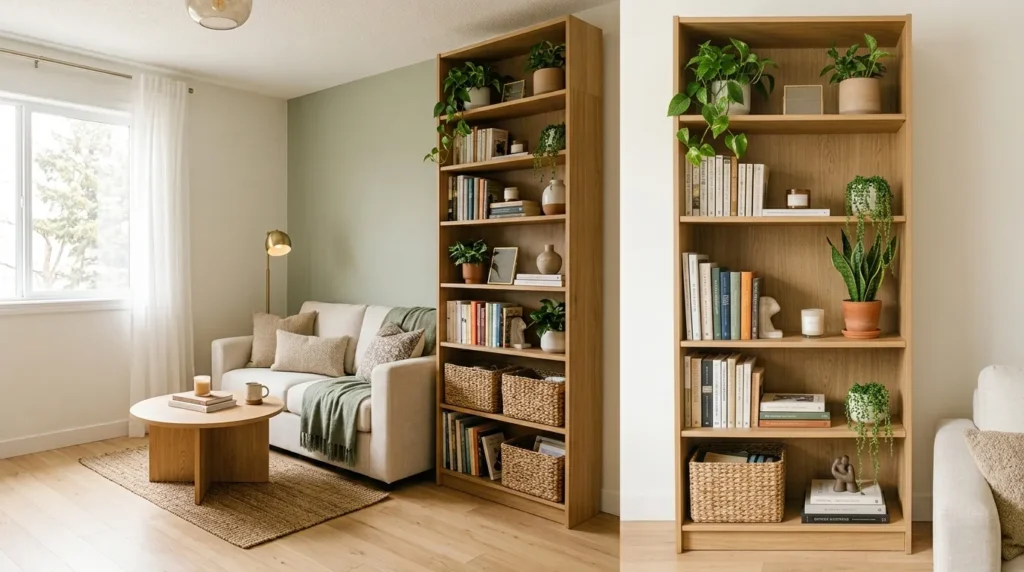
Walls provide valuable storage opportunities that don’t require you to sacrifice walking room. Tall bookcases, narrow cabinets, floating shelves, and wall-mounted storage can hold books, baskets, artwork, and everyday items while keeping the floor relatively clear.
Vertical storage can also make a room feel taller by emphasizing the height of the walls.
This is especially helpful in rooms with high ceilings, where leaving the upper portion of the walls completely empty can make the room feel visually unbalanced.
How To Style It
Choose storage that is relatively narrow and tall rather than extremely deep. A slim bookcase can provide considerable storage without projecting far into the room.
Use baskets or boxes on lower shelves to hide less attractive items. Keep decorative objects at eye level and leave some empty shelf space so the unit doesn’t look overloaded.
If you use floating shelves, install only as many as you genuinely need. A few thoughtfully styled shelves usually look better than an entire wall covered with small objects.
6. Floating Furniture
Quick Benefits
- Improves room flow
- Creates more intentional layouts
- Defines conversation areas
- Can make walls feel less crowded
- Helps separate multifunctional spaces
Why It Works
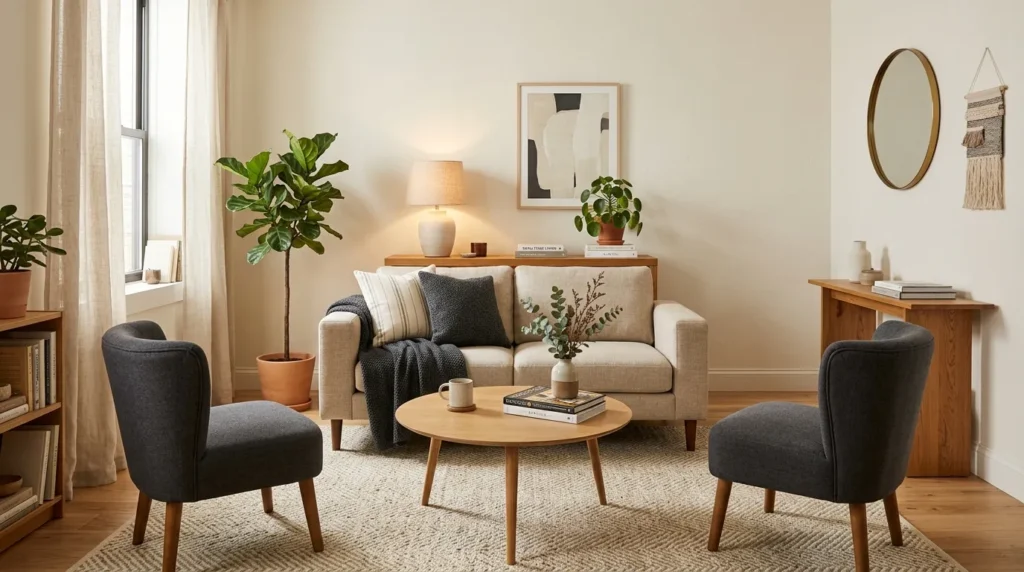
Pushing every piece of furniture directly against the walls is one of the most common small-room decorating habits. It seems logical because it appears to maximize floor space, but it can actually make the layout feel awkward.
In some rooms, floating the sofa or chair even a few inches away from the wall creates a more natural conversation zone.
This doesn’t mean every piece needs to sit in the center of the room. The idea is simply to arrange furniture according to how people use the space rather than automatically following the walls.
How To Style It
Start with the sofa as the anchor. Position it based on the room’s focal point, such as a television, fireplace, window, or architectural feature.
If there is enough room, leave a small gap behind the sofa and use that space for a slim console table or floor lamp.
In open-plan homes, floating a sofa can also help visually divide the living area from the dining or kitchen zone.
Keep pathways clear and make sure furniture doesn’t create awkward bottlenecks.
7. Multiuse Pieces
Quick Benefits
- Saves valuable floor space
- Adds flexibility
- Reduces furniture quantity
- Works well in apartments
- Makes small rooms more functional
Why It Works
In a compact living room, furniture that serves multiple purposes can make everyday life much easier.
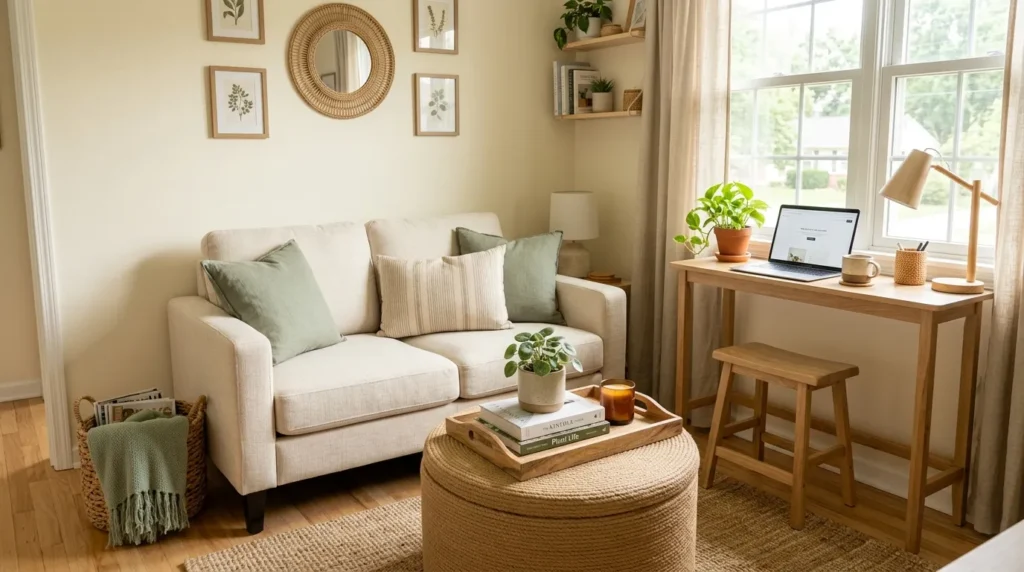
An ottoman can work as a footrest, extra seating, and a coffee table when paired with a tray. A storage bench can provide seating while hiding blankets and other items. A console table can function as a workspace when necessary.
The idea isn’t to turn the room into a collection of clever gadgets. Instead, choose pieces that naturally perform more than one useful function.
This approach can help you avoid buying separate furniture for every activity.
How To Style It
Look for an upholstered ottoman with a firm, relatively flat surface. Add a decorative tray when you need a stable surface for drinks or accessories.
Consider a coffee table with drawers or a lower shelf for books and remotes. A compact storage bench can sit beneath a window or along an unused wall.
Choose pieces that match the rest of your furniture rather than making the multifunctional feature the entire focus of the room.
8. Layered Lighting
Quick Benefits
- Makes the room feel warmer
- Reduces dark corners
- Creates visual depth
- Supports different activities
- Makes evening spaces more inviting
Why It Works
A single ceiling fixture rarely provides the best atmosphere in a small living room. It may illuminate the room, but it doesn’t necessarily make the space feel comfortable.
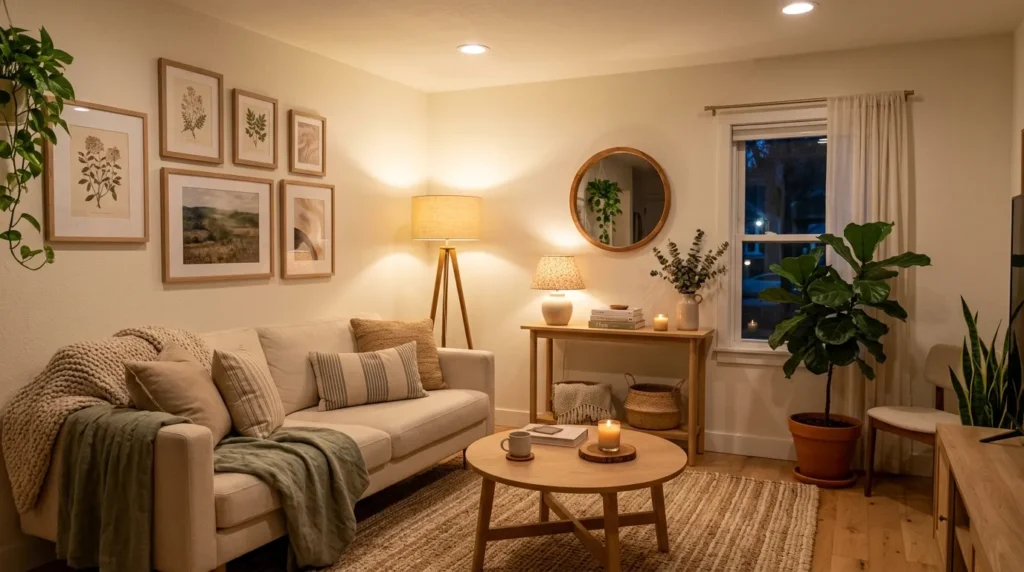
Layered lighting gives you control over different parts of the room. Overhead lighting provides general illumination, while floor lamps, table lamps, wall lights, and accent lighting can create softer pools of light.
This can make a compact room feel more dimensional because the eye has several points of visual interest.
Lighting is especially important in rooms with limited natural light.
How To Style It
Start with the room’s primary ceiling light, then add one or two secondary sources. A floor lamp beside a sofa is useful for reading, while a small table lamp can illuminate a console or side table.
Choose warm-toned bulbs appropriate for residential spaces and use dimmable fixtures when practical.
Don’t forget darker corners. A lamp tucked into an unused corner can make that area feel purposeful rather than forgotten.
9. Open Coffee Table
Quick Benefits
- Keeps the seating area visually light
- Provides useful surface space
- Can offer storage underneath
- Makes cleaning easier
- Works well in compact layouts
Why It Works
Coffee tables are often necessary, but a heavy, solid table can make a small living room feel more crowded.
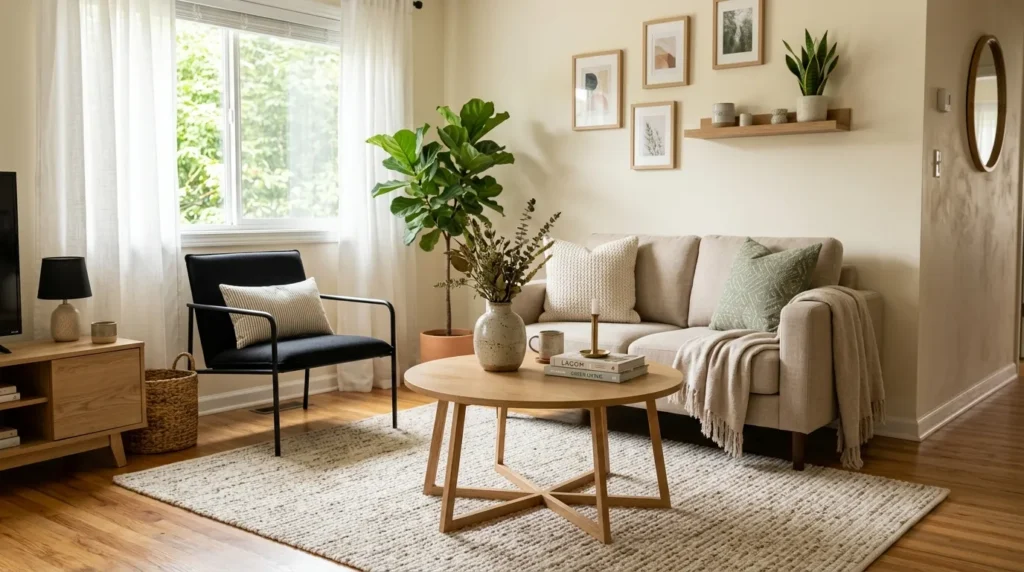
Tables with open bases, slim legs, glass tops, or visually light frames allow more of the floor to remain visible. This creates a subtle sense of openness while still giving you a practical surface.
The right shape also matters. A round or oval table can make it easier to move around the room because there are fewer sharp corners.
How To Style It
Choose a coffee table that leaves comfortable walking space around it. If your sofa is compact, don’t automatically buy a large rectangular table.
A round table can work beautifully in a square or conversational seating arrangement. A narrow rectangular table may be better for a long living room.
Keep the tabletop edited. A tray, small plant, coffee table book, or decorative object can be enough.
If you need additional storage, choose an open lower shelf rather than a visually bulky enclosed base.
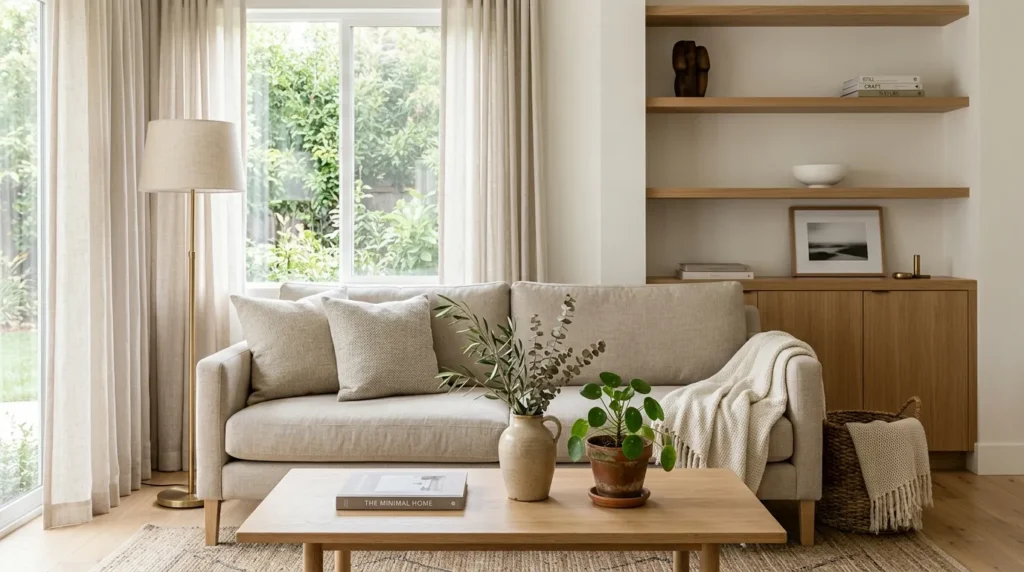
10. Minimal Clutter
Quick Benefits
- Makes the room feel calmer
- Improves visual flow
- Makes cleaning easier
- Allows favorite pieces to stand out
- Helps a small room feel intentional
Why It Works
Sometimes the biggest change you can make to a small living room is simply removing things.
Compact spaces have less visual tolerance for clutter because there are fewer empty areas to balance everything. A collection of small decorative objects, extra furniture, exposed cables, and overflowing shelves can quickly make the room feel busy.
Minimalism here doesn’t mean having an empty room. It means being selective about what deserves space.
A few meaningful pieces often have more impact than dozens of accessories.
How To Style It
Start by removing anything you don’t use, need, or genuinely enjoy. Then look at surfaces such as the coffee table, media console, shelves, and side tables.
Group similar objects together instead of spreading them throughout the room. Use baskets and closed storage to contain everyday items.
Leave some empty wall and shelf space. Those quiet areas give the eye somewhere to rest and help your favorite furniture and artwork stand out.
Before adding another decorative piece, ask whether it improves the room or simply fills an empty spot.
Related Articles
- Small Living Room Decorating Ideas
- Cozy Living Room Ideas
- Small Apartment Decorating Ideas
- Living Room Storage Ideas
- Neutral Living Room Ideas
Frequently Asked Questions
How can I make a small living room look bigger?
Use appropriately scaled furniture, keep pathways clear, choose a cohesive color palette, and maximize natural and artificial light. Mirrors can reflect light and add visual depth, while a properly sized area rug can connect the seating area. The goal is to reduce visual interruptions without making the room feel empty.
What furniture should I avoid in a small living room?
Avoid furniture that is significantly oversized for the room, especially pieces that block pathways or make doors difficult to open. Extremely deep sofas, bulky entertainment units, and too many occasional chairs can consume valuable floor space. Instead, look for comfortable pieces with proportions suited to the room.
Should a small living room have a large rug?
Often, yes. A properly sized rug can make the seating area feel more cohesive. A rug that’s too small may visually separate the furniture and make the room feel fragmented. Choose the largest size that fits comfortably while still allowing doors to open and pathways to remain usable.
What color is best for a small living room?
Light, soft colors are a popular choice because they reflect light and create an airy atmosphere. Warm white, ivory, beige, greige, pale blue, and muted green can all work beautifully. You don’t have to avoid dark colors entirely; use them strategically through furniture, artwork, or accents.
How do I arrange furniture in a very small living room?
Begin with the largest piece, usually the sofa, and position it around the room’s main focal point. Then add only the seating and tables you genuinely need. Keep major walking paths open and consider furniture with exposed legs or slim profiles. A compact arrangement is usually more comfortable than trying to fit too many pieces.
How can I add storage without making my living room feel crowded?
Use vertical space whenever possible. Tall bookcases, floating shelves, narrow cabinets, storage ottomans, and baskets can provide useful storage without consuming as much floor area. Closed storage is particularly helpful for everyday items that would otherwise create visual clutter.
Can I use dark furniture in a small living room?
Absolutely. Dark furniture can add contrast and personality. The key is balancing it with lighter walls, textiles, flooring, or nearby surfaces. A dark sofa against a light wall, for example, can create a strong focal point without making the entire room feel heavy.
Conclusion
A small living room doesn’t need to be completely redesigned to feel dramatically better. Often, the biggest difference comes from making a few intentional choices about scale, layout, storage, lighting, and visual clutter.
Start with the furniture. Make sure your sofa and chairs are comfortable but appropriately proportioned for the room. Then look at the layout and ask whether people can move around easily. If everything is pushed against the walls, experiment with a slightly more conversational arrangement.
From there, use a cohesive color palette, a properly sized rug, and a few thoughtful accessories to bring the room together. Vertical storage can help keep everyday belongings organized, while layered lighting can make the space feel warm and inviting after dark.
Most importantly, don’t feel like a small living room has to imitate a large one. Work with the space you have. Choose pieces you love, keep the pathways comfortable, and give every item a reason to be there.
Sometimes a small room becomes more beautiful simply when you stop trying to fit more into it.