

10 Modern Bedroom Ideas With Hotel-Inspired Decor
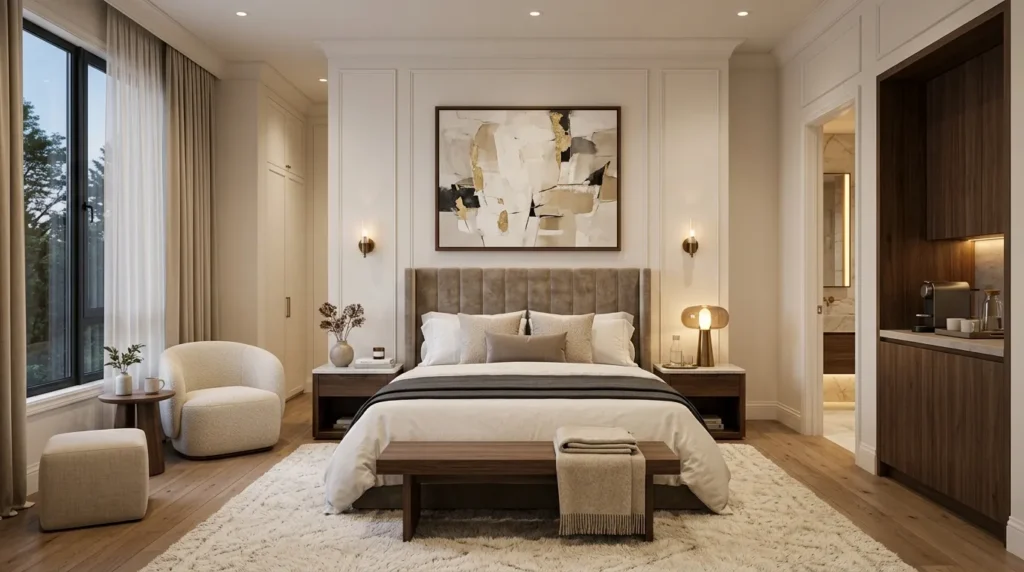
A beautiful hotel bedroom has a particular quality that makes you want to slow down the moment you walk through the door. The bed looks inviting, the lighting feels soft, the colors are calming, and there is just enough decoration to make the room feel finished without making it feel cluttered.
You can bring that same feeling into a modern bedroom without trying to recreate an actual hotel suite.
The secret is to focus on the details that make hotel rooms feel comfortable and polished: layered bedding, coordinated colors, generous curtains, soft lighting, practical bedside storage, quality-looking materials, and a sense of visual order.
I’ve noticed that one of the biggest differences between an ordinary bedroom and a hotel-inspired one is how intentionally the room is arranged. The bed becomes the focal point, bedside tables are balanced, lighting is layered, and decorative pieces are selected rather than scattered throughout the room.
You also don’t need a huge bedroom. A smaller space can benefit from the same principles. Keeping the palette restrained and choosing furniture that fits the room’s scale can make the space feel calmer and more spacious.
For a modern look, warm neutrals work especially well. Think ivory bedding, taupe upholstery, warm wood, soft gray, cream curtains, brushed metal, and subtle black accents. Texture keeps these quiet colors from becoming boring.
These modern bedroom ideas focus on creating a comfortable, sophisticated retreat inspired by the best qualities of hotel interiors while keeping the space practical enough for everyday life.
Whether you’re refreshing your master bedroom, guest room, or apartment bedroom, these ideas can help you create a space that feels organized, relaxing, and polished.
Table of Contents
1. Layered Hotel Bedding
Create a plush, inviting bed with multiple coordinated layers.
2. Upholstered Headboard
Give the bed a sophisticated focal point with a soft statement headboard.
3. Symmetrical Nightstands
Create visual balance with coordinated bedside furniture and lighting.
4. Soft Neutral Palette
Use calming shades to create the relaxed feeling of a modern hotel room.
5. Floor-To-Ceiling Curtains
Add softness and visual height with long, tailored window treatments.
6. Layered Bedside Lighting
Combine practical and ambient lighting for a comfortable evening atmosphere.
7. Statement Bedroom Bench
Add useful seating and a polished finishing detail at the foot of the bed.
8. Textured Accent Wall
Use subtle architectural texture to make the bedroom feel more custom.
9. Minimal Luxury Styling
Keep accessories intentional for a clean and sophisticated appearance.
10. Cozy Hotel Seating
Create a small lounge area that makes the bedroom feel more complete.
1. Layered Hotel Bedding
Quick Benefits
- Creates a plush appearance
- Makes the bed more inviting
- Adds visual depth
- Works with neutral colors
- Easy to refresh seasonally
Why It Works
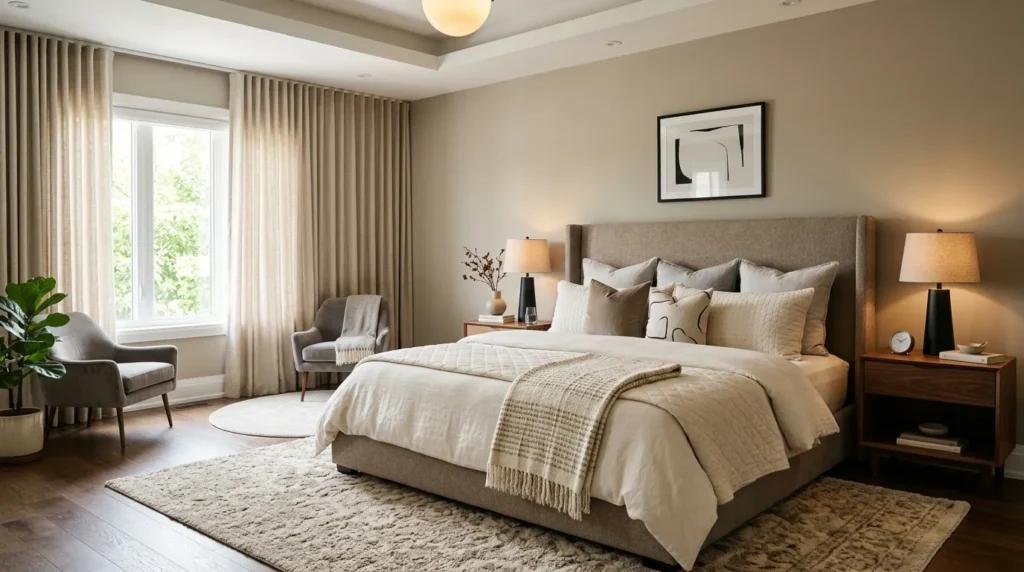
The bed is usually the first thing you notice when entering a bedroom, which makes bedding one of the most important elements in a hotel-inspired design.
Rather than using one duvet and a couple of pillows, layer different textures and proportions.
Start with quality-looking sheets, then add a duvet or comforter, folded throw blanket, and a controlled arrangement of pillows.
The goal isn’t to make the bed look excessively decorated. It should look comfortable and easy to use.
Neutral colors are particularly effective because texture becomes more noticeable when strong patterns aren’t competing for attention.
How To Style It
Begin with white, ivory, cream, or soft beige bedding.
Add a duvet or quilt in a complementary shade.
Fold a textured blanket across the lower third of the bed.
Use two sleeping pillows per person and add a small number of decorative pillows.
Choose linen-look, cotton, quilted, velvet, or other tactile fabrics for contrast.
Finish with a simple throw at the foot of the bed.
Keep the arrangement symmetrical if you’re aiming for a classic hotel aesthetic.
2. Upholstered Headboard
Quick Benefits
- Creates a strong focal point
- Adds softness
- Makes the bed look substantial
- Improves visual comfort
- Works with modern interiors
Why It Works
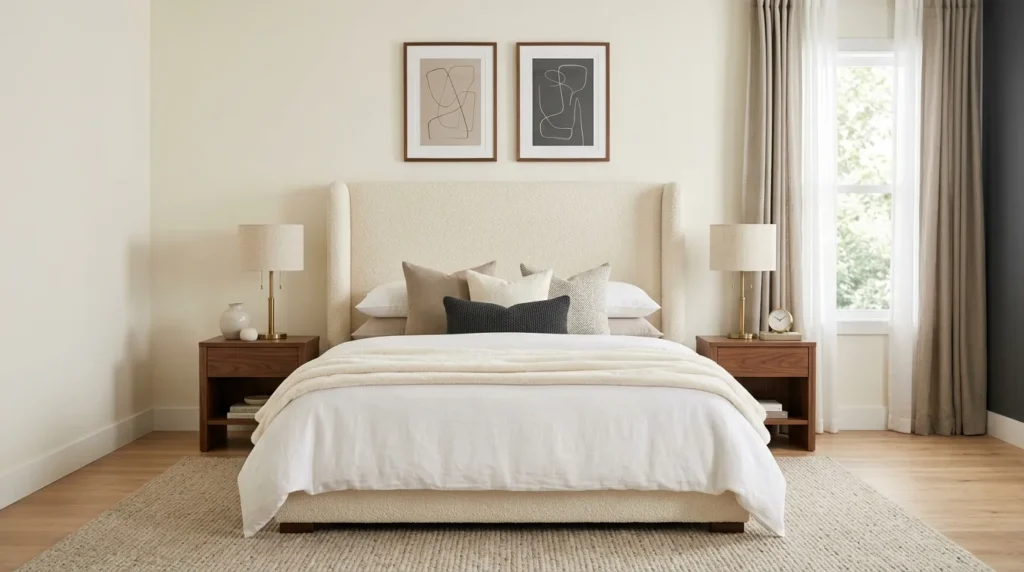
A large upholstered headboard can instantly give a bedroom a more finished appearance.
Hotels often use substantial headboards because they visually anchor the bed and create a comfortable backdrop.
For a modern bedroom, a simple rectangular or softly curved headboard usually works better than highly ornate designs.
The upholstery also introduces a layer of softness against harder materials such as wood, metal, glass, and stone.
How To Style It
Choose an upholstered headboard in cream, taupe, beige, gray, or another neutral.
A wide headboard can extend beyond the width of the mattress to create a more substantial look.
Pair it with simple nightstands.
Use symmetrical bedside lamps.
For a more contemporary appearance, consider a tall channel-tufted or softly padded design.
Avoid excessive decorative detailing if the rest of the bedroom is minimalist.
3. Symmetrical Nightstands
Quick Benefits
- Creates visual balance
- Makes the room feel organized
- Provides useful storage
- Frames the bed
- Supports a hotel-style appearance
Why It Works
Symmetry is one of the easiest ways to create a sense of order.
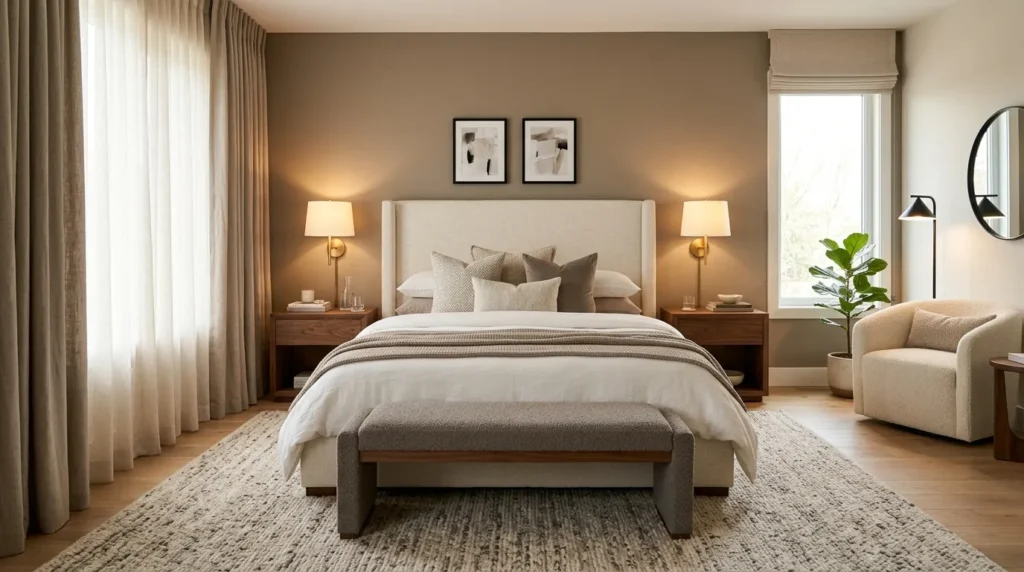
Matching nightstands on either side of the bed immediately make the bedroom feel more intentional.
They don’t have to be elaborate. In fact, simple nightstands often work best in modern rooms.
The important thing is that each side has enough surface space for practical items such as a lamp, book, water glass, or phone.
How To Style It
Choose two nightstands with similar proportions.
Place matching lamps on each side when possible.
Keep the surfaces relatively uncluttered.
Use one decorative object or small vase on each side.
If storage is needed, choose nightstands with drawers.
For a contemporary look, consider warm wood, walnut, light oak, or matte finishes.
Repeat the nightstand finish elsewhere in the room for visual continuity.
4. Soft Neutral Palette
Quick Benefits
- Creates a calming atmosphere
- Makes the bedroom feel sophisticated
- Works with different furniture styles
- Makes layering easier
- Supports restful visual design
Why It Works
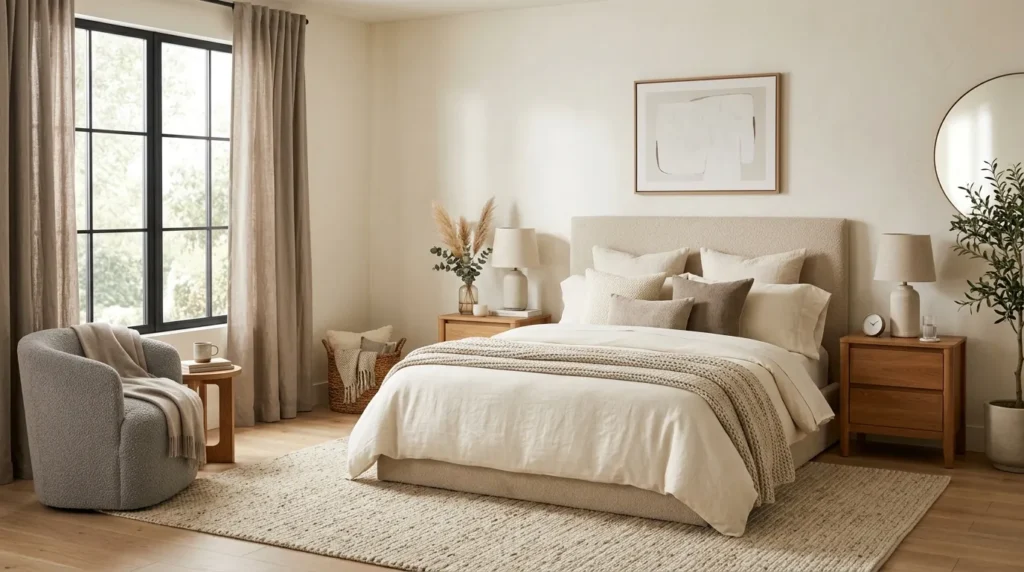
Hotel-inspired bedrooms rarely need a complicated color scheme.
A restrained palette helps create the feeling of calm that makes a bedroom comfortable.
Warm white, cream, beige, taupe, soft gray, and muted brown can be layered without making the room feel visually busy.
The important part is variation.
If every surface is exactly the same shade, the bedroom can feel flat.
Instead, use different tones and textures within the same general color family.
How To Style It
Choose one main neutral for the walls.
Use a slightly lighter or darker shade for the bedding.
Add warm wood through the bed frame or nightstands.
Introduce soft gray or taupe through an accent chair or rug.
Use black or bronze sparingly for definition.
Bring in greenery if you want a natural accent.
5. Floor-To-Ceiling Curtains
Quick Benefits
- Adds softness
- Makes ceilings appear taller
- Enhances the windows
- Improves privacy
- Creates a polished appearance
Why It Works
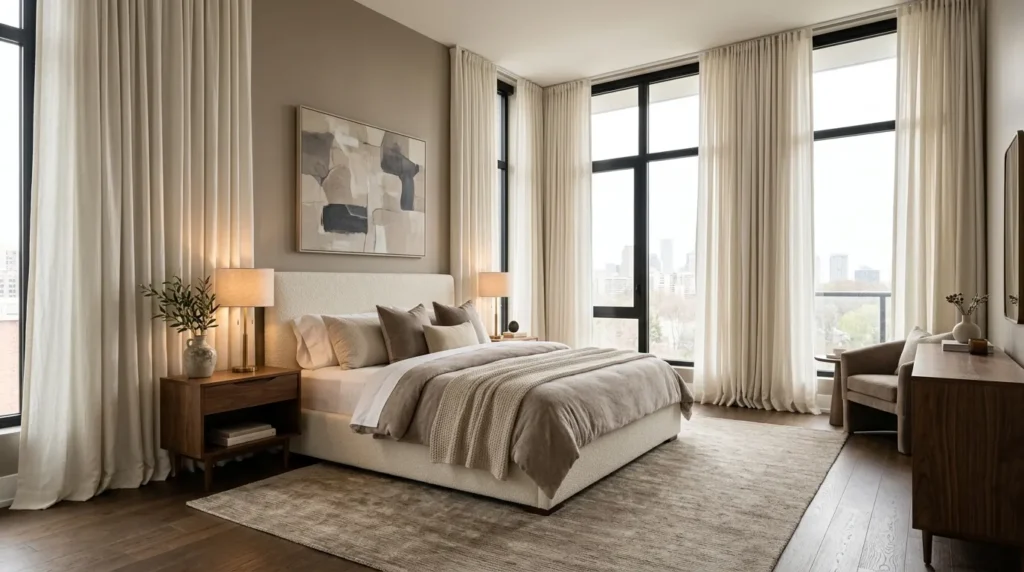
Window treatments can dramatically affect the perceived proportions of a bedroom.
Long curtains that extend toward the floor create a continuous vertical line, especially when the hardware is positioned appropriately above the window.
The effect is particularly attractive in modern bedrooms because the curtains soften clean architectural lines.
Hotel-inspired spaces often use simple, full-length window treatments rather than complicated patterns.
How To Style It
Choose ivory, cream, beige, taupe, or soft gray curtains.
Use substantial fabric with a clean drape.
Hang panels high enough to complement the room’s proportions while following appropriate installation requirements.
Let the curtains extend close to the floor.
Consider combining decorative panels with suitable shades for privacy and light control.
Keep patterns minimal if the bedding and furniture already provide plenty of visual texture.
6. Layered Bedside Lighting
Quick Benefits
- Creates a relaxing atmosphere
- Improves nighttime functionality
- Adds visual balance
- Highlights the bed
- Allows flexible illumination
Why It Works
Good bedroom lighting is rarely about one bright ceiling fixture.
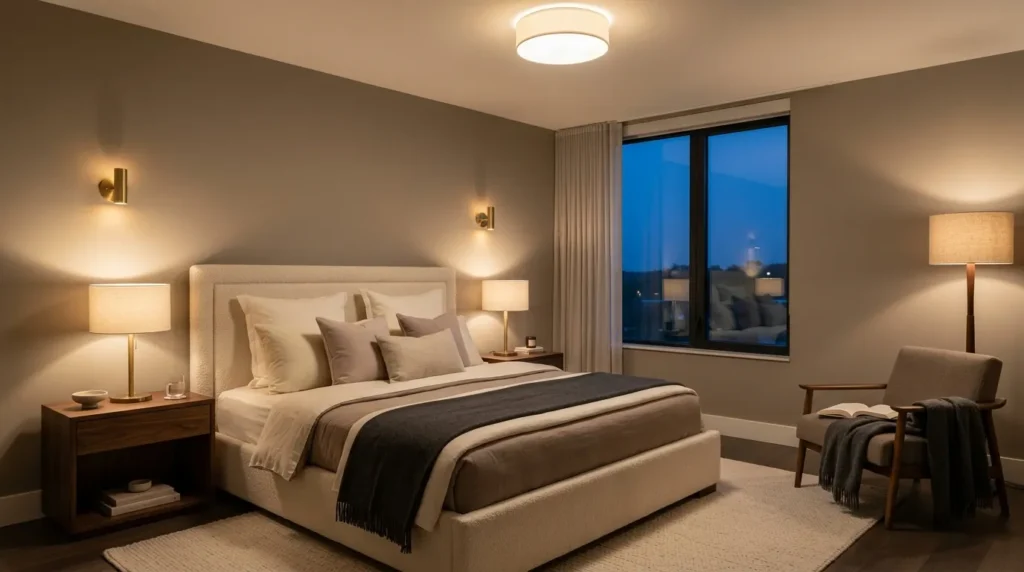
Hotel rooms typically use several sources to create different levels of illumination.
Bedside lamps provide useful reading light.
Wall-mounted fixtures can save surface space.
A ceiling fixture provides general illumination.
Accent lighting can highlight artwork, architectural features, or other decorative elements.
Together, these sources create a softer and more flexible environment.
How To Style It
Start with matching bedside lamps for a classic symmetrical look.
Choose warm, comfortable lighting appropriate for evening use.
Consider wall-mounted sconces if nightstand space is limited.
Add a ceiling fixture that complements the overall design.
Use floor or accent lighting if the bedroom has a seating area.
Whenever possible, use separate switches or dimmers so you can control each layer independently.
7. Statement Bedroom Bench
Quick Benefits
- Adds useful seating
- Completes the bed arrangement
- Introduces texture
- Creates a polished appearance
- Provides a practical surface
Why It Works
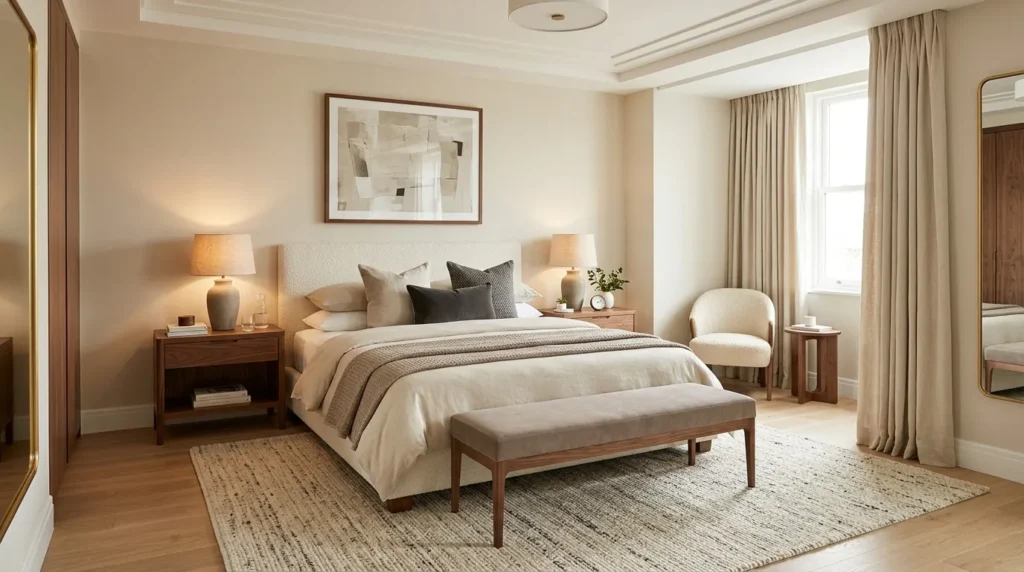
A bench at the foot of the bed is a common hotel-inspired detail because it combines function with visual balance.
It can provide a convenient place to sit while putting on shoes, folding blankets, or preparing for the day.
It also visually completes the lower portion of the bed.
The bench doesn’t need to match the headboard exactly. A little contrast can make the room feel more layered.
How To Style It
Choose a bench that is narrower than or approximately aligned with the bed’s width.
Upholstered benches add softness.
Wooden benches create a more natural modern appearance.
A slim black frame can add contemporary contrast.
Keep the bench relatively simple if the headboard is already substantial.
Leave enough clearance around it for comfortable movement.
8. Textured Accent Wall
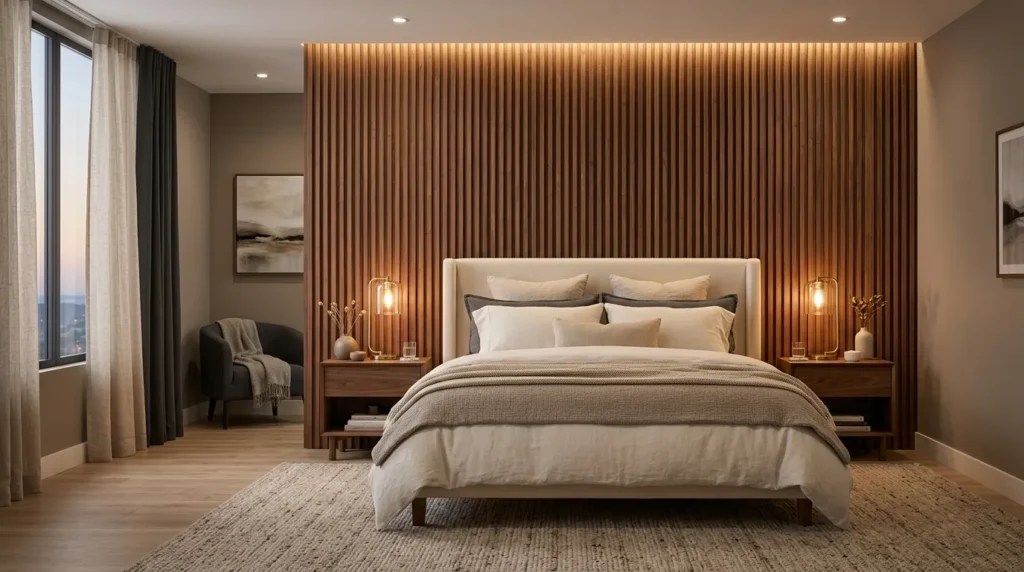
Quick Benefits
- Creates visual depth
- Makes the bed area more distinctive
- Adds architectural interest
- Works with neutral colors
- Can reduce the need for artwork
Why It Works
An accent wall behind the bed can provide the visual impact of a luxury hotel headboard wall without requiring a complicated design throughout the room.
Options include wood paneling, vertical slats, subtle molding, plaster-inspired finishes, textured wallpaper, or other suitable wall treatments.
The best choice depends on the home’s architecture and maintenance requirements.
A restrained texture can make a neutral bedroom feel much richer.
How To Style It
Keep the accent wall behind the bed.
Choose a finish that complements the existing flooring and furniture.
Warm wood can introduce natural character.
Soft plaster-inspired finishes can create a seamless modern appearance.
Vertical paneling can emphasize ceiling height.
Keep the bedding relatively simple so the wall remains the focal point.
Use warm bedside lighting to highlight the texture in the evening.
9. Minimal Luxury Styling
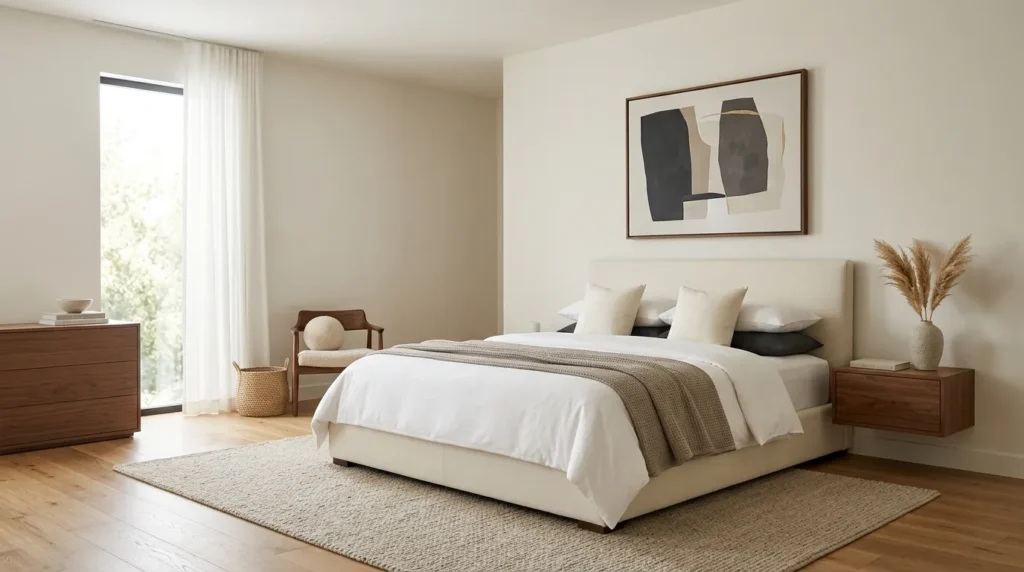
Quick Benefits
- Reduces visual clutter
- Makes furniture stand out
- Creates a calmer environment
- Simplifies cleaning
- Works especially well in smaller rooms
Why It Works
A hotel-inspired bedroom doesn’t need decorative objects covering every available surface.
In fact, the opposite is often more effective.
A small collection of carefully chosen accessories can make the room feel intentional while leaving plenty of breathing room.
This is particularly useful for bedrooms because clutter can make an otherwise relaxing space feel visually stressful.
How To Style It
Choose one substantial artwork above a dresser or opposite the bed.
Place a simple vase on a nightstand.
Use a tray to organize small bedside items.
Add one decorative object to a dresser.
Keep the floor mostly clear.
Avoid filling every wall with artwork.
Before adding another accessory, consider whether it contributes to the room’s overall balance.
10. Cozy Hotel Seating
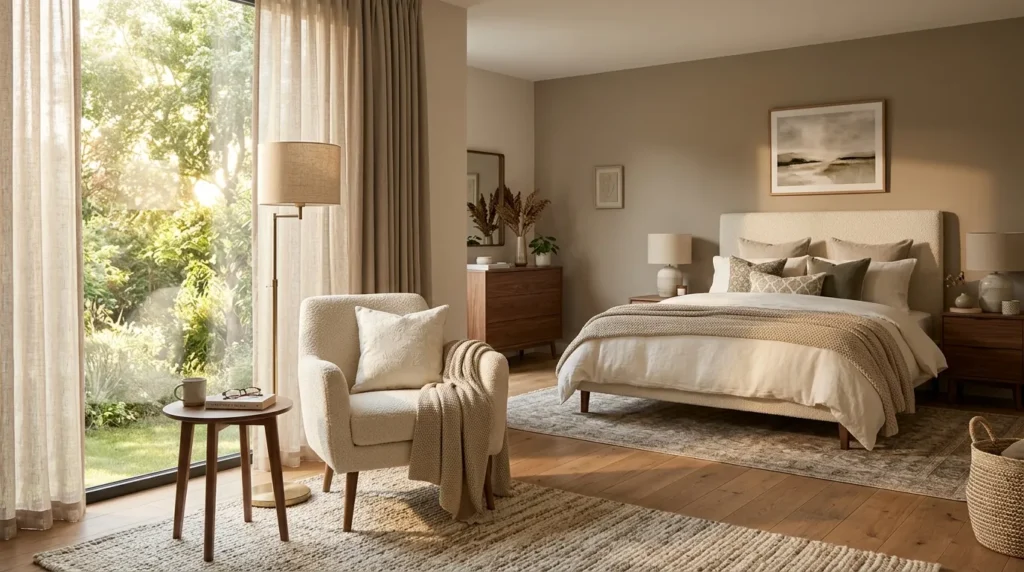
Quick Benefits
- Creates a separate relaxation zone
- Makes the room feel larger
- Adds functionality
- Introduces another texture
- Gives the bedroom a boutique-hotel feel
Why It Works
If space allows, a small seating area can make a bedroom feel much more complete.
A comfortable chair beside a window, a small bench near a dresser, or two compact chairs with a side table can create a separate zone for reading or relaxing.
This works especially well in larger bedrooms where the bed alone doesn’t fill the space naturally.
How To Style It
Place a comfortable accent chair near a window when possible.
Add a small side table and reading lamp.
Use a cushion or throw that repeats one of the bedroom’s main colors.
A compact upholstered bench can work in smaller rooms.
Choose furniture that maintains comfortable walking paths.
Avoid adding seating simply to fill empty space; it should have a clear purpose.
How To Make a Bedroom Feel Like a Hotel
The easiest way to create a hotel-inspired bedroom is to focus on consistency.
Start with the bed because it is the visual center.
Use coordinated bedding, symmetrical bedside furniture, and balanced lighting.
Then work outward.
Add curtains, a rug, artwork, and one or two furniture pieces that complement the central palette.
Hotel-style bedrooms also tend to feel uncluttered.
Keep frequently used objects organized and avoid allowing clothing, packaging, cords, and miscellaneous items to become part of the room’s visual landscape.
Comfort matters just as much as appearance.
Choose bedding you genuinely enjoy sleeping in, lighting that is comfortable at night, and furniture that supports everyday use.
The goal isn’t to make your bedroom look like a showroom.
It is to borrow the design principles that make hotel rooms feel polished and relaxing.
What Colors Work Best for a Hotel-Inspired Bedroom?
Neutral colors are an excellent starting point.
Cream and ivory create a soft foundation.
Beige and taupe add warmth.
Soft gray can introduce a cooler contemporary element.
Brown and walnut add natural depth.
Black or bronze can provide small amounts of contrast.
If you want color, muted green, dusty blue, or warm terracotta can work as controlled accents.
Avoid introducing too many competing colors.
A simple palette makes it easier to coordinate bedding, curtains, furniture, artwork, and accessories.
How To Make a Small Bedroom Look More Luxurious
Small bedrooms benefit from simplicity.
Choose a bed frame that fits comfortably without dominating the room.
Use matching nightstands if space allows.
Mount lighting on the wall when bedside surfaces are limited.
Choose curtains that create vertical height.
Use one appropriately sized rug rather than several small mats.
Mirrors can help reflect light, although they should be positioned thoughtfully.
Keep decorative accessories limited.
Most importantly, maintain clear pathways around the bed.
A room feels more refined when you can move through it comfortably.
Modern Hotel Bedroom Mistakes to Avoid
Too many pillows: Layered bedding should still be practical.
Oversized furniture: Large pieces can overwhelm smaller rooms.
Poor bedside lighting: Decorative lamps aren’t useful if they don’t provide comfortable illumination.
Too many colors: A restrained palette usually creates a calmer result.
Cluttered nightstands: Keep useful items organized and decorative pieces limited.
Short curtains: Full-length treatments often create a more polished appearance.
Tiny rugs: A rug that is too small can make the bed feel visually disconnected.
Ignoring comfort: Beautiful bedding and furniture still need to work for everyday living.
FAQ
How can I make my bedroom look like a luxury hotel?
Focus on a comfortable bed, layered bedding, symmetrical nightstands, soft lighting, full-length curtains, coordinated colors, and minimal accessories. An upholstered headboard, substantial rug, bench, and textured accent wall can add another layer of sophistication. The key is creating visual consistency rather than filling the room with expensive-looking decorations.
What colors are best for a hotel-style bedroom?
Cream, ivory, beige, taupe, warm gray, soft brown, and muted charcoal are excellent choices for a modern hotel-inspired bedroom. Natural wood tones can add warmth, while black or bronze can provide contrast. You can also introduce muted green or dusty blue as a restrained accent.
How do you style a hotel bed at home?
Use multiple layers rather than one thick blanket. Start with sheets, then add a duvet or quilt, a folded throw, and a controlled number of pillows. Keep the colors coordinated and use different textures to create depth. A neatly made bed with simple, well-proportioned layers often looks more polished than one overloaded with decorative pillows.
What type of headboard looks modern and luxurious?
Upholstered headboards with clean rectangular or gently curved shapes work especially well. Neutral upholstery such as cream, beige, taupe, or gray can create a sophisticated foundation. Tall headboards can emphasize the bed as the room’s focal point, while wider designs can give the entire wall a more substantial appearance.
Should bedroom nightstands match?
Matching nightstands are useful when you want the symmetrical appearance often associated with hotel interiors. They don’t have to be identical in every situation, but keeping their height, scale, or visual weight similar helps create balance. Matching lamps can reinforce the symmetrical arrangement.
What lighting makes a bedroom feel luxurious?
Layered lighting works best. Combine a ceiling fixture with bedside lamps or sconces and, when appropriate, a floor lamp or accent light. Warm, comfortable illumination can make the room feel more relaxing in the evening. Dimmers or separate controls provide additional flexibility.
How do you make a modern bedroom cozy?
Use soft bedding, layered textiles, warm lighting, curtains, natural wood, and comfortable seating. A neutral palette can create a calm foundation, while texture prevents the room from feeling flat. Keep clutter under control and leave enough open space for the room to feel comfortable rather than crowded.
Conclusion
A hotel-inspired bedroom is less about copying a specific hotel and more about recreating the qualities that make a well-designed guest room feel comfortable.
Start with the bed.
Make it the visual focal point with layered bedding, an upholstered headboard, and balanced nightstands.
Then build the room outward.
Use a restrained palette, full-length curtains, textured surfaces, and a substantial rug to create depth. Add layered lighting so the room feels comfortable during the evening rather than relying on one bright ceiling fixture.
If you have enough space, introduce a small seating area or bench to make the bedroom more functional.
And perhaps most importantly, edit the room.
A few thoughtfully chosen accessories usually look more sophisticated than dozens of small decorative objects.
You don’t have to renovate the entire bedroom to create this effect. Start with the area that has the greatest visual impact, such as the bed, lighting, or window treatments.
Choose materials and colors that you genuinely enjoy living with.
The result should feel polished enough to resemble a boutique hotel but comfortable enough to remind you that it is home.
Related Articles
- 10 Modern Bedroom Ideas for a Calm and Stylish Space
- 10 Elegant Aesthetic Bedroom Ideas You’ll Want to Copy
- 10 Small Bedroom Ideas to Make the Most of Your Space
- 10 Cozy Bedroom Ideas for a Relaxing Retreat
- 10 Neutral Bedroom Ideas for a Timeless Look