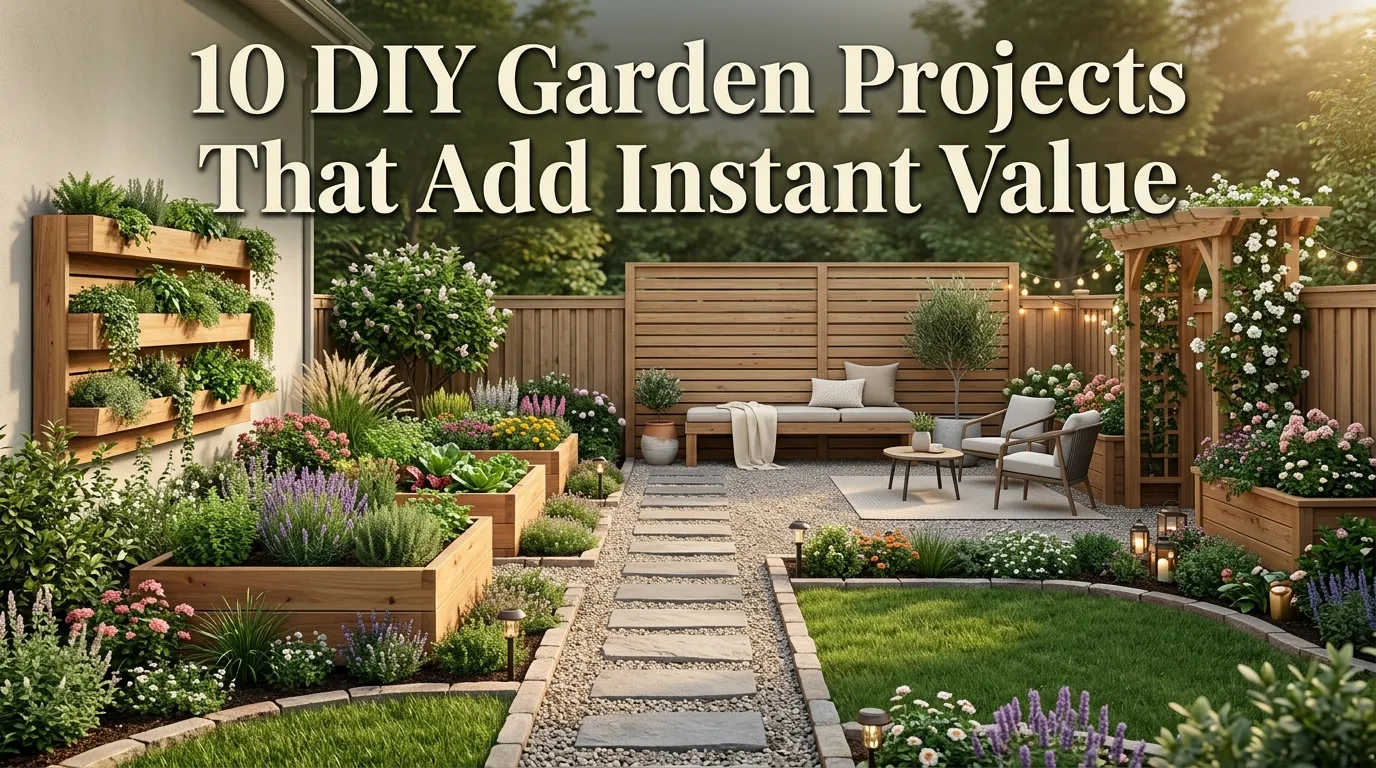
10 DIY Garden Projects That Add Instant Value
A beautiful garden can make a home feel more finished, functional, and inviting without requiring an expensive landscape renovation.
The good news is that some of the most noticeable improvements can be tackled as DIY projects. A defined garden path, a tidy raised bed, a simple privacy screen, or a well-designed seating area can change how an outdoor space looks and how you use it.
When people talk about adding value to a garden, it’s tempting to focus only on expensive features. In practice, smaller improvements can have a strong visual impact when they solve an obvious problem. A muddy walkway becomes a proper path. An empty corner becomes a useful seating area. An untidy garden bed gains a clean border. A plain fence becomes a more attractive backdrop for plants.
I’ve noticed that the best DIY garden projects tend to combine appearance with function. They don’t simply add another decorative object. They make the yard easier to use, easier to maintain, or more appealing to look at.
It’s also important to distinguish between making your home more appealing and guaranteeing a particular increase in property value. No DIY project can promise a specific return when you sell. Local buyer preferences, neighborhood conditions, construction quality, and the overall property all matter.
That’s why the ideas below focus on practical improvements that can make an outdoor space feel more intentional and well cared for.
Some projects are suitable for a weekend, while others may take longer depending on the materials, tools, and size of your yard. Before digging, check local requirements for underground utilities, property boundaries, drainage, structures, and permits where applicable.
The goal isn’t to create the most elaborate garden on the block.
It’s to make smart improvements that give your outdoor space a finished appearance while making it more enjoyable to use.
Table of Contents
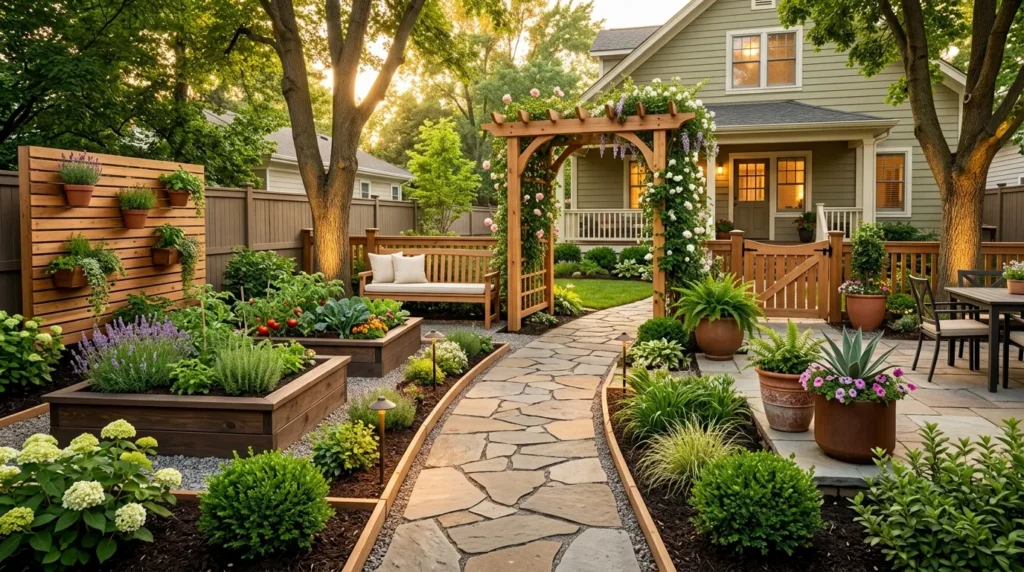
1. Defined Garden Paths
Create attractive routes through the yard while protecting lawn and planting areas.
2. Raised Garden Beds
Add structure and growing space with practical, well-built planting beds.
3. Simple Privacy Screens
Create visual separation with attractive screens and climbing greenery.
4. Built-In Seating
Turn an unused garden area into a comfortable outdoor destination.
5. Fresh Garden Borders
Give planting beds a cleaner shape with clearly defined edges.
6. Vertical Plant Wall
Use vertical space to add greenery and architectural interest.
7. DIY Compost Station
Create a practical system for turning suitable garden waste into useful compost.
8. Outdoor Potting Bench
Add a dedicated gardening workspace for tools, containers, and planting tasks.
9. Mulched Landscape Beds
Create a polished garden appearance while helping retain soil moisture and suppress weeds.
10. Garden Lighting
Highlight paths, planting areas, and outdoor living spaces with carefully positioned lighting.
1. Defined Garden Paths
Quick Benefits
- Creates structure
- Improves movement through the garden
- Protects planting areas
- Reduces muddy walkways
- Makes the landscape feel more finished
Why It Works
A garden path does more than help you get from one place to another.
It gives the landscape a visual framework.
Without a defined route, people naturally walk across lawns or through planting beds, which can lead to worn grass, compacted soil, and muddy areas.
A well-planned path directs movement while also creating a sense of purpose.
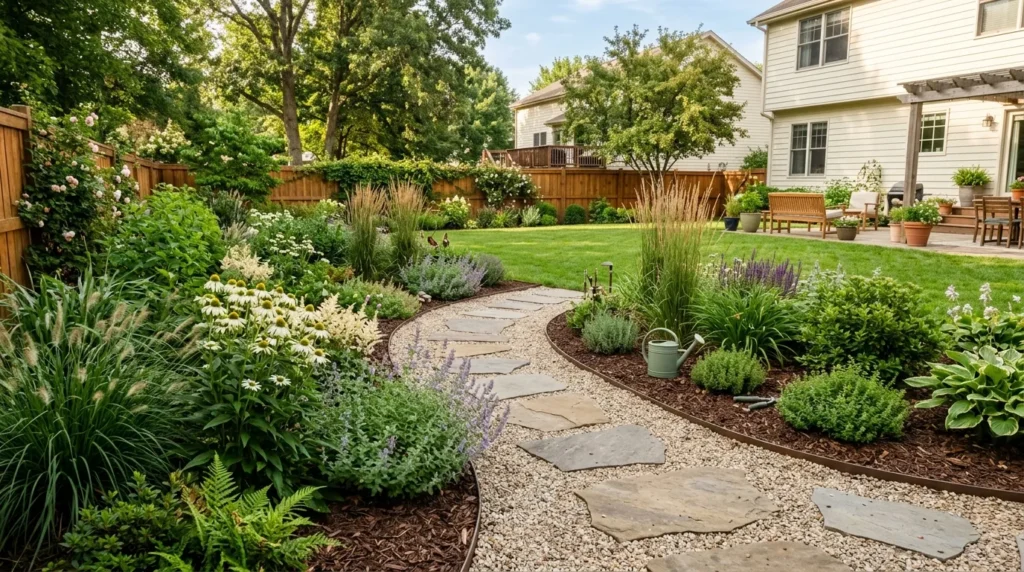
For a budget-friendly DIY project, materials such as gravel, stepping stones, brick, or pavers can work depending on your soil, drainage, climate, and intended use.
The most important factor is choosing a path that looks appropriate for the house and is practical for everyday movement.
How To Style It
Start by deciding where people naturally walk.
Mark the proposed route with landscape marking paint or temporary stakes and string.
Keep the path wide enough for comfortable use.
For a casual garden, irregular stepping stones surrounded by gravel or groundcover can look natural.
For a more formal landscape, use straight lines and repeated pavers.
Before digging, contact the appropriate utility-locating service in your area to identify underground lines.
Prepare the base according to the material you’re installing rather than simply placing heavy materials directly on soil.
Add low-growing plants along the edges if you want a softer transition between the path and garden beds.
2. Raised Garden Beds
Quick Benefits
- Adds organized growing space
- Creates clear garden structure
- Makes planting areas easier to define
- Works well for vegetables and flowers
- Can improve accessibility
Why It Works
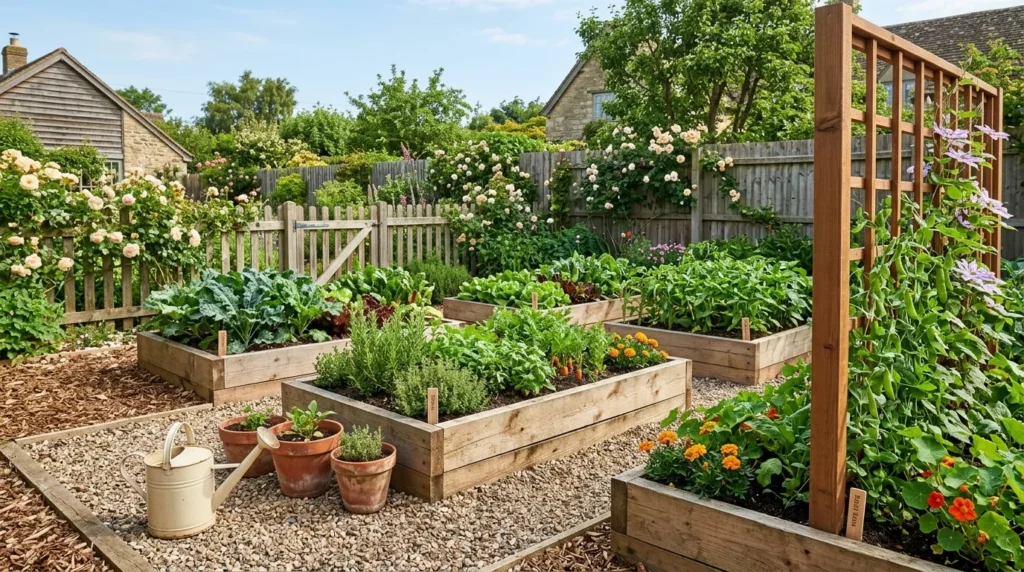
Raised beds make a garden look intentional almost immediately.
Instead of having plants scattered throughout an open yard, raised beds establish clear boundaries and give the landscape a stronger visual rhythm.
They’re also practical for growing vegetables, herbs, annual flowers, and many other plants.
A simple rectangular design is often enough.
You don’t need elaborate carpentry to create an attractive raised bed, although construction should be appropriate for the materials, soil load, climate, and location.
How To Style It
Untreated or appropriately rated wood can create a classic garden appearance, while stone, brick, or composite materials offer different aesthetics and maintenance requirements.
Keep the shape simple.
A few well-proportioned beds usually look more polished than numerous tiny boxes.
Fill them with quality growing medium suited to the plants.
Mix vegetables with herbs and flowers if you want a more decorative edible garden.
Leave sufficient space between beds for watering, harvesting, and maintenance.
If you’re building taller beds, think carefully about structural stability and accessibility before filling them.
3. Simple Privacy Screens
Quick Benefits
- Adds privacy
- Defines outdoor rooms
- Creates a backdrop for plants
- Improves seating areas
- Adds vertical interest
Why It Works
A garden can be beautiful and still feel exposed.
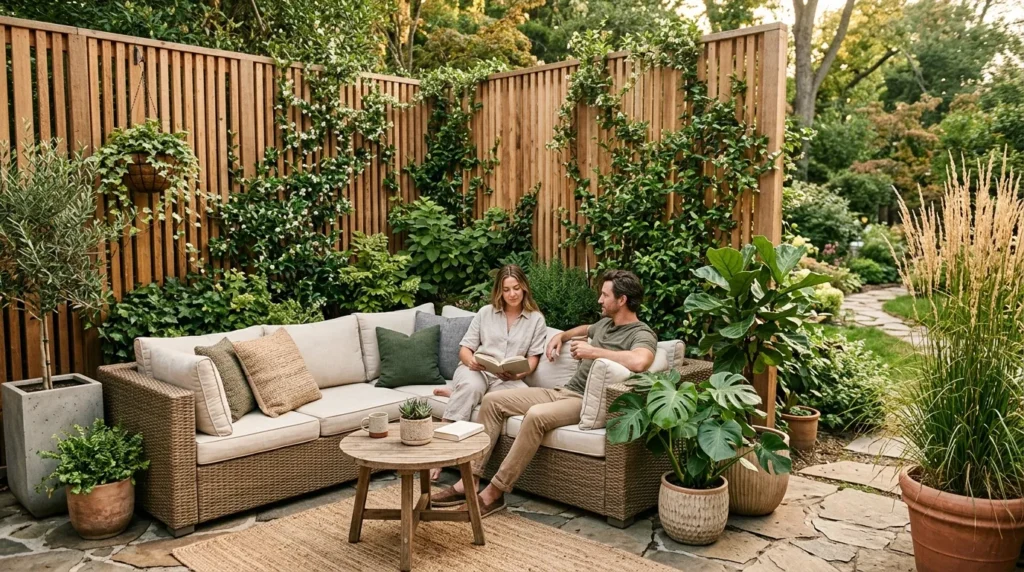
A DIY privacy screen can help create a sense of separation around a patio, seating area, outdoor dining space, or hot tub.
Wood slats, lattice panels, trellises, and appropriately installed fencing can all create visual screening.
The best option depends on local regulations, property boundaries, wind conditions, and the amount of privacy required.
A screen can also become a design feature rather than something that simply blocks a view.
How To Style It
Use natural wood for a warm garden aesthetic.
Painted panels can complement the home’s exterior.
A lattice or trellis can support suitable climbing plants.
For a softer look, combine the structure with large containers filled with greenery.
Don’t build directly on a property line without understanding applicable local requirements.
For larger or permanent structures, check whether permits or professional installation are required.
Make sure posts and panels are securely anchored, particularly in areas with strong winds.
4. Built-In Seating
Quick Benefits
- Makes the garden more usable
- Creates a destination
- Adds functional value
- Uses awkward spaces
- Works well around patios and beds
Why It Works
A garden becomes more valuable to everyday life when you actually have somewhere comfortable to sit.
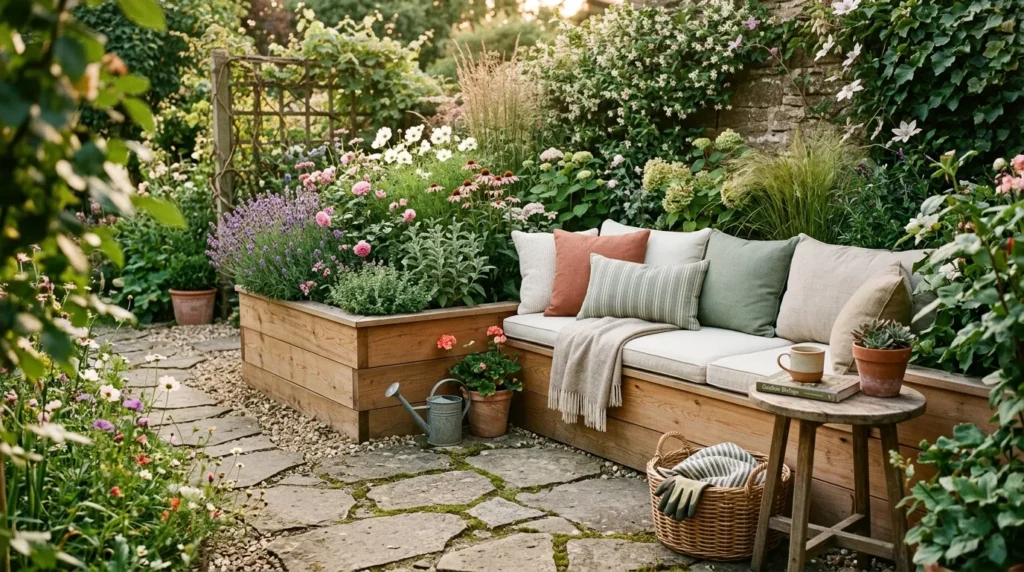
Built-in seating can turn an unused corner into an outdoor room.
A simple bench against a wall, fence, or raised bed can provide enough seating without taking up as much space as a complete furniture set.
For DIYers, a straightforward bench can also be easier to build than a complicated outdoor sectional.
How To Style It
Position seating where you can enjoy the garden rather than simply placing it wherever there’s empty space.
A bench facing a flower bed, tree, or water feature creates a natural focal point.
Use weather-appropriate lumber and exterior-rated fasteners.
Sand and finish wood according to the manufacturer’s recommendations.
Add outdoor cushions for comfort.
Place a small side table nearby for drinks, books, or gardening tools.
For a more built-in appearance, integrate the bench into a garden wall or raised planter where structurally appropriate.
5. Fresh Garden Borders
Quick Benefits
- Creates cleaner lines
- Defines planting beds
- Makes maintenance easier
- Separates lawn from garden
- Gives the yard a finished appearance
Why It Works
One of the simplest ways to make a garden look more intentional is to define its edges.
Overgrown or irregular borders can make even healthy plants look messy.
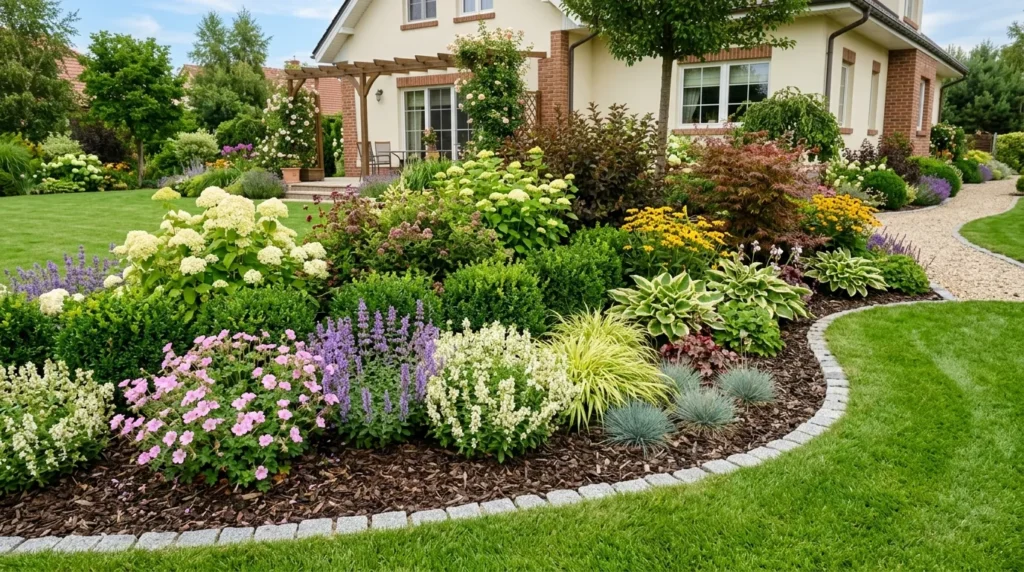
A crisp transition between lawn and planting bed creates visual structure.
You don’t necessarily need expensive edging products.
A simple trench edge, stone border, brick, or suitable landscape edging can create the separation you need.
How To Style It
First decide whether you prefer curved or straight borders.
Curved beds often feel relaxed and natural.
Straight lines tend to suit modern and formal landscapes.
Mark the desired shape before digging.
Remove grass and weeds from the planting area.
Create a consistent edge and keep it maintained.
If using stone or brick, establish a stable base appropriate for the material.
Avoid excessively narrow strips that are difficult to mow or maintain.
Repeat the same edging material throughout the garden for a more cohesive appearance.
6. Vertical Plant Wall
Quick Benefits
- Adds greenery without using much ground space
- Creates a focal point
- Makes plain walls more interesting
- Works in small yards
- Can provide partial screening
Why It Works
Vertical gardening allows you to use walls, fences, and other appropriate structures that would otherwise remain empty.
A vertical plant display can make a small garden feel more layered.
It can also hide an unattractive fence or create a focal point behind a seating area.
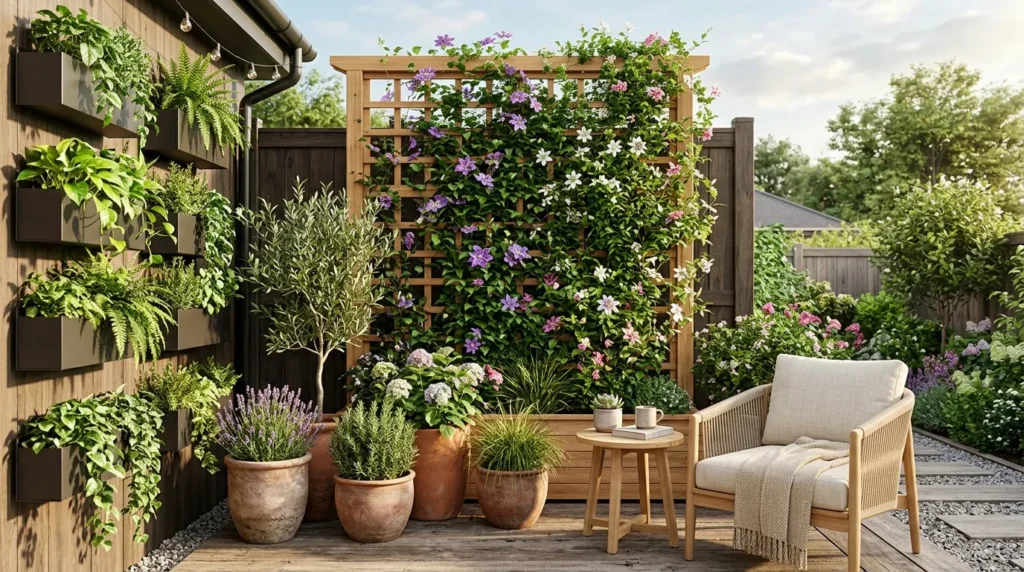
You can build a simple trellis, install wall-mounted planters, or use a freestanding structure designed for outdoor use.
The plants you choose should match the available light and growing conditions.
How To Style It
Start with the structure.
A wood trellis creates a natural look.
Metal can feel more contemporary.
Add climbing plants where appropriate, making sure the structure can support their mature weight.
For containers, combine upright foliage with trailing plants.
Repeat a few plant varieties rather than choosing dozens of unrelated species.
Keep irrigation and drainage in mind.
A vertical garden may dry out faster than plants growing directly in the ground.
7. DIY Compost Station
Quick Benefits
- Gives garden waste a purpose
- Creates useful compost over time
- Keeps organic material organized
- Supports gardening
- Can reduce some household waste
Why It Works
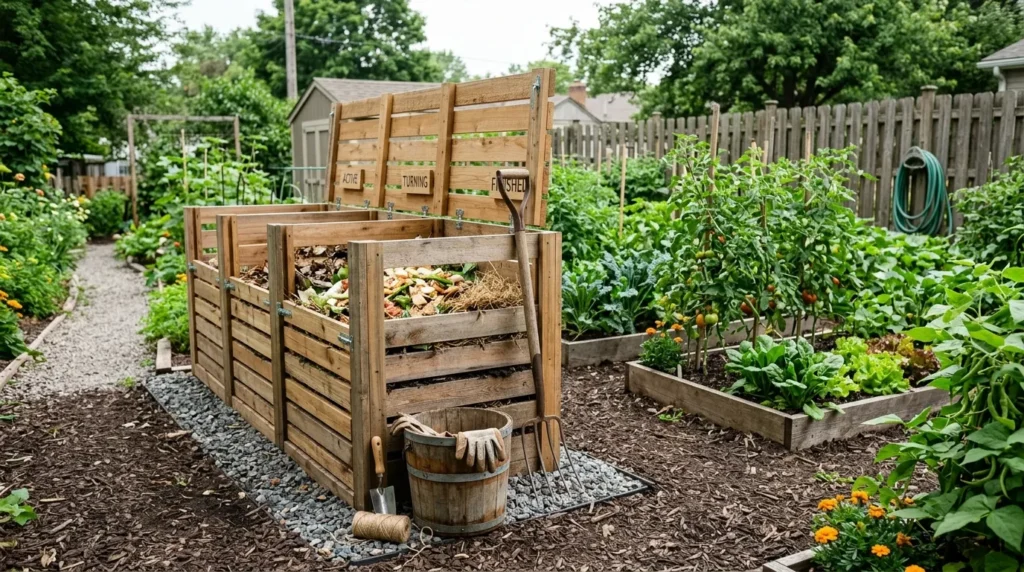
A compost station isn’t the most glamorous garden project, but it can be one of the most useful.
Instead of treating every suitable organic material as waste, composting allows certain plant materials and food scraps to break down into organic matter that can eventually benefit the garden.
A tidy compost area also looks much better than an improvised pile.
The system needs to be appropriate for your climate and household, and not all organic materials belong in every composting system.
How To Style It
Build or purchase a compost bin appropriate for your space.
Choose a location with suitable drainage and access.
A partially shaded area can be practical in many climates, although conditions vary.
Keep a balanced mix of appropriate “green” and “brown” materials.
Examples can include certain vegetable scraps, leaves, and untreated plant material.
Avoid meat, dairy, pet waste, and other materials unless your specific composting system is designed to handle them.
Keep the station neat and easy to access.
A small path leading to it can make regular maintenance much easier.
8. Outdoor Potting Bench
Quick Benefits
- Creates a dedicated gardening workspace
- Keeps tools organized
- Makes repotting easier
- Adds visual charm
- Uses vertical storage
Why It Works
If you regularly garden, a dedicated workspace can make outdoor tasks much more convenient.
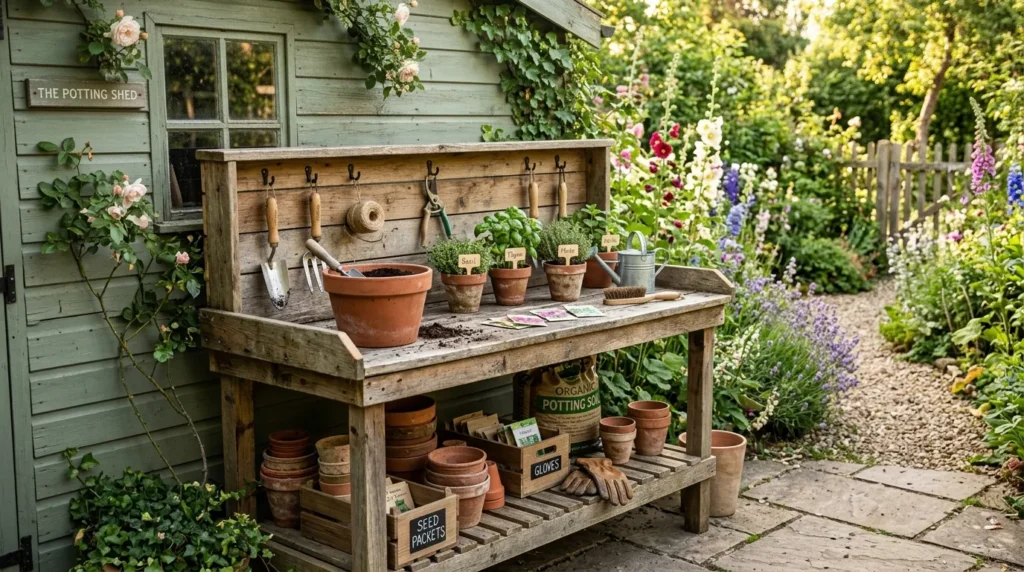
Instead of carrying pots, soil, hand tools, and gardening supplies around the yard, a potting bench gives everything a designated location.
It can also become an attractive feature when positioned against a shed or garden wall.
How To Style It
Choose a sturdy outdoor work surface.
Add shelves underneath for pots and containers.
Use hooks for hand tools.
Keep potting soil in a sealed, appropriate container rather than open bags exposed to weather.
Add a small shelf above the worktop for frequently used supplies.
Use weather-resistant finishes and hardware.
A few terracotta pots and potted herbs can make the bench decorative without compromising its usefulness.
Don’t overload the structure.
It should remain a functional workspace rather than becoming another cluttered storage area.
9. Mulched Landscape Beds
Quick Benefits
- Creates a polished appearance
- Helps suppress some weeds
- Can help retain soil moisture
- Defines planting areas
- Provides a finished backdrop for plants
Why It Works
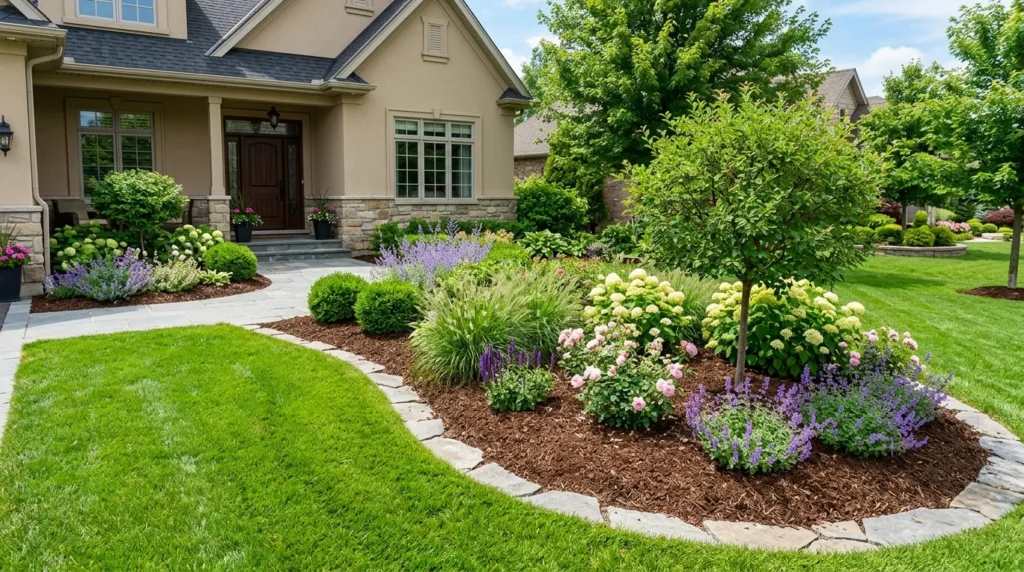
Fresh mulch can make a garden bed look dramatically more finished.
It creates visual contrast beneath shrubs, flowers, and trees while helping cover exposed soil.
Organic mulches can also contribute organic matter as they break down, although different mulch materials have different characteristics.
The important thing is to use mulch correctly.
Too much mulch can create problems, particularly when piled against tree trunks or plant stems.
How To Style It
Begin by removing weeds and preparing the planting bed.
Choose a mulch that complements the house and garden.
Natural wood mulch works well for many traditional landscapes.
Gravel or other mineral mulches can suit modern gardens and areas where appropriate.
Apply an appropriate layer rather than creating a deep mound.
Keep mulch away from direct contact with tree trunks and plant crowns.
Refresh the bed when necessary rather than automatically adding more material every season.
Combine mulch with well-defined borders for the strongest finished appearance.
10. Garden Lighting
Quick Benefits
- Extends evening use
- Highlights garden features
- Improves pathway visibility
- Creates atmosphere
- Adds visual depth after dark
Why It Works
A garden can look completely different after sunset.
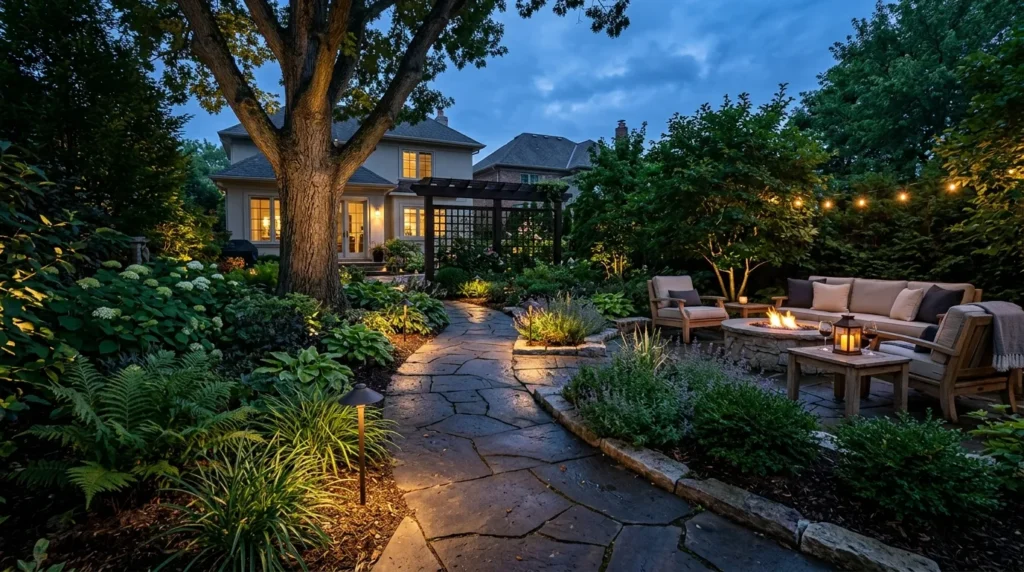
Thoughtfully placed lighting draws attention to pathways, trees, planting beds, seating areas, and architectural features.
You don’t need to illuminate every inch of the yard.
A few carefully positioned fixtures often create a more sophisticated result than excessive brightness.
For DIY projects, low-voltage landscape lighting and solar fixtures can be options depending on the application and local requirements.
How To Style It
Begin with areas that need practical illumination.
Path lights can help define walkways.
Accent lights can highlight trees or architectural features.
Soft lighting around seating areas can make the space more inviting.
Avoid pointing bright lights directly toward windows or neighboring properties.
Use outdoor-rated equipment designed for the environment.
For wired systems, follow manufacturer instructions and applicable electrical requirements. If you’re unsure about electrical installation, consult a qualified professional.
The goal is a gentle layer of light rather than turning the garden into a brightly lit parking lot.
How DIY Garden Projects Can Add Value
There are two different kinds of value to consider.
Practical value comes from making the outdoor space easier to use.
A defined walkway makes movement easier.
A raised bed creates useful growing space.
A seating area gives the garden a purpose.
Perceived property value comes from how complete and cared-for the home appears.
A tidy, functional landscape can contribute to curb appeal and buyer perception.
However, there is no universal formula that says a specific DIY project will increase a home’s sale price by a certain amount.
The quality of the work matters.
Poorly built structures, uneven paths, unsafe electrical installations, drainage problems, or unfinished landscaping can have the opposite effect.
For that reason, prioritize projects you can complete safely and to a professional-looking standard.
Best DIY Garden Projects for Beginners
If you’re new to DIY landscaping, start with projects that don’t require advanced construction skills.
Good options include:
- Mulching garden beds
- Creating simple garden borders
- Installing appropriate container gardens
- Building a basic potting bench
- Creating a simple compost station
- Adding suitable solar garden lights
More complicated projects such as retaining walls, permanent structures, extensive grading, irrigation, electrical systems, or large decks may require specialized knowledge or professional assistance.
Know your limits.
A smaller project completed correctly is better than a large project that creates safety or drainage problems.
How To Make DIY Landscaping Look Expensive
You don’t necessarily need expensive materials.
Consistency makes a bigger difference than variety.
Repeat the same materials throughout the garden.
For example, if you use natural stone for one border, consider repeating that material elsewhere.
Keep plantings in intentional groups rather than scattering individual plants everywhere.
Create clear transitions between lawn, paths, planting beds, and seating.
Use a limited palette of hardscape materials.
Maintain the garden regularly.
Fresh mulch, trimmed edges, healthy plants, clean paths, and functioning lighting can make a modest landscape look considerably more polished.
DIY Garden Mistakes To Avoid
Skipping planning: Measure the area before buying materials.
Ignoring drainage: Water problems can damage plants and structures.
Building too close to property lines: Check applicable local requirements first.
Forgetting mature plant size: A small plant today may become a large one later.
Using indoor materials outdoors: Outdoor conditions require appropriate materials and finishes.
Installing lighting without understanding electrical requirements: Outdoor electrical work needs proper equipment and installation.
Overbuilding: A garden feature should suit the size of the yard.
Choosing maintenance-heavy designs: Be realistic about how much upkeep you want.
Ignoring soil conditions: Test or assess your soil before committing to plants that require different conditions.
FAQ
Which DIY garden projects can add the most value?
Projects that improve both appearance and function tend to have broad appeal. Defined pathways, tidy planting beds, attractive seating areas, privacy features, and well-maintained landscaping can make an outdoor space feel more complete. However, no project guarantees a specific increase in property value. Quality, local market preferences, and overall property condition all matter.
What is the easiest DIY garden project for beginners?
Mulching, creating defined garden borders, adding container plants, and installing suitable solar lighting are generally approachable starting points. These projects require less structural work than building walls, decks, or permanent structures. Choose a project that matches your available tools, experience, and the conditions of your yard.
Can landscaping really increase home value?
Good landscaping can contribute to curb appeal and buyer perception, but the financial effect varies considerably by property and market. A well-maintained, functional garden can make a home more attractive, while poorly executed DIY work may create maintenance or repair concerns. Focus on durable improvements that make the outdoor space enjoyable now as well as appealing to future buyers.
What is the best low-cost way to improve a garden?
Start by cleaning and defining the existing landscape. Remove weeds, refresh appropriate mulch, sharpen garden-bed edges, prune plants correctly, and clean paths and outdoor surfaces. Then add one strong feature, such as a simple seating area, garden path, or attractive planting bed. Maintenance and consistency can make a surprisingly large visual difference.
Do I need permission to build a garden structure?
It depends on the project and your location. Rules can apply to fences, privacy screens, sheds, retaining walls, electrical work, decks, and structures near property boundaries or utilities. Check your city or county requirements, HOA rules if applicable, and property restrictions before beginning a permanent project.
What DIY garden project gives the biggest visual impact?
A clearly defined garden path, fresh planting bed, privacy screen, or attractive seating area can create a strong visual change because each establishes structure. The best choice depends on your yard. If the garden already has good planting but lacks organization, borders and pathways may have more impact than adding more plants.
How can I make a small garden look more valuable?
Keep the design simple and proportional. Define clear areas for planting, walking, and seating. Use vertical gardening where appropriate, repeat materials, maintain crisp edges, and avoid overcrowding. A small garden with healthy plants, clean paths, attractive lighting, and a comfortable seating area can feel more intentional than a larger yard filled with unrelated features.
Conclusion
You don’t need to completely redesign your yard to make it feel more valuable.
Often, the biggest improvements come from giving the garden structure.
A simple path can define how people move through the space. Raised beds can organize plants. A privacy screen can create a comfortable outdoor room. A built-in bench can turn an unused corner into a place where you actually want to sit.
Even smaller projects can make a difference.
Fresh mulch, crisp garden borders, vertical greenery, an organized potting bench, and subtle lighting can all contribute to a more finished appearance.
The key is to choose projects that fit your home, climate, budget, maintenance preferences, and DIY skill level.
Don’t start by trying to change everything.
Walk through your yard and look for the areas that feel unfinished or aren’t being used well.
Maybe the path gets muddy.
Maybe the patio lacks privacy.
Maybe the garden beds have no defined edges.
Maybe there is an empty corner that could become a seating area.
Start there.
A thoughtful improvement that solves a real problem is usually more worthwhile than a decorative project that simply adds another thing to maintain.
And if you’re thinking about future resale, prioritize quality. Safe construction, appropriate materials, good drainage, healthy landscaping, and clean workmanship matter far more than following a particular trend.
Build the garden gradually, maintain what you create, and let each project make the next one easier.
The result can be a more beautiful outdoor space that provides value every day—not just when it’s time to sell.
Related Articles
- 10 Backyard Landscaping Ideas for a Beautiful Outdoor Space
- 10 DIY Garden Ideas Anyone Can Complete
- 10 Garden Decor Ideas With DIY Walkways
- 10 Backyard Seating Ideas for Relaxing Outdoors
- 10 Outdoor Lighting Ideas for a Beautiful Backyard