

10 Dreamy Aesthetic Bedroom Ideas You’ll Love
A bedroom doesn’t have to be expensive, oversized, or professionally designed to feel dreamy. Often, the most inviting bedrooms come from a handful of thoughtful choices: soft lighting, comfortable bedding, layered textures, calming colors, and decor that feels personal.
The challenge is knowing how to combine those elements without making the room look overly decorated.
A dreamy aesthetic bedroom should feel beautiful but still livable. You want a bed that looks inviting rather than untouchable, nightstands that have enough space for everyday essentials, and decor that adds personality without turning every surface into a display.
One of the easiest ways to achieve this look is to begin with the atmosphere you want. Maybe you picture a warm neutral retreat with linen bedding and natural wood. Perhaps you prefer romantic details, vintage-inspired furniture, soft florals, or a darker bedroom with moody lighting. The aesthetic can change, but the underlying principles remain similar.
I’ve noticed that lighting makes an especially significant difference. Even a simple bedroom can feel completely different when overhead lighting is replaced or supplemented with warm bedside lamps, small accent lights, and softly illuminated corners.
Texture matters just as much.
Layering cotton, linen, boucle, velvet, woven materials, wood, and soft rugs can give a room depth without requiring lots of decorative objects.
The ideas below cover several different interpretations of a dreamy bedroom, so you can borrow individual elements rather than copying an entire room.
Whether you’re refreshing a small apartment bedroom or styling a spacious primary suite, the goal is the same: create a room that feels comfortable when you walk in and even better when you settle down at the end of the day.
Table of Contents
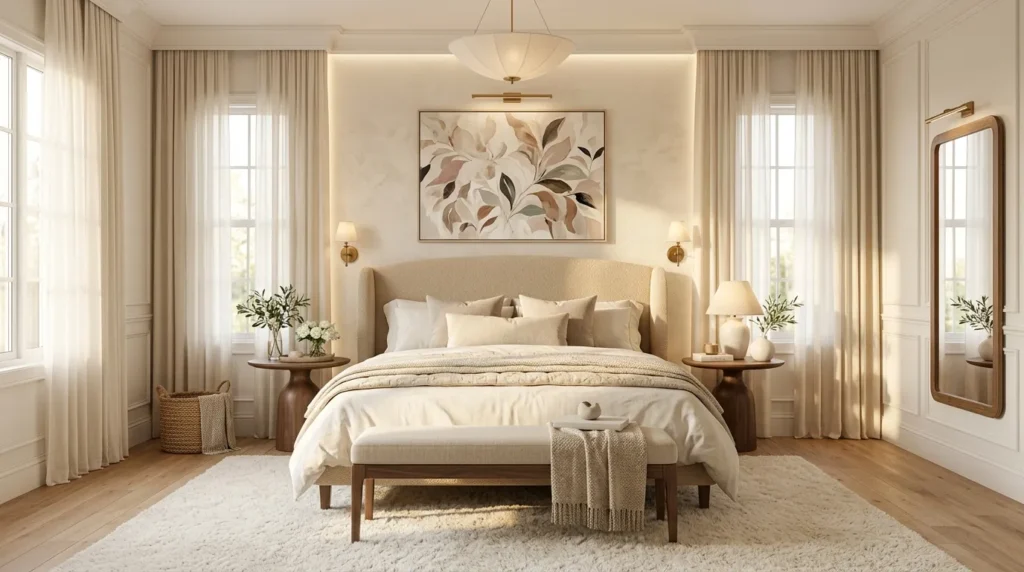
1. Soft Neutral Retreat
Create a calming bedroom with warm neutrals, natural materials, and layered bedding.
2. Romantic Canopy Bed
Add softness and visual drama with flowing fabric and delicate details.
3. Cozy Cottage Layers
Combine vintage-inspired touches, floral textiles, and comfortable textures.
4. Moody Bedroom Glow
Use deeper colors and warm lighting to create an intimate atmosphere.
5. Dreamy Floral Details
Bring softness and personality into the bedroom with understated botanical patterns.
6. Warm Boho Sanctuary
Layer natural fibers, relaxed textiles, and greenery for a collected look.
7. Cloud-Like Bedding
Make the bed the centerpiece with oversized layers and plush textures.
8. Vintage Romantic Charm
Mix antique-inspired furniture with delicate decor and warm finishes.
9. Minimal Dreamy Escape
Keep the room visually simple while using texture and lighting to maintain warmth.
10. Fairy Light Ambience
Use subtle decorative lighting to create a magical evening atmosphere.
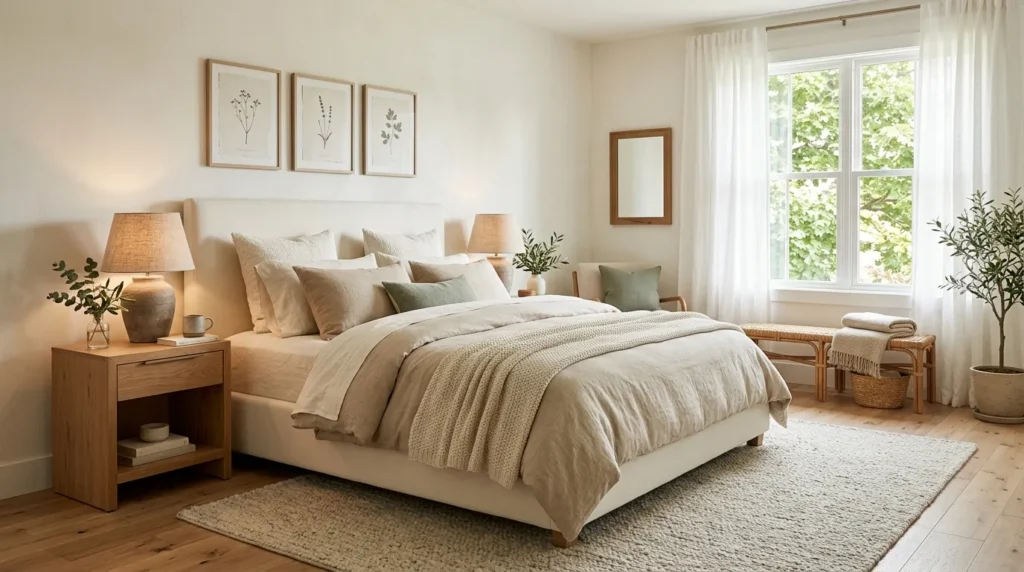
1. Soft Neutral Retreat
Quick Benefits
- Creates a calm visual atmosphere
- Works with many decorating styles
- Makes small rooms feel lighter
- Easy to update seasonally
- Emphasizes texture
Why It Works
Warm neutral colors can make a bedroom feel peaceful without making it feel stark.
Instead of relying on pure white, combine shades such as ivory, cream, oatmeal, beige, warm taupe, and soft brown.
The room gains interest through texture rather than strong color contrast.
This approach works particularly well when you want a bedroom that feels sophisticated but still comfortable.
The bed becomes the main focal point, while natural wood, woven materials, and soft textiles prevent the neutral palette from becoming flat.
How To Style It
Start with warm white or creamy walls if you’re able to paint.
Choose bedding in ivory, beige, or oatmeal.
Layer a quilt or coverlet beneath a larger duvet or comforter, then add two or three different pillow textures.
A natural wood nightstand can add warmth.
Place a ceramic lamp or linen-shaded table lamp beside the bed.
Finish with a soft area rug underneath or beside the bed.
Keep decorative accessories limited to a few meaningful pieces.
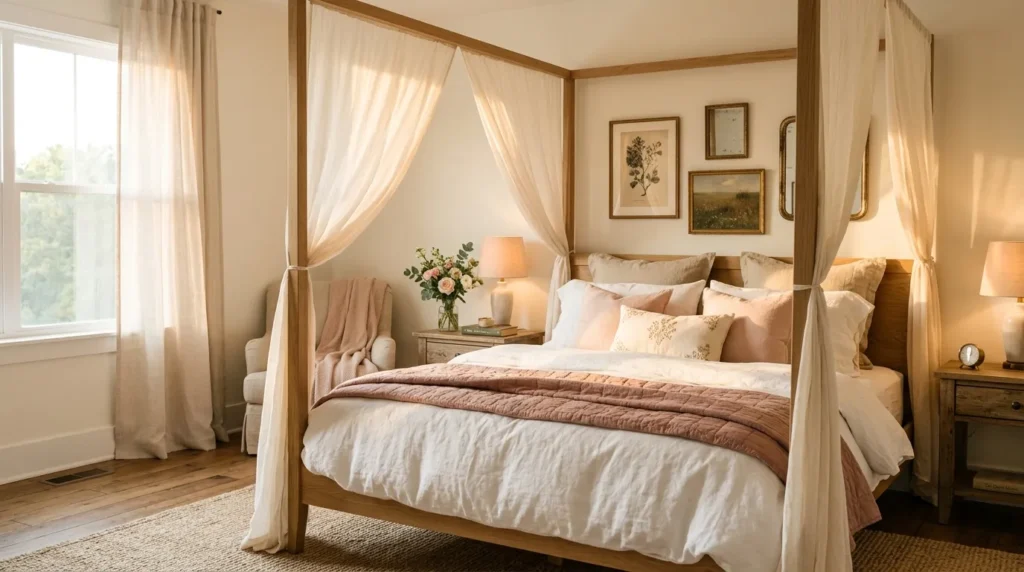
2. Romantic Canopy Bed
Quick Benefits
- Creates a strong focal point
- Adds softness
- Makes the bed feel special
- Works with romantic decor
- Adds vertical interest
Why It Works
A canopy bed instantly changes the proportions of a bedroom by drawing the eye upward.
You don’t need an elaborate four-poster frame to achieve the feeling.
A simple canopy structure with lightweight curtains can create an airy, romantic atmosphere.
The key is keeping the fabric soft and relaxed rather than making it feel heavy.
How To Style It
Choose a simple wood or metal canopy frame.
Use sheer white, cream, or soft beige fabric.
Let the curtains hang naturally instead of arranging them too perfectly.
Pair the bed with soft cotton or linen bedding.
Add small bedside lamps with warm bulbs.
A simple floral arrangement, vintage mirror, or delicate artwork can reinforce the romantic mood.
For a smaller bedroom, avoid overly heavy canopy fabric because it can visually reduce the space.
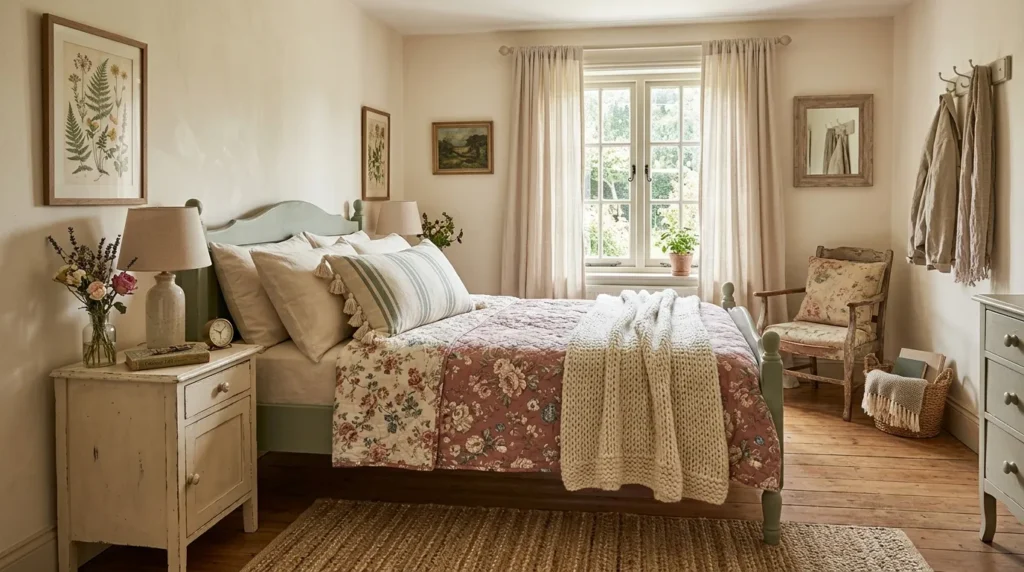
3. Cozy Cottage Layers
Quick Benefits
- Feels warm and lived-in
- Works beautifully with vintage pieces
- Adds personality
- Creates visual texture
- Easy to personalize
Why It Works
Cottage-inspired bedrooms feel dreamy because they don’t rely on perfect coordination.
Instead, they combine comfortable textiles, gentle patterns, aged finishes, and personal details.
A floral pillow might sit beside a striped throw.
A vintage-style bedside table can work with a simple modern lamp.
The result feels collected over time rather than purchased as one matching set.
How To Style It
Use a soft neutral or muted pastel foundation.
Add floral bedding or a patterned accent pillow.
Choose a wooden headboard or painted furniture with a slightly aged appearance.
Layer a knitted throw across the foot of the bed.
Add framed botanical prints or small artwork.
Use a woven basket for extra blankets.
Avoid using too many competing patterns. Choose one main pattern and let the rest remain relatively quiet.
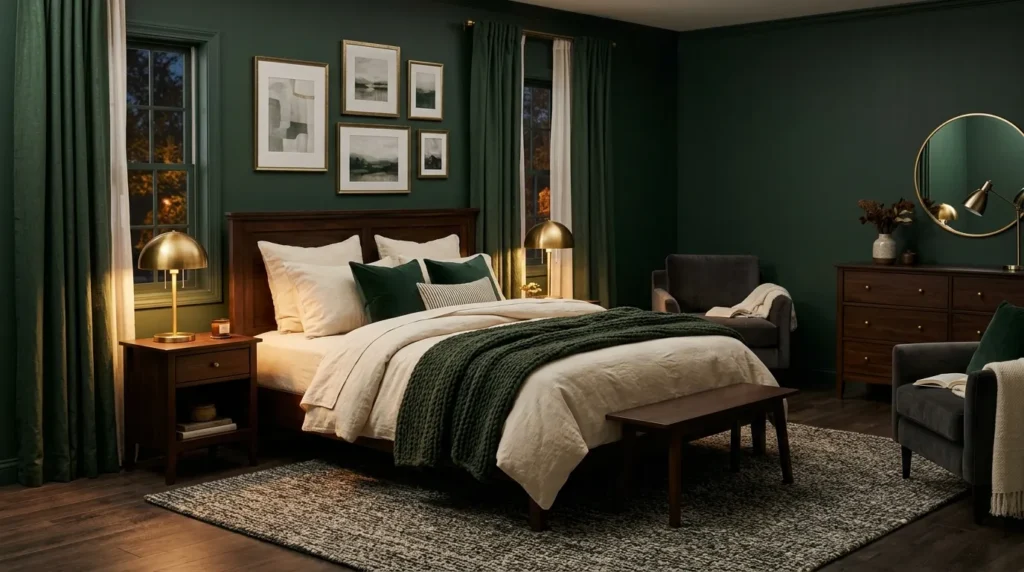
4. Moody Bedroom Glow
Quick Benefits
- Creates an intimate atmosphere
- Works especially well at night
- Adds visual depth
- Makes warm lighting stand out
- Gives the bedroom personality
Why It Works
A dreamy bedroom doesn’t have to be pale.
Deep green, charcoal, navy, chocolate brown, muted burgundy, and other rich tones can create a cozy environment.
The secret is balancing darker surfaces with warm lighting and tactile materials.
Instead of making the room feel gloomy, the darker palette can create a cocoon-like effect.
How To Style It
Choose one deeper wall color or use darker bedding.
Pair it with warm wood furniture and cream-colored textiles.
Use bedside lamps with warm-toned bulbs rather than relying entirely on bright ceiling lights.
Add brass, antique gold, or aged metal accents sparingly.
A textured rug can soften the room.
Keep window treatments substantial enough to make the space feel finished while still allowing appropriate daytime light.
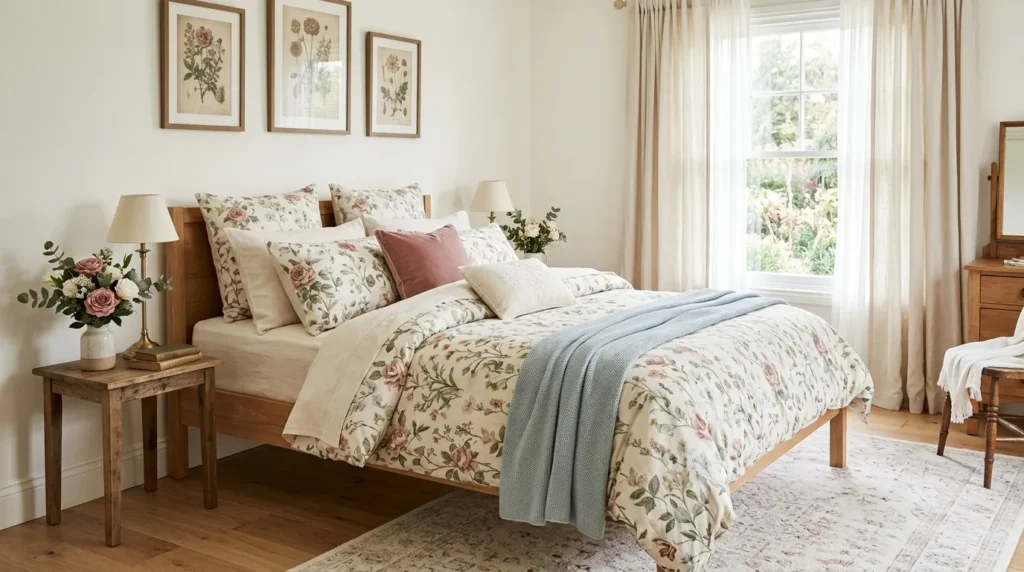
5. Dreamy Floral Details
Quick Benefits
- Adds softness
- Introduces gentle color
- Works with vintage and modern rooms
- Creates a romantic feel
- Easy to change
Why It Works
Floral patterns can instantly make a bedroom feel more expressive.
The trick is choosing the right scale and color palette.
Instead of covering every surface with flowers, use one prominent floral element and keep surrounding pieces quieter.
A floral duvet, upholstered headboard, wallpaper accent, or oversized artwork can become the focal point.
How To Style It
Choose a floral pattern in muted tones rather than several bright colors.
Pair patterned bedding with solid-colored sheets and pillows.
If using floral wallpaper, consider keeping furniture simple.
Add a small vase of seasonal flowers or greenery.
Vintage-style lamps and wooden furniture work particularly well with traditional botanical patterns.
For a contemporary bedroom, choose oversized botanical artwork instead of multiple small floral prints.
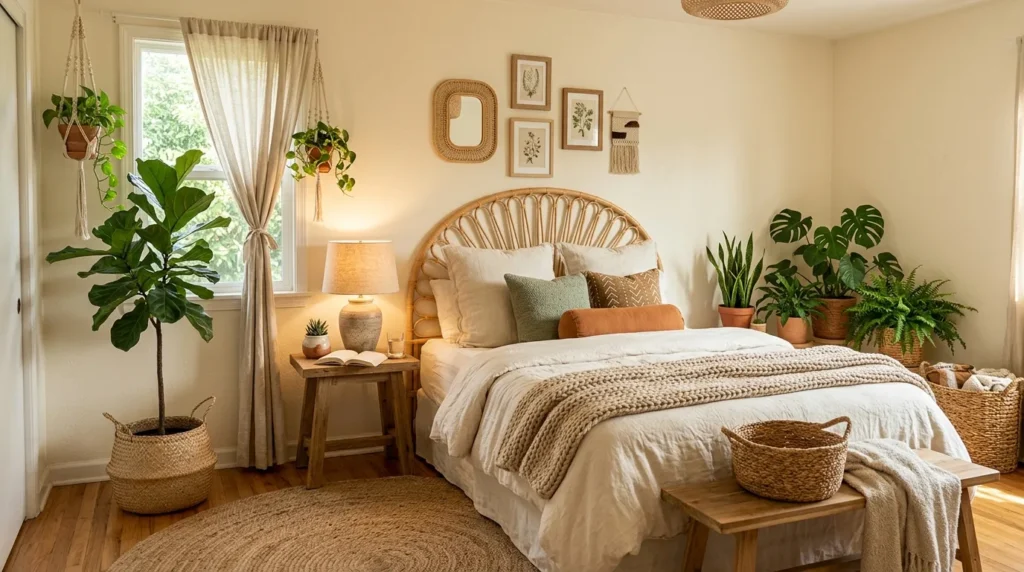
6. Warm Boho Sanctuary
Quick Benefits
- Creates a relaxed atmosphere
- Adds natural texture
- Works with houseplants
- Feels collected rather than formal
- Easy to personalize
Why It Works
Boho-inspired bedrooms are particularly effective when you want the room to feel relaxed and layered.
Natural materials provide much of the visual interest.
Think woven baskets, rattan, wood, cotton, linen, jute, and textured ceramics.
The look doesn’t require a huge number of accessories.
A few larger pieces usually work better than lots of small decorations.
How To Style It
Start with a neutral bedding palette.
Add a woven headboard or natural wood bed frame.
Place a jute or textured rug under the bed.
Use woven baskets for blankets and clothing.
Add one or two easy-care plants where lighting conditions allow.
Choose artwork with earthy tones.
Finish with warm lamps and soft textiles.
Keep walking paths clear so the room remains practical.
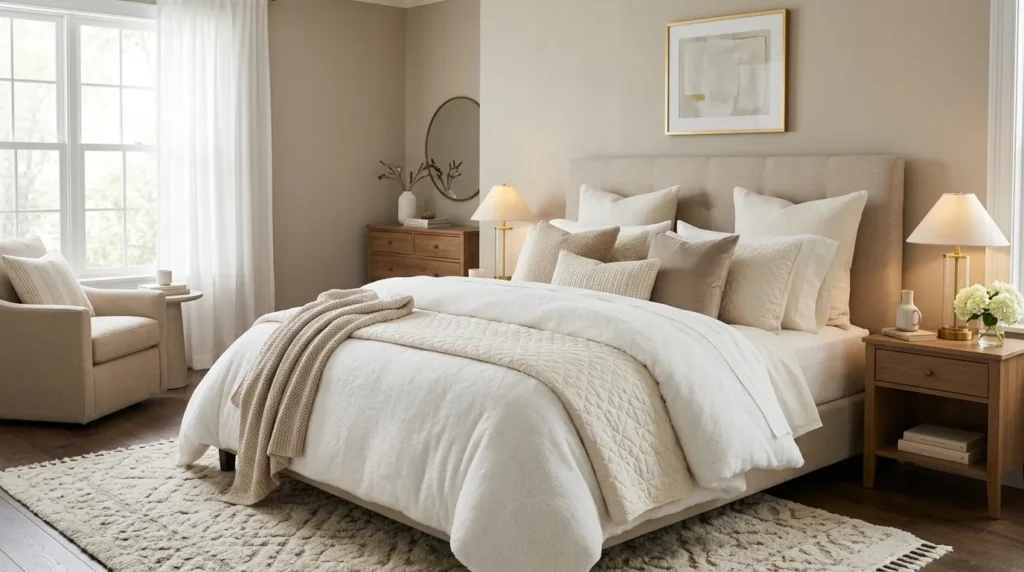
7. Cloud-Like Bedding
Quick Benefits
- Makes the bed feel inviting
- Adds luxurious texture
- Creates a strong focal point
- Works with neutral rooms
- Easy to refresh
Why It Works
In a dreamy bedroom, the bed is often the most important visual element.
You don’t need expensive bedding to create a plush appearance.
Layering is what makes the difference.
A fitted sheet, top sheet if desired, lightweight quilt, duvet, throw, and several appropriately sized pillows can create dimension.
The key is choosing breathable, comfortable materials rather than adding layers simply for appearance.
How To Style It
Start with a simple neutral base.
Add a quilt or coverlet.
Place a duvet or comforter over it and fold the upper section back slightly.
Use pillows in different sizes and textures.
Add one folded throw near the foot of the bed.
Avoid excessive decorative pillows if they make the bed inconvenient to use.
Choose washable, durable fabrics that fit your lifestyle.
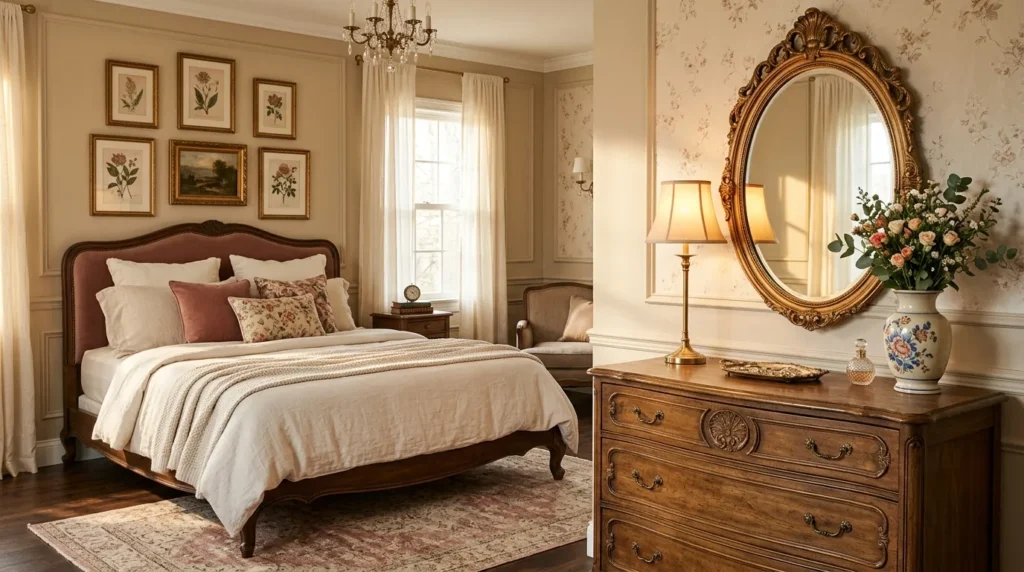
8. Vintage Romantic Charm
Quick Benefits
- Adds character
- Creates a timeless feeling
- Works with antique-inspired furniture
- Makes the bedroom personal
- Adds visual detail
Why It Works
Vintage-inspired pieces can make a bedroom feel as though it has a story.
A carved wooden headboard, antique-style mirror, small dresser, or vintage lamp can become a memorable focal point.
You don’t need everything to be vintage.
In fact, mixing old and new often makes the room feel more natural.
How To Style It
Choose one vintage-inspired statement piece.
A wooden dresser or ornate mirror can work beautifully.
Pair it with simple modern bedding so the room doesn’t feel like a period display.
Add framed artwork, a ceramic vase, or a small stack of books.
Use warm metals sparingly.
Keep the color palette cohesive by repeating a few tones throughout the room.
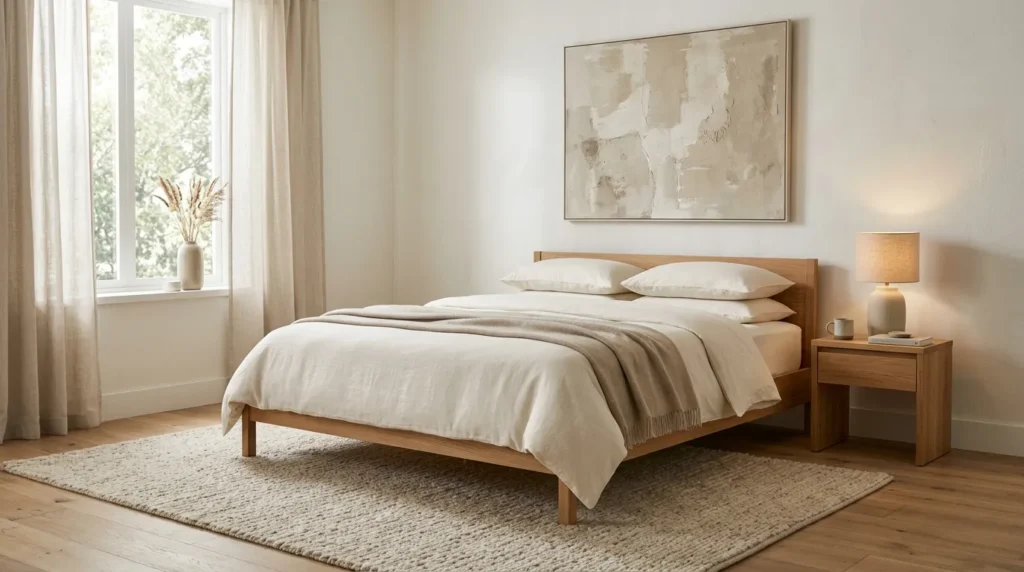
9. Minimal Dreamy Escape
Quick Benefits
- Reduces visual distractions
- Makes cleaning easier
- Works well in small rooms
- Highlights quality pieces
- Creates a calm appearance
Why It Works
Minimalism and dreaminess can absolutely work together.
The key is using texture instead of excess decoration.
A simple bed, soft bedding, natural wood, one large artwork piece, and carefully chosen lighting can create plenty of atmosphere.
This approach is especially useful for smaller bedrooms where too many decorative objects can make the room feel crowded.
How To Style It
Choose a limited color palette.
Keep furniture streamlined.
Use one or two substantial pieces of artwork rather than filling every wall.
Add a textured rug.
Choose bedding with visible fabric variation, such as linen or quilted cotton.
Use a warm bedside lamp.
Leave some surfaces intentionally empty.
That empty space is part of the design.
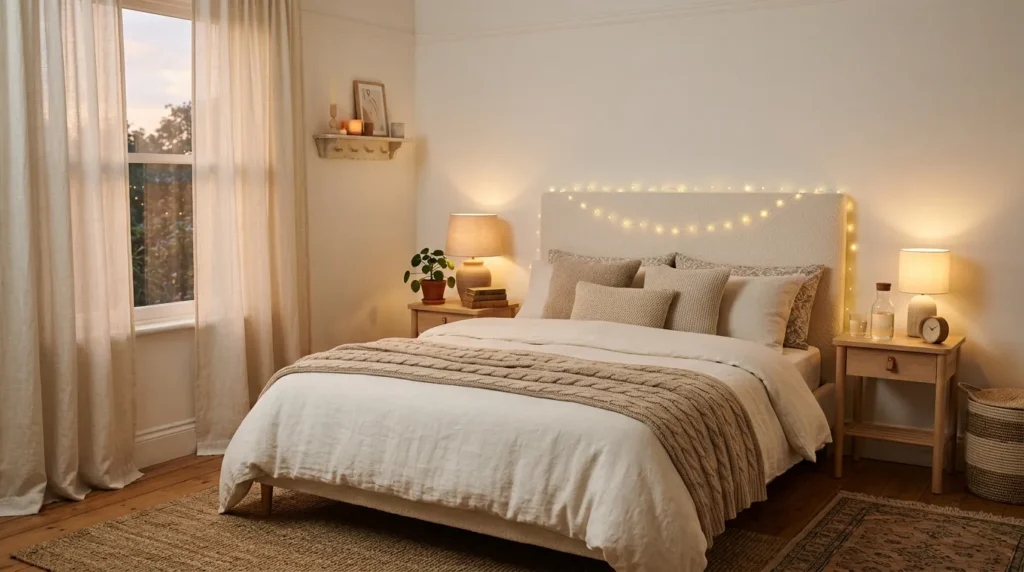
10. Fairy Light Ambience
Quick Benefits
- Creates soft evening lighting
- Adds visual charm
- Works with many aesthetics
- Inexpensive to add
- Makes the bedroom feel magical
Why It Works
Small decorative lights can completely change the atmosphere of a bedroom after sunset.
Rather than using harsh overhead lighting, several low-level sources create a softer environment.
Fairy lights can be particularly effective around a headboard, window, canopy, shelf, or wall display.
Always use products intended for the location and follow the manufacturer’s safety instructions.
How To Style It
Choose warm-white lights rather than overly bright or cool-toned lighting.
Run a subtle strand around a headboard or along a designated decorative area.
Combine fairy lights with bedside lamps rather than using them as the only light source.
Keep cords organized and away from areas where they could become tangled or damaged.
For a more sophisticated look, combine small decorative lights with linen lampshades and candles where appropriate and safe.
How To Choose a Dreamy Bedroom Color Palette
Color is one of the easiest ways to establish the mood of a bedroom.
For a soft and airy appearance, consider:
- Cream
- Ivory
- Warm white
- Pale beige
- Dusty rose
- Soft sage
- Light blue
For a richer bedroom, try:
- Forest green
- Navy
- Chocolate brown
- Charcoal
- Muted burgundy
- Deep taupe
You don’t need to use only one color.
Choose a primary shade, a supporting neutral, and one or two subtle accent colors.
This keeps the room cohesive while still giving it personality.
How To Make a Bedroom Feel Dreamier
If you already like your bedroom but want it to feel more atmospheric, focus on the details that affect how the room feels rather than simply adding more decor.
Layer the Bedding
Mix textures and slightly different neutral shades.
Improve the Lighting
Use several warm light sources at different heights.
Add Soft Textiles
A rug, curtains, upholstered headboard, or throw can soften hard surfaces.
Bring in Natural Materials
Wood, rattan, woven fibers, cotton, and linen can make the room feel warmer.
Reduce Visual Clutter
A clear nightstand and organized surfaces can make the entire room feel calmer.
Add Personal Details
Photographs, artwork, books, and meaningful objects prevent the room from feeling like a generic showroom.
Dreamy Bedroom Lighting Tips
Lighting deserves special attention because it affects the bedroom after dark.
Instead of relying entirely on one ceiling fixture, create layers.
Use:
- Bedside lamps
- Floor lamps
- Wall sconces
- Decorative string lights
- Accent lamps
Warm-toned bulbs can create a softer evening atmosphere.
If you read in bed, make sure your bedside lighting provides enough useful illumination rather than choosing a lamp based only on appearance.
Dimmers can also give you more control when compatible with your fixtures and electrical setup.
How To Style a Dreamy Bedroom on a Budget
You don’t need to replace every piece of furniture.
Start with textiles.
New pillow covers, a throw blanket, curtains, or a washable rug can significantly change the appearance of the room.
Next, improve lighting.
A warm bedside lamp can have a bigger impact than several small decorative purchases.
Then rearrange furniture if the layout allows.
Move the bed to create a stronger focal point, improve walking space, or make better use of natural light.
Finally, edit your decor.
Sometimes removing three or four unnecessary objects creates more impact than adding something new.
Common Dreamy Bedroom Decorating Mistakes
Using too many colors: A limited palette usually feels more cohesive.
Overloading the bed: Too many pillows and layers can make everyday use frustrating.
Relying on overhead lighting: Multiple light sources create a softer atmosphere.
Adding too much small decor: A few meaningful pieces usually have more visual impact.
Ignoring texture: Neutral rooms can feel flat without variation in fabric and materials.
Choosing appearance over comfort: The bedroom should remain practical.
Forgetting storage: Clutter can quickly undermine a carefully styled aesthetic.
Copying one style completely: Borrow elements that fit your personality rather than recreating a showroom.
FAQ
How can I make my bedroom look dreamy?
Focus on soft lighting, layered bedding, calming colors, tactile fabrics, and a limited amount of meaningful decor. Warm lamps, linen or cotton bedding, curtains, rugs, and natural materials can create a comfortable atmosphere without requiring a major renovation. Keeping visible clutter under control also makes the room feel more peaceful.
What colors make a bedroom feel dreamy?
Soft neutrals such as cream, ivory, beige, oatmeal, and warm white are versatile choices. Muted sage, dusty rose, pale blue, and lavender can add subtle color. If you prefer a moodier room, deep green, navy, charcoal, and chocolate brown can create an intimate atmosphere when balanced with warm lighting and softer textiles.
How do I make my bed look aesthetic and cozy?
Use layers with different textures rather than relying on a large number of decorative pillows. Start with comfortable sheets, add a quilt or coverlet, then layer a duvet or comforter and a folded throw. Choose coordinating but not perfectly matching colors. The bed should still be comfortable and easy to use every day.
What lighting is best for a cozy bedroom?
A combination of warm bedside lamps, floor or wall lighting, and subtle accent lights usually works better than a single bright overhead fixture. Choose lighting based on both atmosphere and function. If you read in bed, make sure your bedside lamp provides sufficient task lighting while maintaining the warm aesthetic you want.
How can I create a dreamy bedroom on a budget?
Start with the areas that have the biggest visual impact. Refresh the bedding, add a textured throw, improve bedside lighting, rearrange existing furniture, and remove unnecessary clutter. You can also change pillow covers, add inexpensive artwork, or introduce a plant. Small changes can alter the room’s atmosphere without replacing major furniture.
What makes a bedroom feel luxurious without being expensive?
Texture and proportion often matter more than price. Layer comfortable bedding, use coordinated colors, choose warm lighting, keep surfaces uncluttered, and add natural materials such as wood and woven fibers. One substantial artwork piece or attractive lamp can also create more impact than many inexpensive decorative objects.
Can a small bedroom have a dreamy aesthetic?
Absolutely. In a small bedroom, focus on a limited palette, multifunctional furniture, vertical storage, and soft lighting. Avoid filling every surface with decor. A well-made bed, one attractive light fixture, a small rug, and a few carefully selected accessories can create plenty of atmosphere without making the room feel crowded.
Conclusion
Creating a dreamy bedroom doesn’t require a complete makeover.
The most effective changes are often the ones that influence how the room feels rather than simply how much decoration it contains.
Start with your bed.
Layer comfortable bedding, add a soft throw, and choose textures that make you want to settle in.
Then look at your lighting. Replace harsh evening illumination with warmer, lower-level sources where practical.
From there, choose a color palette that matches the mood you want. Cream and beige can create a light retreat, while deep green or navy can make the room feel more intimate.
Add natural materials, a few meaningful decorative pieces, and perhaps some greenery.
Most importantly, leave room for everyday life.
A beautiful bedroom shouldn’t require an hour of styling every night before you can go to sleep. The best aesthetic bedrooms balance visual appeal with comfort, storage, and practicality.
You can start with one corner, one wall, or simply the bed.
Choose the elements that make you feel most relaxed, build around them gradually, and create a bedroom that feels like your own private retreat.
Related Articles
- 10 Elegant Aesthetic Bedroom Ideas You’ll Want to Copy
- 10 Cozy Bedroom Ideas for a Warm and Relaxing Space
- 10 Small Bedroom Ideas That Make the Most of Limited Space
- 10 Bedroom Wall Decor Ideas Using Large Mirrors
- 10 Modern Bedroom Ideas With Hotel-Inspired Decor