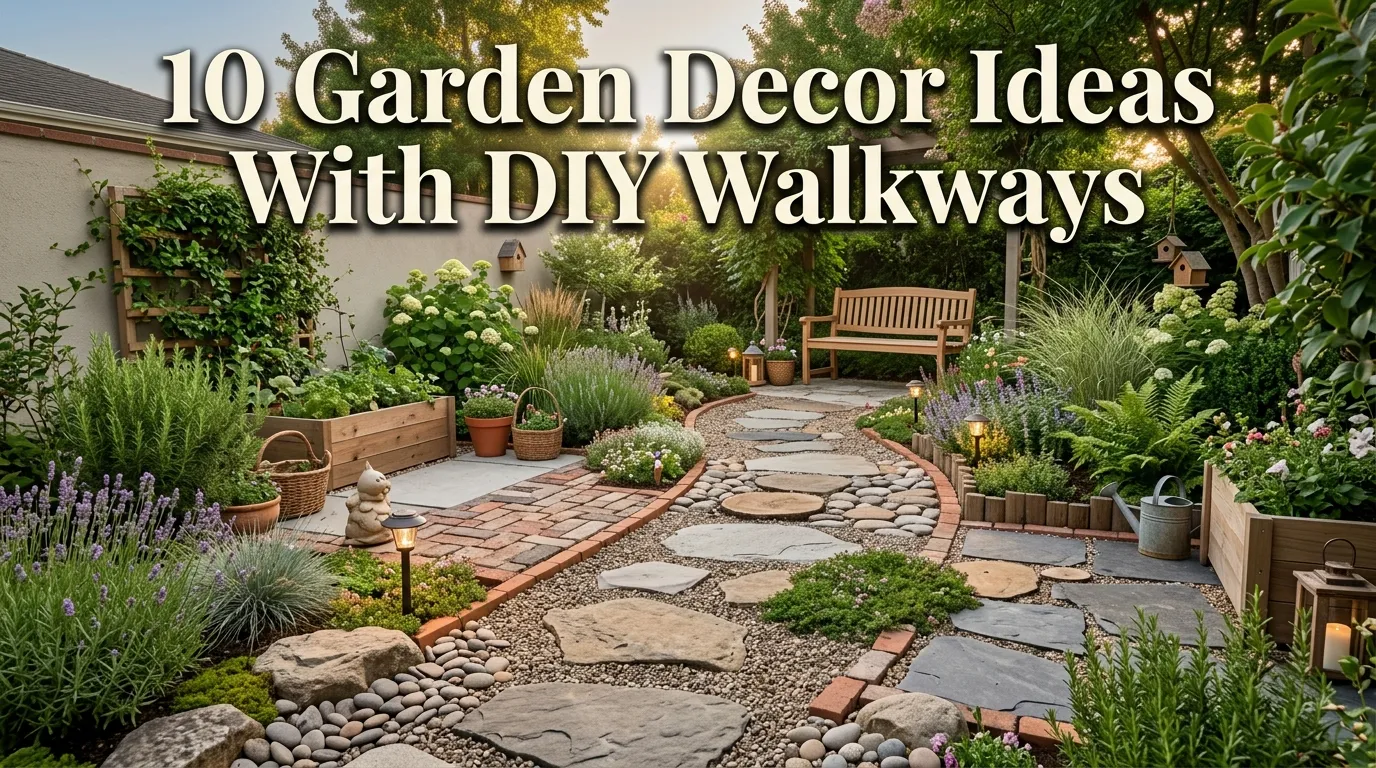
10 Garden Decor Ideas With DIY Walkways
A garden walkway can completely change the way an outdoor space feels. Instead of simply connecting the patio to a flower bed or leading visitors toward the backyard, a thoughtfully designed path can become part of the garden’s decoration.
The best walkways don’t necessarily require expensive landscaping materials or professional installation. With the right layout, affordable materials, and a little weekend effort, you can create a path that feels intentional and fits naturally into the rest of your yard.
I’ve noticed that the most successful DIY garden paths usually have two things in common: they follow a practical route and they look as though they belong in the landscape. A winding path through planting beds can feel relaxed and informal, while straight stepping stones can give a small garden a cleaner, more contemporary appearance.
Materials make a major difference, too. Gravel creates a casual cottage-garden feel. Flat stepping stones look simple and natural. Brick can bring traditional character, while wood slices and reclaimed materials can create a more rustic atmosphere.
You can also use the walkway itself as a decorating opportunity. Low-growing plants, solar lights, edging, mulch, containers, and decorative stones can turn an ordinary path into a destination.
Before starting, think about how people will actually use the garden. A beautiful path isn’t helpful if it becomes slippery, uneven, difficult to maintain, or too narrow for comfortable walking.
These ideas combine decorative appeal with practical considerations so you can create a garden path that looks Pinterest-worthy while still working for everyday outdoor life.
Whether you’re updating a small backyard, creating a cottage-style garden, or simply looking for an inexpensive weekend project, these DIY walkway ideas offer plenty of inspiration.
Table of Contents
1. Stepping Stone Path
Create an informal garden walkway with individual stones surrounded by greenery.
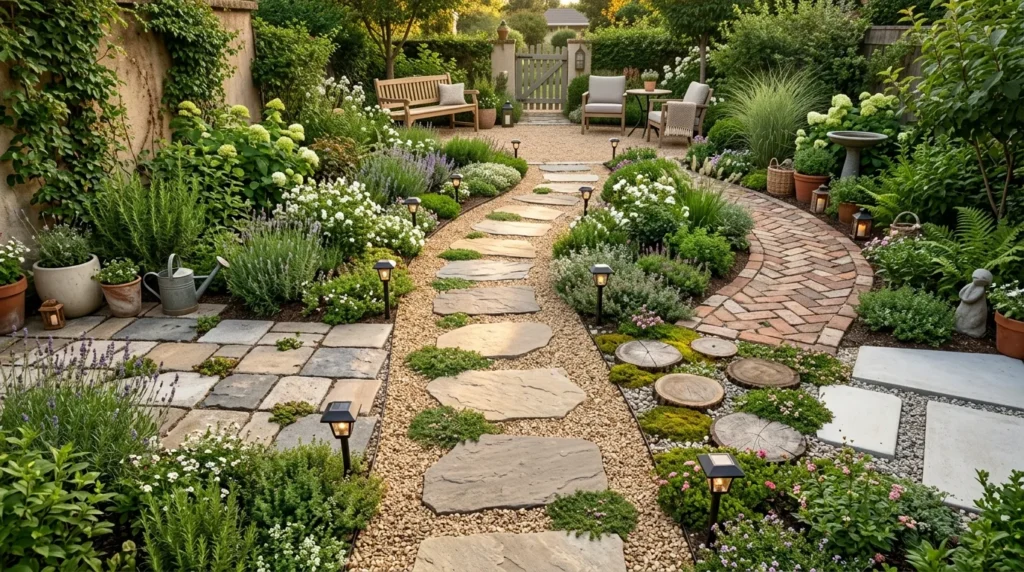
2. Gravel Garden Trail
Use affordable gravel to build a relaxed, low-key garden path.
3. Brick Border Walkway
Frame a simple path with brick for traditional garden character.
4. Curved Mulch Path
Add movement to the landscape with a gently winding walkway.
5. Wood Slice Walkway
Bring rustic character outdoors with natural-looking wood stepping pieces.
6. Paver And Gravel Path
Combine structured pavers with loose gravel for a practical modern design.
7. Cottage Garden Path
Surround a simple walkway with abundant flowers and soft planting.
8. Solar-Lit Walkway
Use low-level lighting to make the path attractive after sunset.
9. Container-Lined Path
Decorate the walkway with strategically placed pots and planters.
10. Natural Stone Path
Create an organic garden feature with irregular stone and surrounding greenery.
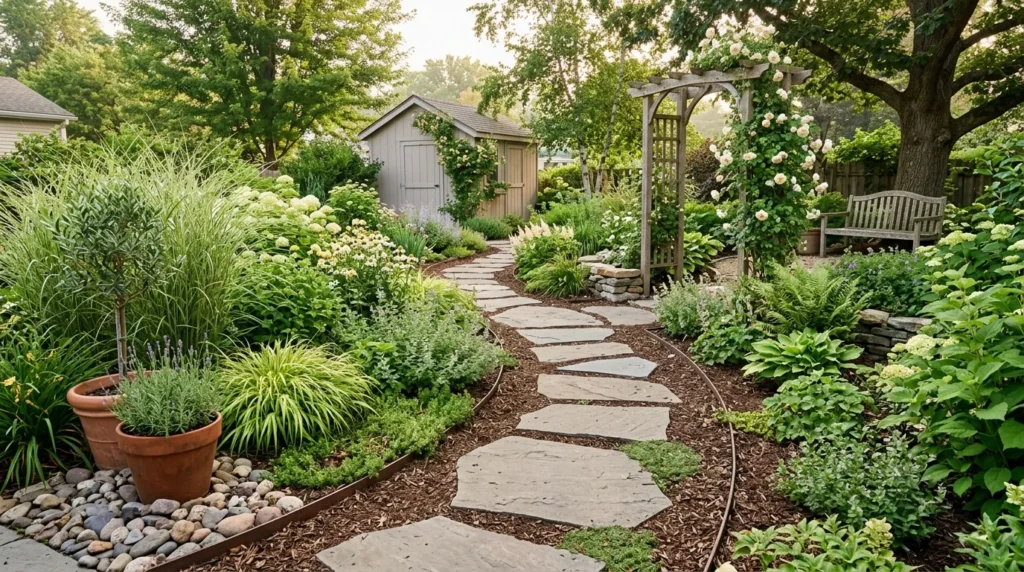
1. Stepping Stone Path
Quick Benefits
- Simple DIY approach
- Works in small gardens
- Easy to customize
- Blends with planting beds
- Creates a relaxed appearance
Why It Works
Stepping stones are one of the easiest ways to add a defined walkway without covering a large portion of the garden.
Instead of creating a continuous surface, individual stones allow grass, ground cover, gravel, or mulch to remain visible between each piece.
This makes the path feel integrated with the landscape rather than imposed on top of it.
The spacing is important. Stones should be positioned with comfortable walking steps in mind, rather than being placed purely for appearance.
How To Style It
Choose stones with relatively flat walking surfaces.
Mark the route before placing them.
Set each stone securely so it doesn’t wobble under normal foot traffic.
Surround the stones with gravel, mulch, low-growing plants, or lawn.
For a natural garden, choose irregular stone shapes.
For a contemporary yard, use large square or rectangular pavers with consistent spacing.
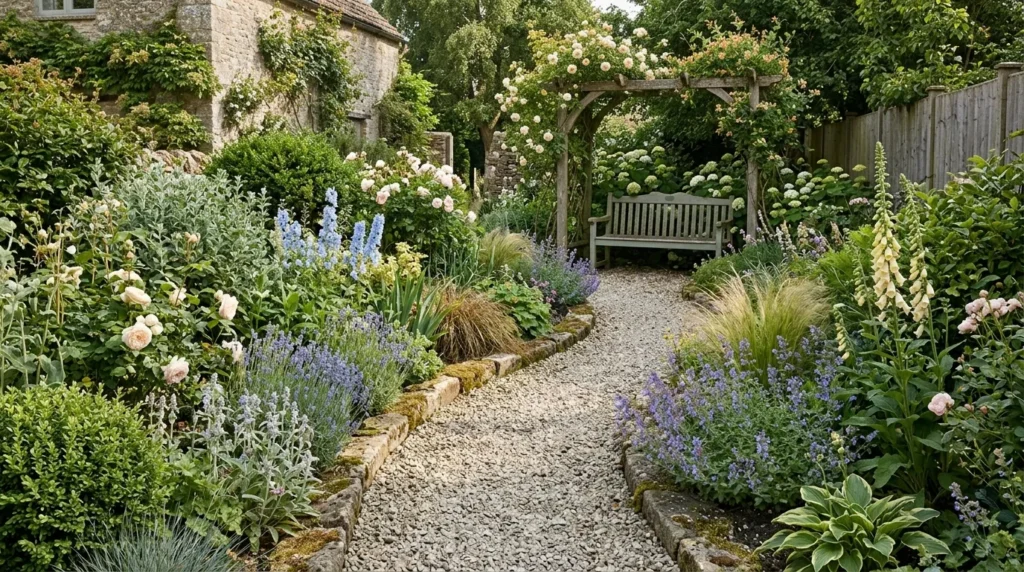
2. Gravel Garden Trail
Quick Benefits
- Relatively affordable
- Easy to shape
- Works with curved layouts
- Complements plants
- Creates a casual atmosphere
Why It Works
Gravel is a practical choice when you want a garden walkway with a relaxed, informal appearance.
It works particularly well in cottage gardens, Mediterranean-inspired landscapes, and natural backyard designs.
Because gravel is available in different colors and sizes, you can coordinate the walkway with your home’s exterior, existing stonework, or garden beds.
A defined edge is useful because it helps keep the gravel contained.
How To Style It
Plan the walkway first and remove unwanted vegetation.
Prepare a stable, appropriately graded base suitable for the path.
Use landscape edging where appropriate.
Choose a gravel size that is comfortable for walking and suitable for the intended use.
Add stepping stones if you want a more structured surface.
Plant low-growing greenery along the edges for a softer transition.
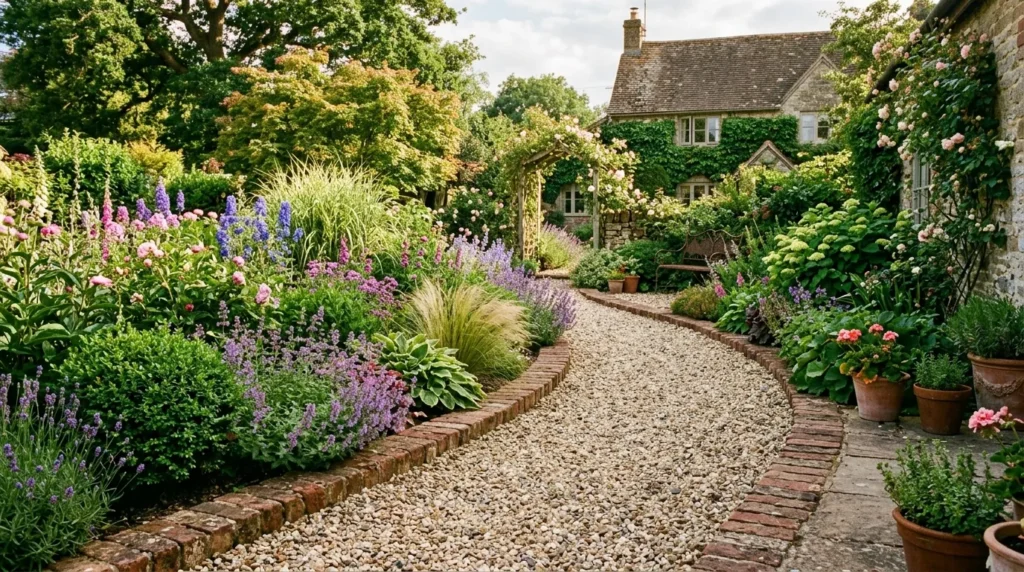
3. Brick Border Walkway
Quick Benefits
- Adds traditional character
- Defines the garden path
- Works with many landscapes
- Creates a finished edge
- Easy to coordinate with brick homes
Why It Works
Brick has a timeless quality that works particularly well in gardens with traditional architecture.
You don’t necessarily need to build the entire walkway from brick.
Using brick as an edging material can create definition around gravel, mulch, or pavers while keeping material costs and installation more manageable.
The warm tones also pair naturally with green foliage.
How To Style It
Use reclaimed-looking brick for a weathered garden appearance.
Create straight edges for formal gardens.
Use gentle curves for cottage-style landscapes.
Fill the center with gravel, compacted suitable path material, or another stable surface.
Repeat brick elsewhere in the garden to create visual continuity.
Keep the surrounding plants slightly informal for a relaxed look.
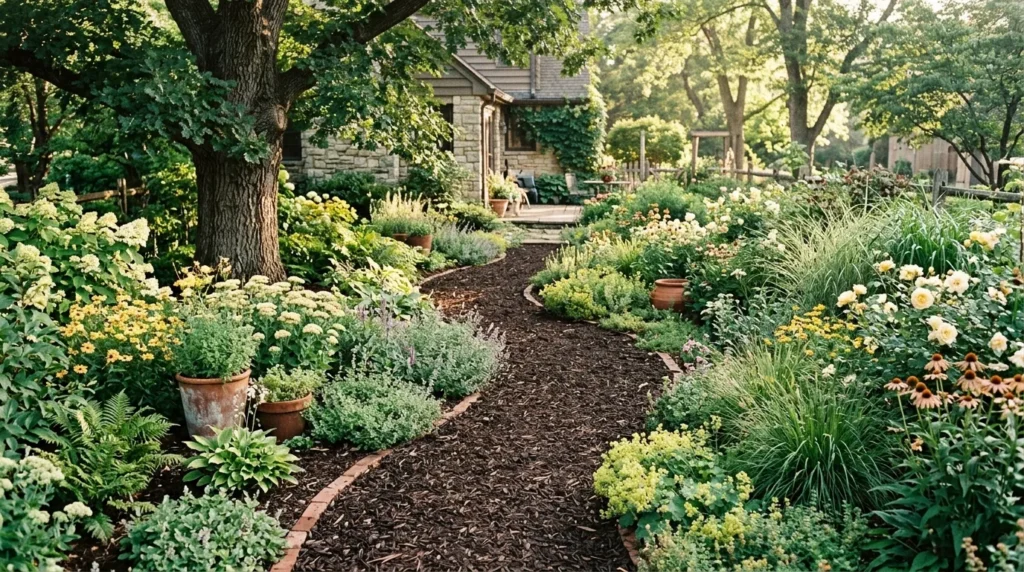
4. Curved Mulch Path
Quick Benefits
- Budget-friendly appearance
- Softens hard landscaping
- Works in informal gardens
- Easy to shape
- Complements flower beds
Why It Works
A curved path can make a garden feel larger and more interesting because the destination isn’t always immediately visible.
Mulch creates a soft transition between planting beds and the walkway.
It works particularly well around trees, shrubs, and perennial borders.
A curved route also gives you an opportunity to create small visual moments along the journey, such as a bench, birdbath, planter, or flowering shrub.
How To Style It
Mark a gentle curve with a garden hose or rope before digging.
Keep the width comfortable for everyday walking.
Install appropriate edging to help contain the mulch.
Use a consistent mulch material throughout the path.
Add stepping stones if the route receives frequent foot traffic.
Keep plants slightly back from the walking surface to maintain a clear pathway.
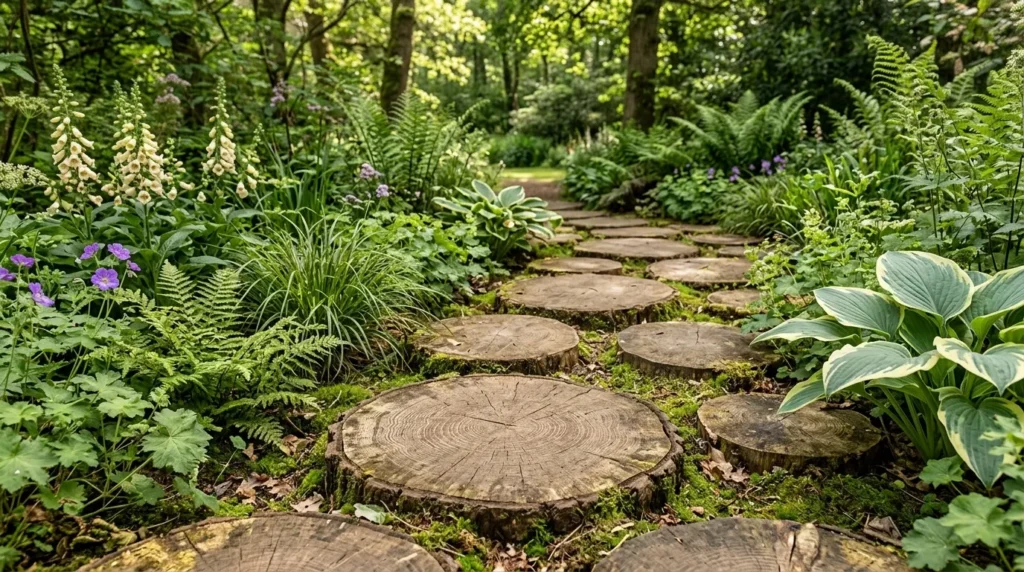
5. Wood Slice Walkway
Quick Benefits
- Rustic appearance
- Natural visual texture
- Works with woodland gardens
- Creates a handmade feel
- Visually distinctive
Why It Works
Wood slices can create an especially charming garden path when paired with natural planting.
The circular shapes add visual rhythm, while the warm wood tones contrast beautifully with green foliage.
However, wood is an organic material and requires more consideration than stone or manufactured pavers.
Outdoor conditions can cause wood to deteriorate, become slippery, or change appearance over time.
How To Style It
Use properly prepared materials suitable for outdoor conditions.
Choose pieces with relatively stable, level surfaces.
Install them securely on an appropriately prepared base.
Leave consistent walking gaps.
Surround the slices with gravel or mulch.
Regularly inspect the path for deterioration and slippery surfaces.
For a longer-lasting walkway, consider manufactured products designed to resemble wood.
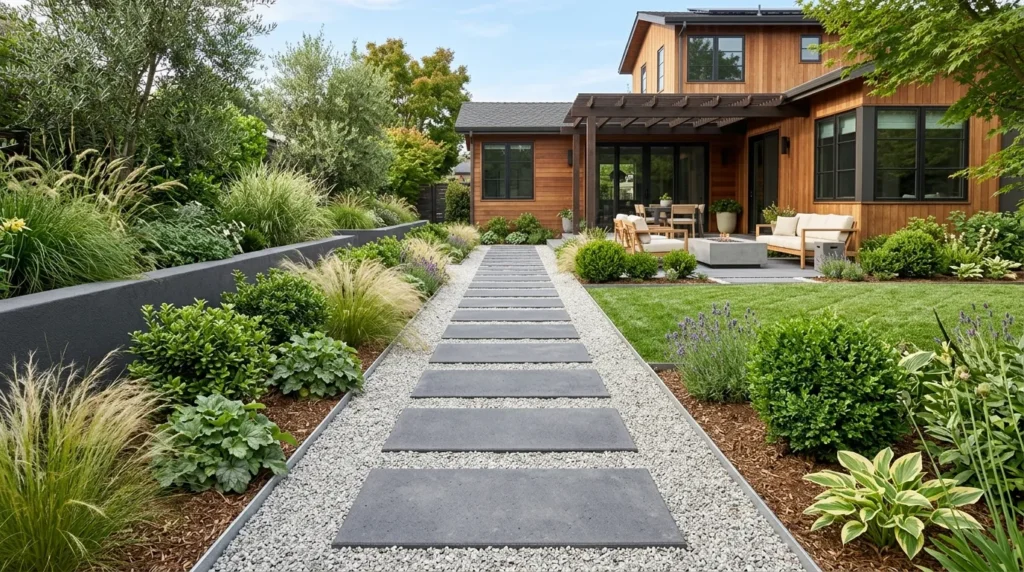
6. Paver And Gravel Path
Quick Benefits
- Combines structure and texture
- Works with modern gardens
- Easy to customize
- Creates visual contrast
- Can define walking areas clearly
Why It Works
Combining pavers with gravel gives you the best of both visual worlds.
The solid pavers establish a clear walking route, while gravel fills the spaces between them and introduces texture.
This approach works particularly well in modern landscapes because the geometric pavers can contrast with softer plants.
How To Style It
Choose large pavers with relatively consistent proportions.
Position them according to comfortable walking patterns.
Use gravel in the spaces between each paver.
Select colors that complement your home’s exterior.
Add simple ornamental grasses along the edges.
For a more minimalist appearance, repeat the same paver material elsewhere in the backyard.
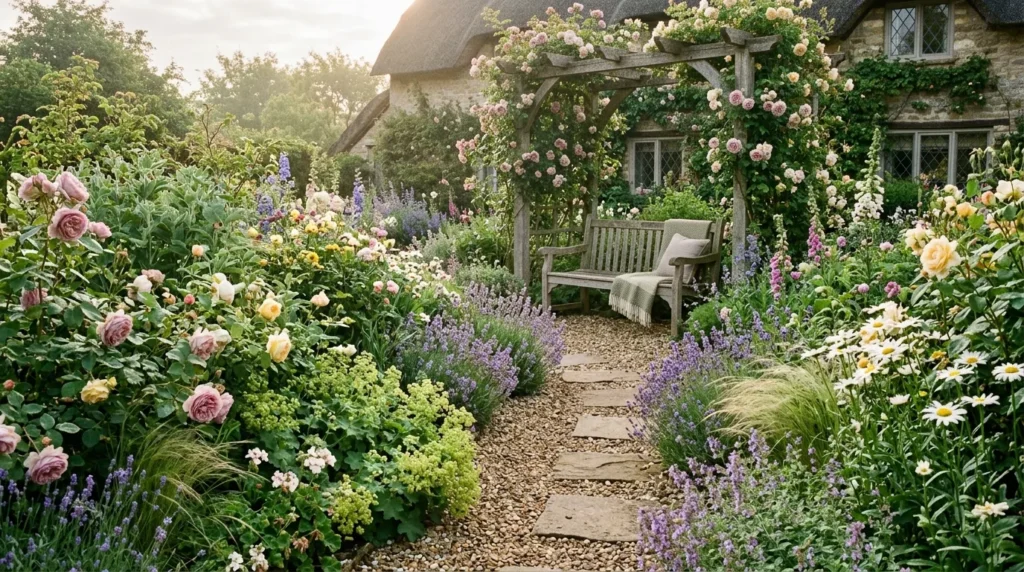
7. Cottage Garden Path
Quick Benefits
- Creates romantic garden character
- Works with flowering plants
- Softens hard edges
- Feels welcoming
- Highly Pinterest-friendly
Why It Works
A cottage garden path doesn’t need to look perfectly symmetrical.
The charm comes from the combination of a simple walking surface and abundant planting.
Flowers can spill visually toward the walkway, while shrubs and grasses create layers around the path.
This style works especially well when you want the garden to feel established and relaxed rather than highly formal.
How To Style It
Use gravel, brick, stepping stones, or another suitable walkway material.
Plant flowers in groups rather than creating a perfectly uniform border.
Mix different heights and textures.
Place taller plants farther from the walking surface.
Add a small bench, vintage-style planter, or birdbath at a stopping point.
Keep enough clear space for comfortable walking.
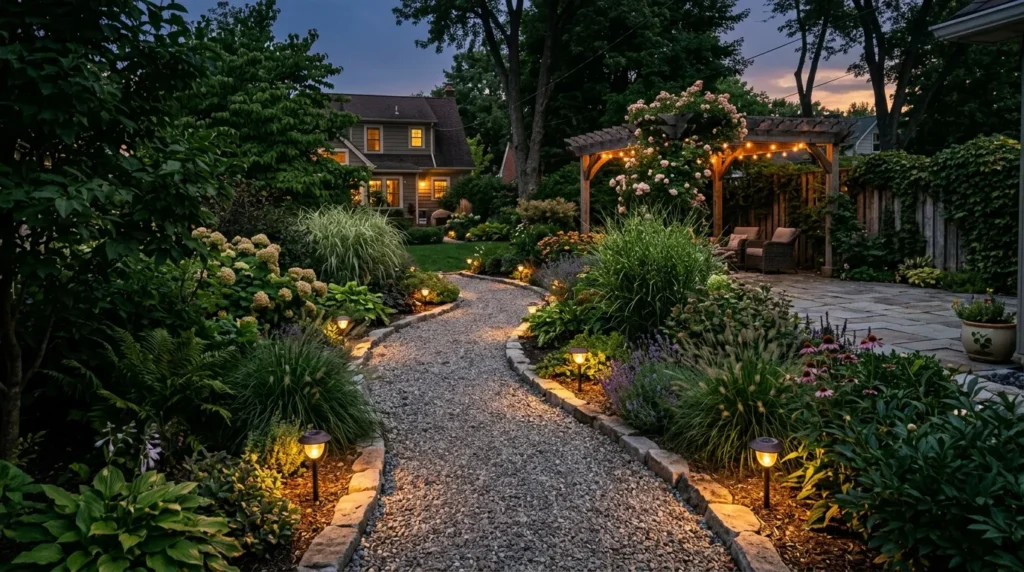
8. Solar-Lit Walkway
Quick Benefits
- Adds evening ambience
- Improves pathway visibility
- Creates decorative points of light
- Easy to update
- Works with many garden styles
Why It Works
A walkway can become just as attractive after sunset as it is during the day.
Small solar path lights can define the route and create a gentle rhythm along the garden.
They are particularly useful where installing hardwired lighting isn’t practical, although their brightness and performance depend on placement, weather, and available sunlight.
Lighting should guide rather than overwhelm the landscape.
How To Style It
Place lights at appropriate intervals along the walkway.
Avoid creating a runway effect by spacing them thoughtfully.
Choose fixtures that complement your garden style.
Use warm-looking illumination for a softer atmosphere.
Keep fixtures clear of plants that could block their light.
Check manufacturer recommendations for placement, charging, and outdoor use.
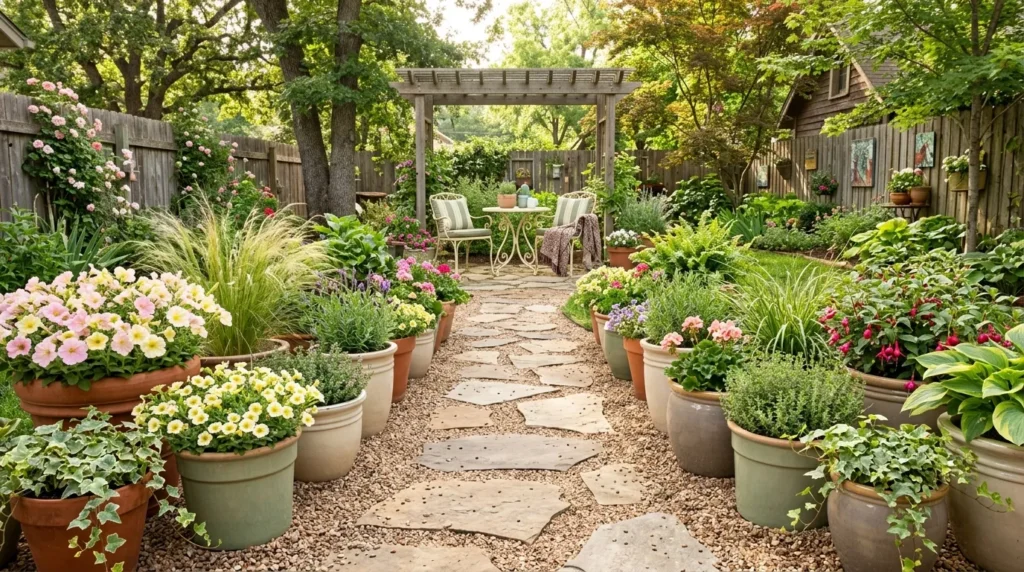
9. Container-Lined Path
Quick Benefits
- Adds color
- Works in small gardens
- Easy to change seasonally
- Creates a welcoming entrance
- Doesn’t require permanent planting
Why It Works
Containers provide a flexible way to decorate a walkway.
They are especially useful when the garden has limited planting space or when you want to change the look throughout the year.
Pots can also add height and color without requiring major landscaping work.
The key is repetition.
A few coordinated containers usually look more intentional than many unrelated pots.
How To Style It
Choose containers that share a color, material, or general style.
Use different plant heights for visual interest.
Place larger containers at wider points along the walkway.
Keep pots outside the walking area.
Choose plants based on the available sunlight and local growing conditions.
Repeat one or two plant varieties to create continuity.
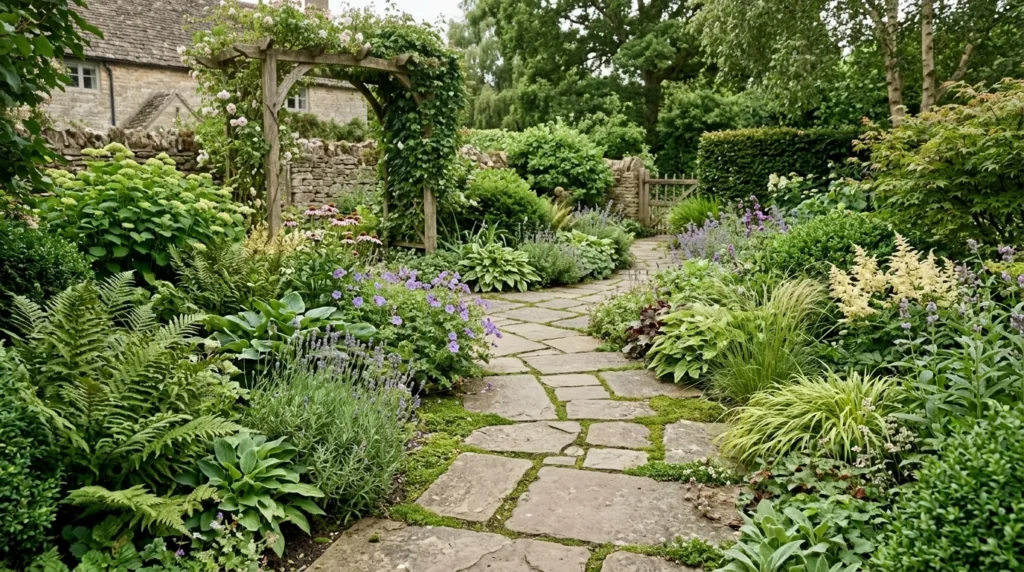
10. Natural Stone Path
Quick Benefits
- Creates an organic appearance
- Works with mature gardens
- Adds natural texture
- Complements greenery
- Can become a long-term landscape feature
Why It Works
Natural stone has a timeless quality that allows a garden path to blend with the surrounding landscape.
Irregular stones can create a relaxed, organic walkway, while more consistently cut stone can create a cleaner appearance.
The surrounding planting is just as important as the stone itself.
Low ground cover, moss-like textures where appropriate, gravel, and natural mulch can soften the edges.
How To Style It
Choose stones with stable, reasonably flat walking surfaces.
Prepare the ground carefully so stones sit securely.
Arrange irregular pieces like a natural puzzle.
Fill gaps with suitable gravel, soil, or planting depending on the site and climate.
Add low-growing plants around the edges rather than directly in areas receiving frequent foot traffic.
Repeat the stone elsewhere in the landscape for a cohesive look.
How To Plan a DIY Garden Walkway
Before buying materials, spend a little time planning the route.
Walk through the garden and identify where you naturally want to go.
Think about the main destinations:
- Back door
- Patio
- Shed
- Vegetable garden
- Fire pit
- Pool
- Seating area
- Driveway
- Gate
A walkway should follow a useful route rather than simply filling an empty section of the yard.
For curved paths, use a garden hose to experiment with different shapes.
For straight paths, stakes and string can help establish the edges.
Take photographs from several viewpoints.
This simple planning stage can prevent a common DIY mistake: building a beautiful path that doesn’t connect the spaces people actually use.
How Wide Should a Garden Walkway Be?
The appropriate width depends on how the path will be used.
A narrow decorative path through planting can work for occasional single-person use.
A primary route used frequently should provide more comfortable walking space.
If two people regularly walk together, additional width becomes important.
Also consider doors, gates, furniture, garden carts, wheelbarrows, and maintenance equipment.
Don’t design only for the finished photograph.
Think about how you’ll actually move through the garden throughout the year.
Affordable Materials for DIY Garden Paths
Several materials can create attractive walkways without requiring a highly elaborate design.
Gravel: Flexible and available in many colors and sizes.
Mulch: Useful for informal garden paths and temporary designs.
Stepping stones: Excellent for simple routes through grass or planting.
Brick: Useful for traditional paths and decorative borders.
Pavers: Offer predictable shapes and a more structured appearance.
Natural stone: Provides organic texture and long-term visual appeal.
The best material depends on drainage, climate, soil conditions, foot traffic, maintenance expectations, and the overall style of your property.
How To Make a Garden Walkway Look More Expensive
You don’t necessarily need expensive materials to create a polished appearance.
Focus on the edges.
Clean, defined borders immediately make a walkway feel more intentional.
Repeat materials throughout the garden.
For example, use the same stone around a patio and along the walkway.
Add plants in layers.
Combine low ground cover with medium-height perennials and taller shrubs where appropriate.
Lighting can also have a significant effect.
A few carefully positioned lights can make a simple walkway look dramatically different at night.
Finally, keep the route maintained.
Removing weeds, refreshing loose material, trimming plants, and repairing uneven sections can matter more than the original material price.
DIY Garden Walkway Mistakes to Avoid
Skipping the planning stage: Test the route before installing anything.
Ignoring drainage: Water management is essential for outdoor paths.
Uneven stepping stones: Stones that move or tilt can become a tripping concern.
Making paths too narrow: Consider actual daily use.
Overcrowding the edges: Plants should enhance the walkway without obstructing it.
Choosing materials only for appearance: Durability and maintenance matter.
Poor lighting placement: Lights should help define the route without causing glare.
Ignoring local conditions: Soil, rainfall, frost, and sunlight can affect materials and plants.
FAQ
What is the cheapest way to make a garden walkway?
Mulch and gravel can be relatively affordable options, depending on local material and delivery costs. Stepping stones can also work well when you only need to create a simple route through a lawn or planting bed. The most economical choice depends on the size of the walkway, site preparation, material availability, and whether you install it yourself.
What is the easiest DIY garden path?
A simple stepping-stone path is among the easiest approaches for a small garden. You can establish the route, prepare individual locations, and position suitable stones securely. Gravel paths can also be straightforward, but they typically require more preparation and edging to keep the material contained.
How do I make a garden path without concrete?
You can create a garden path using gravel, mulch, stepping stones, brick, pavers, or natural stone. The appropriate preparation depends on the material and intended foot traffic. A stable, well-prepared base and good drainage are important for creating a path that remains comfortable and usable.
What can I use for a temporary garden walkway?
Wood chips or mulch can work for informal, temporary pathways. Gravel can provide a longer-lasting loose-surface option. Stepping stones can also create a simple route without constructing a fully paved walkway. Choose materials based on drainage, maintenance, and how frequently the path will be used.
How do I keep gravel from spreading into my garden?
A defined edge can help contain loose gravel. Options include landscape edging, brick, stone, metal edging, or other suitable border materials. Preparing the base correctly and choosing an appropriate gravel size can also improve stability. Periodic raking and replenishing may still be necessary.
How can I make a garden path look natural?
Use materials that complement the surrounding landscape and avoid making every element overly symmetrical. Irregular natural stone, gentle curves, mixed planting, gravel, mulch, and soft-edged borders can create a more organic appearance. Repeating a few materials and plant types keeps the design cohesive without making it look overly formal.
Are solar lights good for garden paths?
Solar path lights can be useful for adding low-level illumination and visual definition without installing traditional hardwired lighting. Their performance depends on sunlight exposure, weather, battery capacity, and product quality. Position them where they can receive adequate sunlight and follow the manufacturer’s outdoor-use and installation instructions.
Conclusion
A garden walkway can be much more than a practical route between two parts of your yard.
With the right materials and a little planning, it can become one of the most memorable decorative features in the landscape.
Start by deciding where the path actually needs to go.
Then choose a style that fits your home and garden.
Stepping stones can create a relaxed weekend project. Gravel offers flexibility and a casual feel. Brick adds traditional character. Natural stone creates an organic appearance, while pavers can give a modern garden more structure.
Don’t overlook the details around the walkway.
Plants can soften hard edges. Containers can introduce seasonal color. Solar lighting can create a welcoming evening atmosphere. Clean edging can make inexpensive materials look more finished.
Most importantly, make the path comfortable and practical.
Prepare the surface appropriately, think about drainage, secure uneven materials, and leave enough room for everyday movement.
You don’t need to transform the entire backyard at once.
Start with the path that would make the biggest difference to how you use the garden. Once that route is finished, add planting, lighting, and decorative details gradually.
A well-designed walkway can make the garden feel more connected, inviting, and intentional—and give you a beautiful reason to spend more time outdoors.
Related Articles
- 10 Backyard Landscaping Ideas for a Beautiful Outdoor Space
- 10 Backyard Seating Ideas for Outdoor Relaxation
- 10 Patio Garden Ideas for Small and Large Spaces
- 10 Outdoor Lighting Ideas for a Cozy Backyard
- 10 Garden Decor Ideas for a Charming Outdoor Space