

10 DIY Coffee Tables Using Simple Tools
A coffee table can be one of the most noticeable pieces in a living room, but buying the perfect one isn’t always easy. Maybe the size you need is hard to find, the style doesn’t quite match your space, or the price of the tables you love is higher than you’d like to spend.
That’s where a DIY coffee table can be such a satisfying project.
You don’t need a fully equipped workshop to create something attractive and functional. With a few basic tools, suitable lumber or reclaimed materials, hardware, and a little patience, you can build a table that fits your room instead of trying to make your room fit a store-bought piece.
The key is choosing a project that matches your experience level. A simple rectangular tabletop with straightforward legs may be enough for a first project, while more decorative designs can give experienced DIYers an opportunity to experiment with joinery, finishes, and reclaimed materials.
I’ve found that the best beginner furniture projects are often the simplest ones. A clean shape gives you more room to concentrate on accurate measurements, smooth sanding, sturdy connections, and a finish that makes the material look its best.
Before starting any project, make sure your tools are appropriate for the materials you’re using and follow their safety instructions. Wear suitable eye and hearing protection, keep hands clear of cutting and drilling areas, and work on a stable surface.
These ten coffee table ideas range from rustic wooden designs to modern minimalist tables and storage-friendly options. Most can be adapted to different room sizes, wood species, and finishes, so you can create something that feels personal without requiring a professional workshop.
Table of Contents
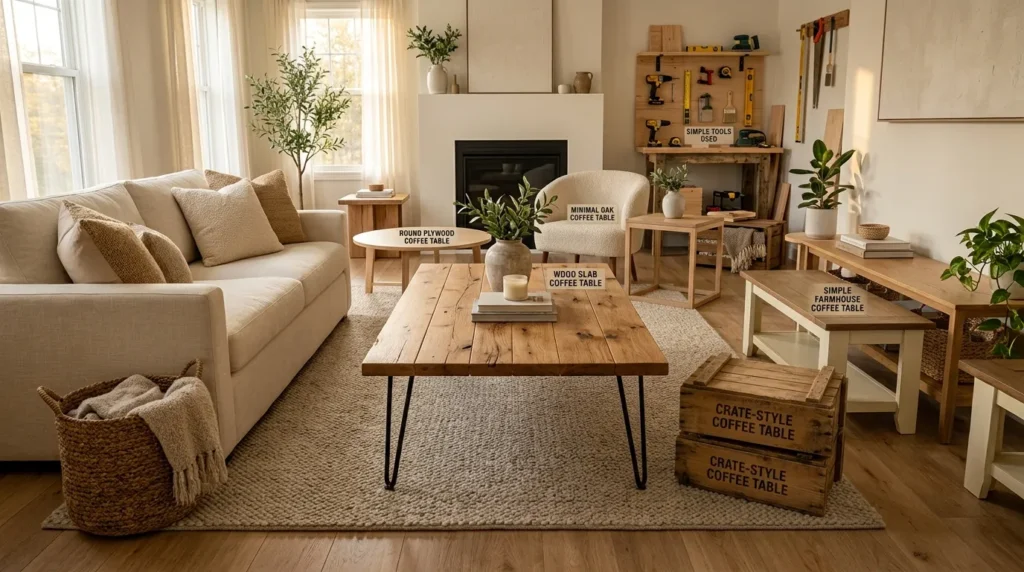
1. Simple Wood Slab
Build a straightforward coffee table from a prepared wooden top and basic legs.
2. Crate Storage Table
Turn wooden crates into a practical coffee table with built-in storage.
3. Hairpin Leg Table
Combine a simple wood top with metal hairpin legs for a modern look.
4. Plank Farmhouse Table
Create a warm farmhouse-style table from joined wooden boards.
5. Rustic Pallet Table
Repurpose suitable pallet wood into a casual industrial-inspired table.
6. Square Storage Table
Build a compact square table with a useful lower shelf.
7. X-Leg Coffee Table
Add visual interest with simple crossed wooden legs.
8. Round Wood Table
Create a softer living-room silhouette with a circular tabletop.
9. Two-Tone Modern Table
Combine painted elements with natural wood for contemporary contrast.
10. Lift-Top Coffee Table
Add a practical raised work surface to a simple coffee table design.
1. Simple Wood Slab
Quick Benefits
- Beginner-friendly design
- Requires relatively few components
- Easy to customize
- Works with many decorating styles
- Simple silhouette
Why It Works
Sometimes the most beautiful DIY furniture is also the simplest.
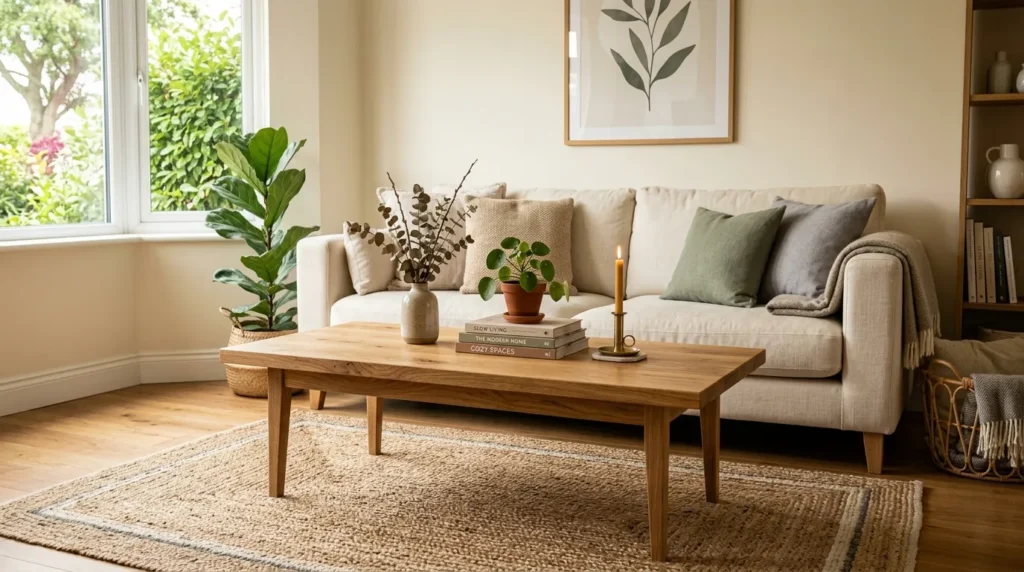
A solid wood tabletop paired with four straightforward legs creates a coffee table with clean lines and plenty of room for the material itself to become the focal point.
This project is particularly useful for beginners because there are fewer complicated shapes and joints to manage. You can concentrate on accurate measurements, sanding, and making sure the finished table is stable.
The style can also change dramatically depending on the wood and finish. Light natural wood can feel Scandinavian or contemporary, while darker stain can create a traditional appearance.
How To Style It
Start with a properly dried, straight tabletop or suitable furniture-grade boards.
Measure the desired finished height based on your sofa and room layout before cutting the legs. A coffee table generally works best when its height relates comfortably to the surrounding seating.
Attach the legs securely using appropriate hardware or joinery for the design.
Sand the tabletop progressively until it feels smooth, paying special attention to corners and edges.
Finish it with a product appropriate for indoor furniture and the type of wood you’ve chosen.
2. Crate Storage Table
Quick Benefits
- Adds hidden or open storage
- Uses simple construction
- Great for small living rooms
- Provides rustic character
- Easy to personalize
Why It Works
Storage can make a coffee table much more useful.
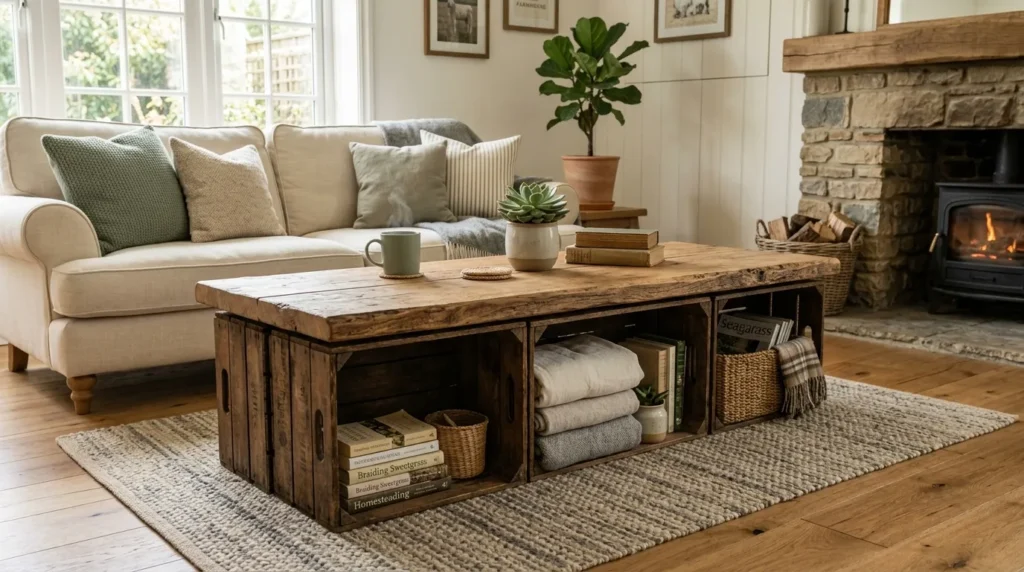
Wooden crates can create open compartments for books, blankets, games, or baskets while supporting a tabletop above them.
This design works especially well in casual homes where you want furniture to provide both decoration and organization.
The important thing is to make sure the crates are structurally sound and the finished table is stable. Decorative crates aren’t necessarily designed to support furniture loads, so choose materials appropriate for the project.
How To Style It
Arrange four suitable wooden crates beneath a sturdy tabletop, leaving storage openings accessible from the sides.
Secure the components rather than simply stacking them.
Add low-profile casters only if the design and hardware are appropriate and the table remains stable.
For a farmhouse look, use a natural or lightly stained finish. For a more modern appearance, paint the base in a neutral color while keeping the tabletop natural.
Use baskets or storage boxes inside the openings to keep small items organized.
3. Hairpin Leg Table
Quick Benefits
- Modern appearance
- Simple assembly
- Minimal materials
- Works well in small rooms
- Easy to customize
Why It Works
Hairpin legs are popular for DIY furniture because they can create a finished-looking table without complicated woodworking.
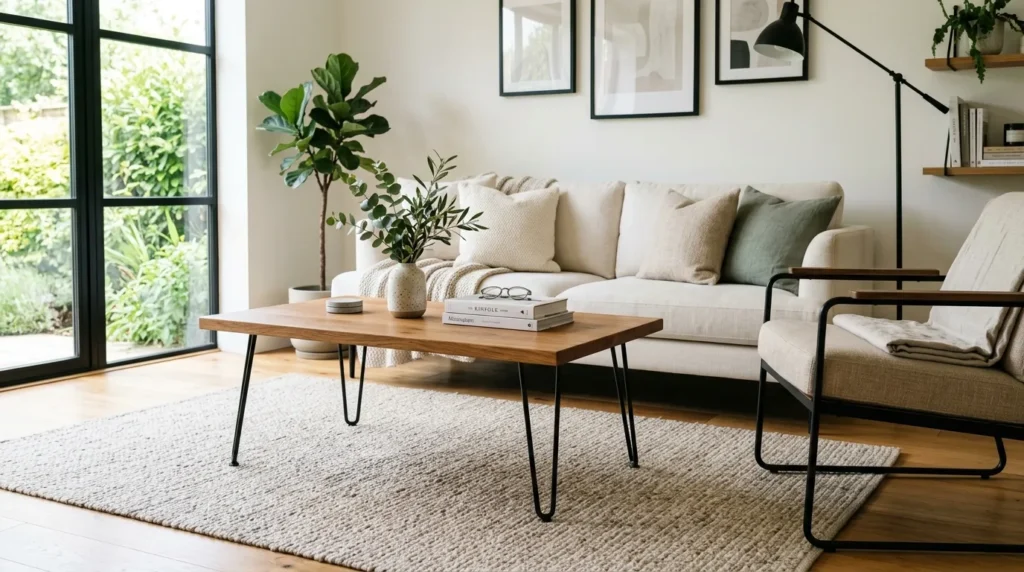
The thin metal legs visually take up little space, making the coffee table feel lighter than designs with thick wooden bases.
This can be especially helpful in smaller living rooms where heavy furniture can make the layout feel crowded.
The tabletop becomes the primary visual feature, allowing you to experiment with different wood species and finishes.
How To Style It
Choose a straight, stable wood top appropriate for indoor furniture.
Position the hairpin legs evenly and far enough from the edges to provide good stability.
Use the correct screws for both the leg material and tabletop thickness.
A clear finish can highlight natural grain, while a light stain can give the table a warmer appearance.
Pair the finished table with neutral upholstery, woven textures, and simple ceramic accessories.
4. Plank Farmhouse Table
Quick Benefits
- Warm farmhouse character
- Uses readily available lumber
- Customizable dimensions
- Strong visual texture
- Works with traditional interiors
Why It Works
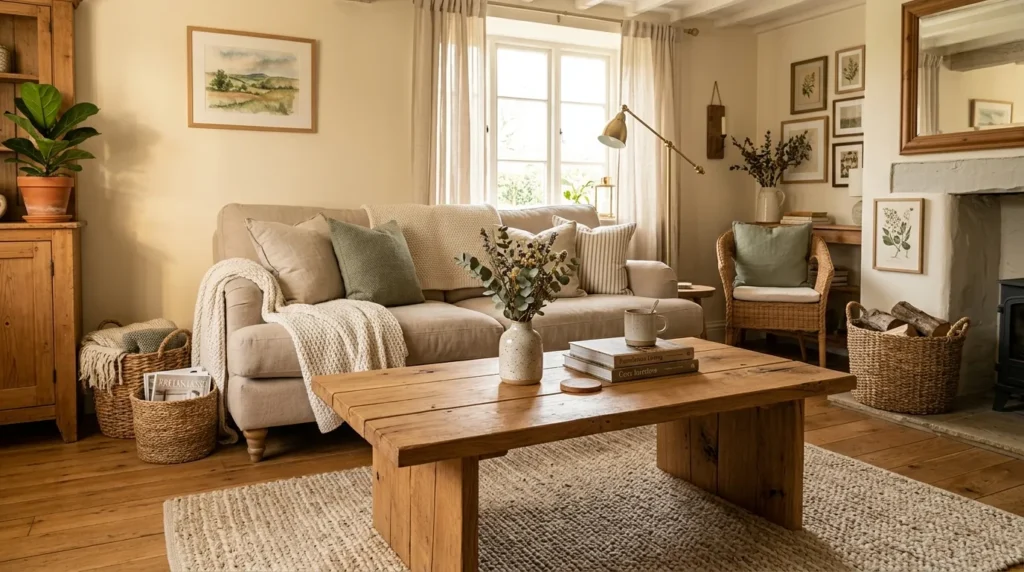
A plank tabletop can give a coffee table the warm, slightly imperfect character associated with farmhouse furniture.
Instead of relying on one large piece of wood, several boards are joined together to create the top.
This gives you the opportunity to choose different board widths or subtly contrasting grain patterns.
Accuracy matters here. Boards need to be properly aligned and securely joined so the finished tabletop remains stable.
How To Style It
Choose straight boards with similar thicknesses.
Cut them to length and arrange them so the grain and color variation look intentional.
Join the boards using an appropriate woodworking method, then allow the assembly to cure or settle according to the adhesive or hardware instructions.
Sand the entire surface and soften sharp edges.
A clear matte finish can preserve the natural appearance, while a warm stain can enhance the farmhouse character.
Pair it with simple wooden or painted legs.
5. Rustic Pallet Table
Quick Benefits
- Repurposes existing materials
- Creates an industrial look
- Budget-friendly potential
- Strong visual character
- Easy to customize
Why It Works
Pallet furniture can be an appealing option for DIYers who enjoy giving discarded materials a second life.
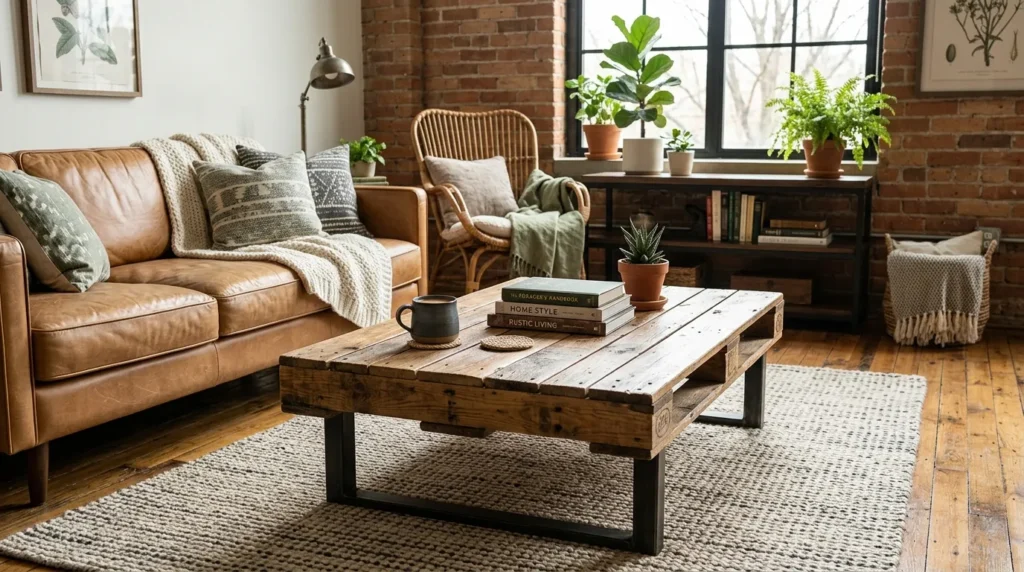
The naturally weathered appearance can create an industrial or rustic coffee table with very little decorative embellishment.
However, pallet wood requires more care than ordinary furniture lumber. Not every pallet is appropriate for indoor furniture, and unknown treatment, contamination, damage, or previous use can make some pallets unsuitable.
If you’re using pallets, choose clean, known-source materials that are appropriate for reuse.
How To Style It
Inspect every board carefully and remove damaged or questionable pieces.
Clean and sand the wood thoroughly.
Build a simple rectangular frame and add sturdy legs or suitable casters.
Seal the finished wood with an appropriate indoor furniture finish.
Keep the surrounding decor relatively simple. Metal accents, leather seating, industrial lighting, and neutral textiles can complement the rustic character.
6. Square Storage Table
Quick Benefits
- Useful for compact rooms
- Adds lower-level storage
- Simple geometric design
- Easy to customize
- Provides a strong focal point
Why It Works
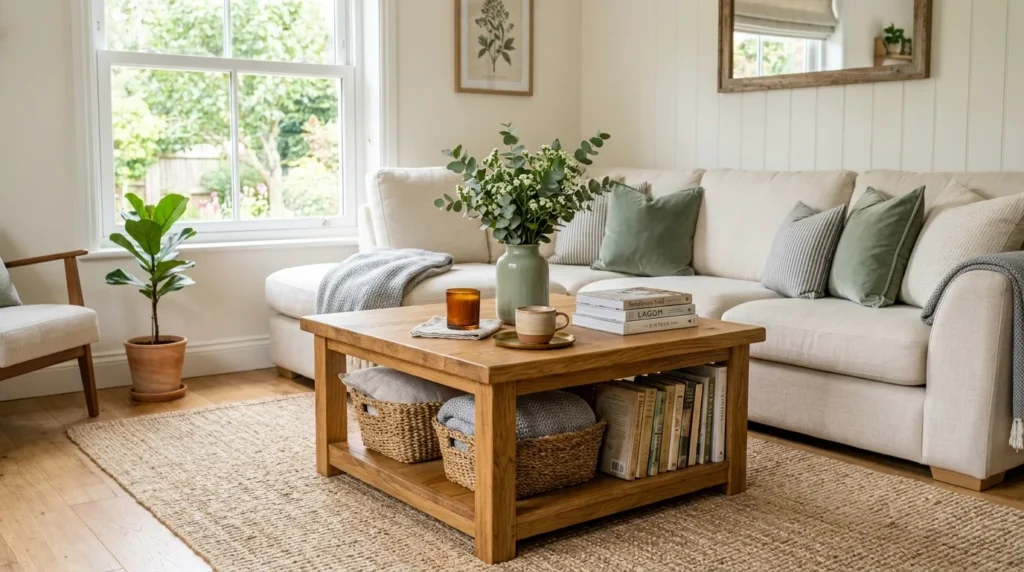
A square coffee table can be particularly useful when your seating arrangement is centered around a compact living area.
Adding a lower shelf creates another useful surface without significantly increasing the footprint.
This design is also straightforward to modify. You can change the tabletop size, shelf height, leg style, or finish depending on your needs.
How To Style It
Build a sturdy square frame using appropriately sized lumber.
Add a lower shelf with enough clearance for baskets, books, or decorative storage.
Sand every surface thoroughly before finishing.
For a modern look, paint the base a muted neutral and keep the shelf and top in natural wood.
For a more rustic appearance, use one consistent wood finish throughout.
Keep the tabletop decor low and simple so it doesn’t interfere with conversation or sightlines.
7. X-Leg Coffee Table
Quick Benefits
- Adds architectural interest
- Creates a farmhouse feel
- Provides sturdy support
- Works with wood tops
- Makes a strong DIY statement
Why It Works
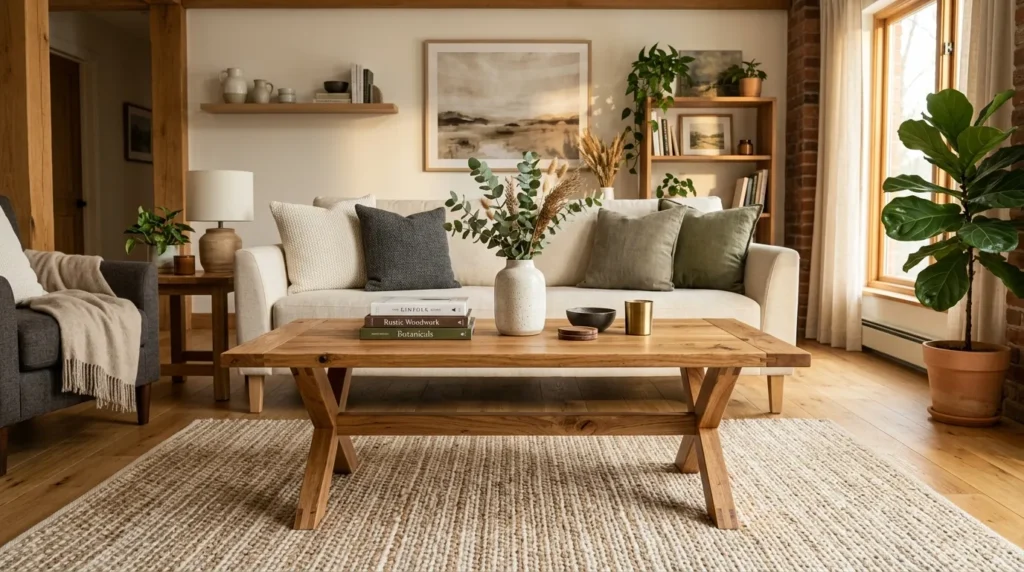
The X-shaped base gives a simple coffee table more visual personality.
It can also create the appearance of a more sophisticated piece of furniture without requiring an overly complicated tabletop.
The main challenge is accuracy. The crossed pieces need to be measured, cut, and positioned carefully so the table remains balanced and stable.
How To Style It
Use straight lumber for the X-shaped legs and measure each piece carefully.
Test the leg arrangement before permanently attaching it.
Use appropriate structural fasteners or joinery.
Sand the edges thoroughly, especially around the crossed sections.
A natural wood top with painted legs can create an attractive contrast, while an all-wood finish produces a more traditional look.
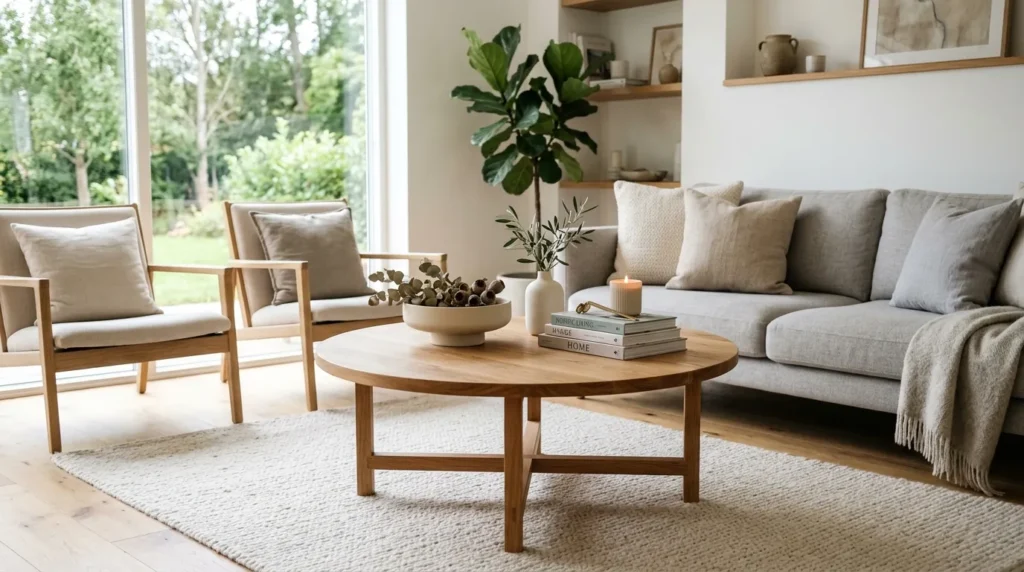
8. Round Wood Table
Quick Benefits
- Softens angular furniture
- Improves circulation
- Works well in small rooms
- Creates a distinctive silhouette
- Great for contemporary spaces
Why It Works
A round coffee table can make a living room feel more relaxed because it eliminates sharp corners.
This can be especially helpful in smaller spaces or homes where people frequently walk around the coffee table.
The circular shape also creates a natural focal point.
Cutting a perfect circle requires the appropriate tools and technique, so beginners may find it easier to purchase a pre-cut round tabletop and concentrate on building the base.
How To Style It
Choose a tabletop diameter that leaves comfortable walking space around the table.
Pair it with three or four sturdy legs or a simple pedestal base.
Use a soft natural finish for a Scandinavian-inspired look or a darker finish for a more traditional appearance.
Keep accessories arranged loosely around the center rather than creating a tall, cluttered display.
9. Two-Tone Modern Table
Quick Benefits
- Creates visual contrast
- Looks contemporary
- Easy to personalize
- Combines painted and natural finishes
- Works with neutral interiors
Why It Works
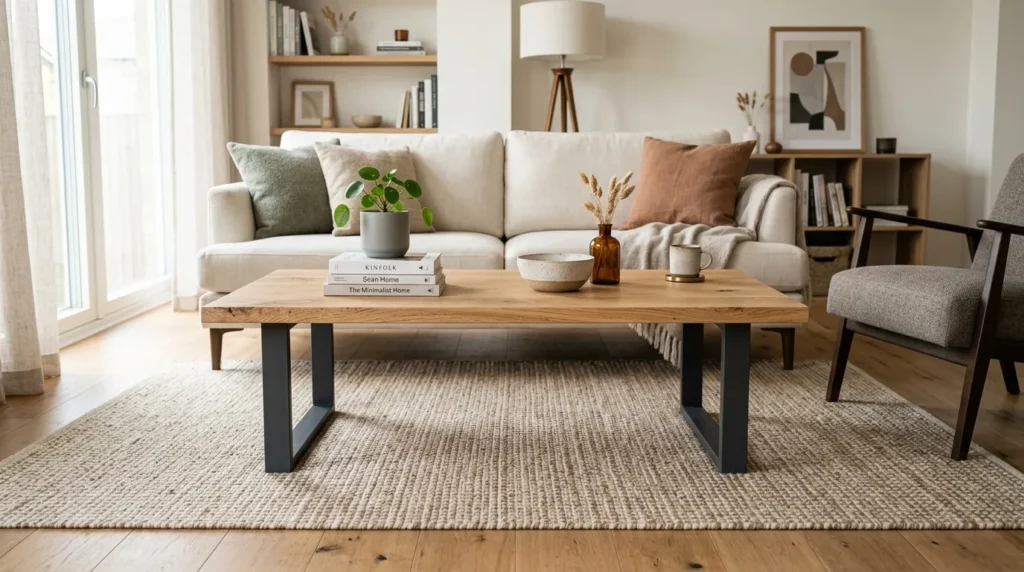
A two-tone coffee table can look much more custom than a single-finish design.
The contrast might come from a natural wood tabletop and painted legs, or from two complementary wood tones.
This approach is useful when your living room already contains several materials and you want the coffee table to connect them visually.
The key is restraint. Two finishes are usually enough.
How To Style It
Start with a simple rectangular or square table design.
Sand and prepare the wood carefully before applying paint or stain.
Use painter’s tape and appropriate preparation techniques to create clean transitions between finishes.
A warm natural wood top paired with matte black legs can create a modern industrial look.
For a softer room, try natural wood with warm white or muted gray painted legs.
10. Lift-Top Coffee Table
Quick Benefits
- Adds useful functionality
- Great for small spaces
- Creates a temporary work surface
- Provides concealed storage opportunities
- Combines furniture and practicality
Why It Works
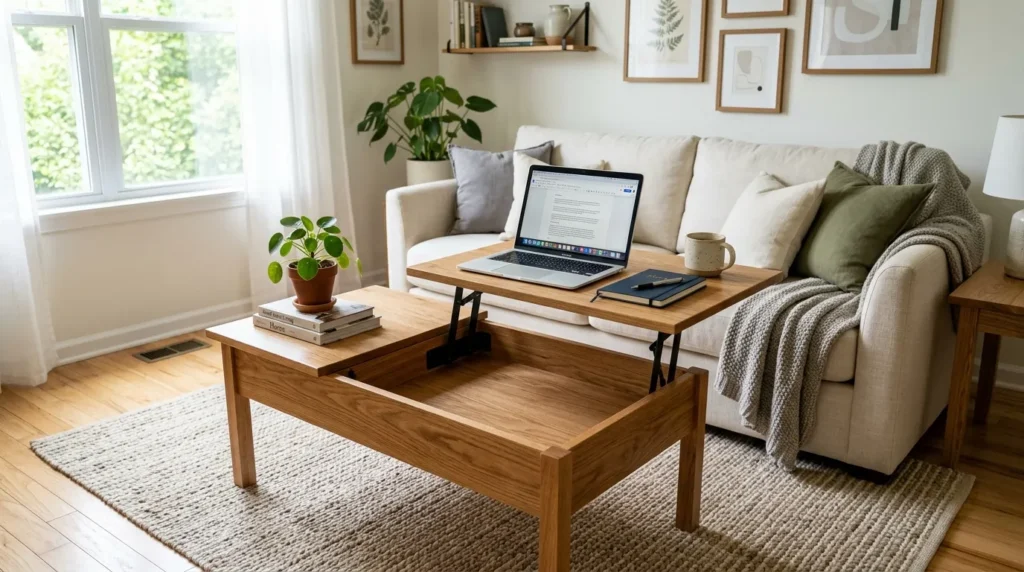
A lift-top coffee table can be particularly useful when your living room needs to serve multiple purposes.
The tabletop can raise to create a more comfortable working, writing, or dining surface while remaining a normal coffee table when closed.
This project is more mechanically involved than a basic table because the lifting hardware needs to be installed correctly and support the intended load.
For beginners, using a purpose-made lift-top mechanism with clear installation instructions can simplify the project.
How To Style It
Choose a sturdy tabletop with enough thickness and strength for the hardware.
Install the lift mechanism exactly according to its instructions.
Keep the internal storage compartment organized with shallow baskets or dividers.
Choose a finish that complements the rest of your furniture.
When styling the closed table, keep decorative items lightweight and easy to move before raising the top.
Related Articles
- DIY Furniture Ideas for Beginners
- DIY Farmhouse Furniture Ideas
- Small Living Room Ideas
- Easy Woodworking Projects
- DIY Home Decor Projects
Frequently Asked Questions
Can a beginner build a DIY coffee table?
Yes. A basic coffee table with a simple wooden top and straightforward legs can be a good beginner woodworking project. Start with a design that requires minimal complicated joinery, focus on accurate measurements, and take your time with sanding and assembly.
What tools do I need to make a simple coffee table?
The exact tools depend on the design, but many basic projects can be completed with tools such as a measuring tape, pencil, drill/driver, clamps, sanding equipment, and an appropriate saw. If you don’t own a particular cutting tool, having lumber or a tabletop cut to size by a retailer can simplify the project.
What is the easiest DIY coffee table design?
A simple rectangular tabletop attached to four sturdy legs is among the easiest designs. You can simplify the project even further by purchasing pre-cut furniture legs and a prepared tabletop, allowing you to concentrate on assembly and finishing.
How tall should a coffee table be?
A coffee table generally looks and feels best when its height relates closely to the surrounding sofa or seating. Many living rooms use a table that is approximately level with or somewhat below the seat height, but the ideal measurement depends on your furniture and how you use the space.
What type of wood is best for a DIY coffee table?
There isn’t one best wood for every project. Pine and other accessible softwoods can be budget-friendly and easy to work with, while hardwoods such as oak or maple can provide greater durability and a different appearance. Choose wood based on your budget, tools, experience, and desired finish.
How do I make a DIY coffee table sturdy?
Start with a stable design and properly sized structural components. Secure the legs or base with appropriate fasteners or joinery, keep the frame square during assembly, and test the table for wobbling before finishing. Don’t rely on decorative components to provide structural support.
Should I stain or paint my DIY coffee table?
Either can work. Stain highlights natural wood grain, while paint provides more control over color and can complement an existing room palette. A clear protective finish can also be useful over stained or painted surfaces when appropriate for the product and intended use.
Conclusion
Building your own coffee table doesn’t have to mean turning your living room into a woodworking shop.
The simplest designs can be surprisingly effective. A wood slab with basic legs, a hairpin-leg table, or a straightforward plank design can give you a beautiful custom piece without requiring advanced woodworking skills.
If you need more functionality, consider a crate storage table, lower shelf, or lift-top design. If appearance is your priority, experimenting with natural wood, contrasting finishes, or an X-shaped base can create a much more distinctive piece.
Before cutting anything, measure your living room carefully. Think about the sofa, chairs, walking paths, and the amount of space you want around the table. A beautifully built table that’s too large for the room will never feel quite right.
Then take your time with the details that make a DIY piece look polished: square assembly, smooth sanding, clean edges, sturdy connections, and an appropriate protective finish.
You don’t need complicated tools to create something you’ll be proud of. Start with a manageable design, work safely, and let the materials do much of the decorating.