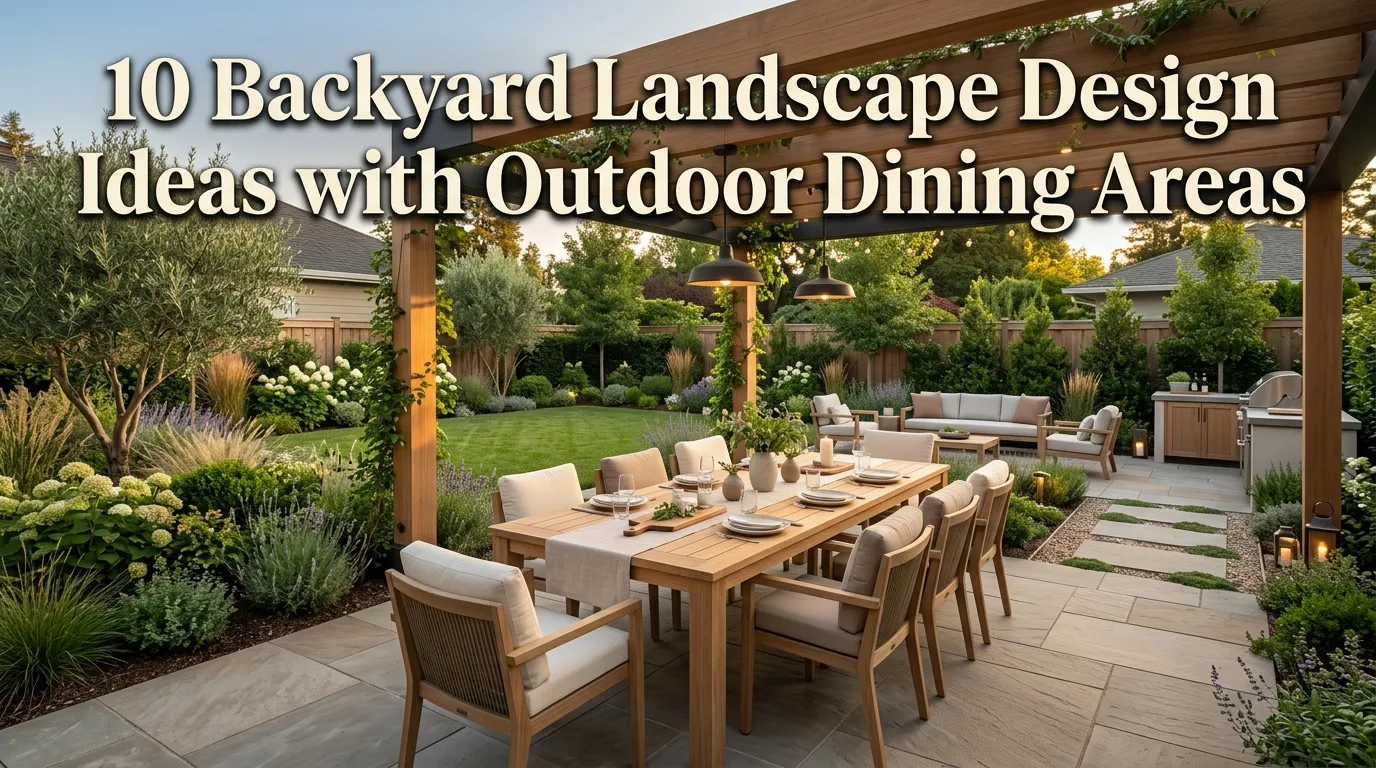
10 Backyard Landscape Design Ideas with Outdoor Dining Areas
A backyard can be so much more than a patch of grass with a few chairs. With the right layout, landscaping, and dining setup, even an ordinary outdoor space can become an extension of your home—a place for weekend breakfasts, casual family dinners, summer gatherings, and long evenings outside.
One of the best ways to make a backyard feel intentional is to design the landscape around how you actually want to use it. Instead of choosing plants first and figuring out the furniture later, think about where you would naturally want to eat, relax, entertain, and move through the space.
Outdoor dining deserves particular attention because it combines comfort and function with the visual character of the landscape. A dining table surrounded by greenery can become a beautiful focal point, while a pergola, patio, string lights, or layered planting can make the area feel like a true destination.
I’ve found that the most successful backyard dining spaces don’t necessarily require a huge budget or an enormous yard. Good proportions, thoughtful placement, shade, comfortable seating, and a little privacy can make a much bigger difference than simply adding more furniture.
Whether you’re working with a spacious suburban backyard, a narrow garden, or a compact patio, these ideas can help you create an outdoor dining area that feels connected to the landscape.
Below, you’ll find ten approaches ranging from simple patio dining zones to lush garden settings and covered entertaining spaces. Each idea focuses on both appearance and everyday usability, so your backyard can look beautiful while still being somewhere you genuinely want to spend time.
Table of Contents
1. Garden Patio Dining
Create a dedicated dining zone surrounded by plants and comfortable landscaping.
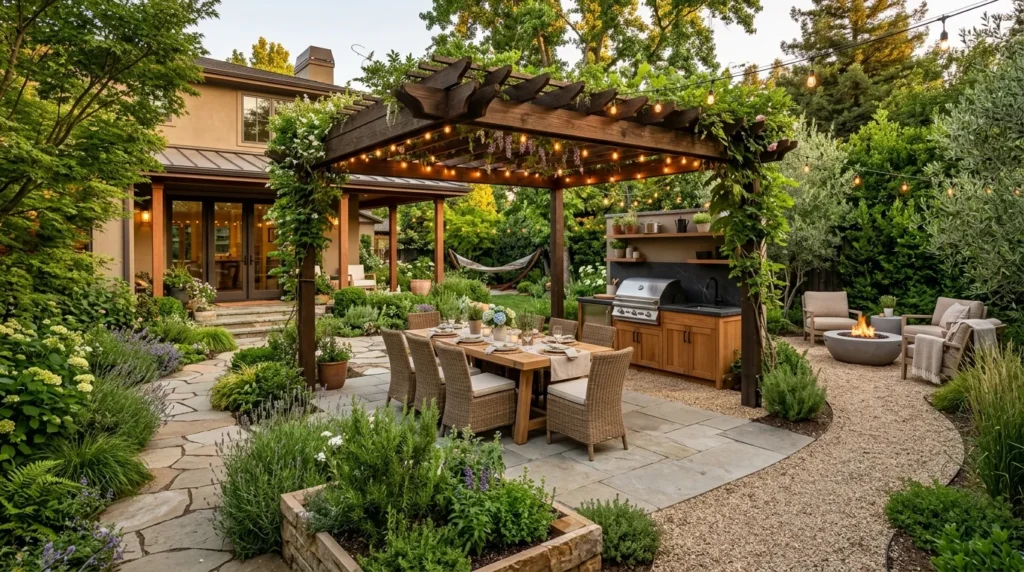
2. Pergola Dining Retreat
Add architectural structure and shade with a pergola positioned over your dining area.
3. Lush Green Dining
Surround an outdoor table with layered greenery for a garden-inspired atmosphere.
4. Gravel Dining Courtyard
Use a compact gravel surface to create a casual, flexible dining destination.
5. Poolside Dining Zone
Combine outdoor meals with a pool landscape for an entertaining-friendly backyard.
6. Fire Pit Dining Area
Place dining near a fire feature to create a welcoming evening gathering space.
7. Covered Patio Dining
Use a covered structure to provide protection from sun and changing weather.
8. Small Backyard Bistro
Turn a compact backyard into an intimate dining space with appropriately scaled furniture.
9. Natural Stone Setting
Use stone paving and organic landscaping to create a timeless outdoor dining area.
10. String Light Garden
Combine warm outdoor lighting with planting and dining furniture for evening ambiance.
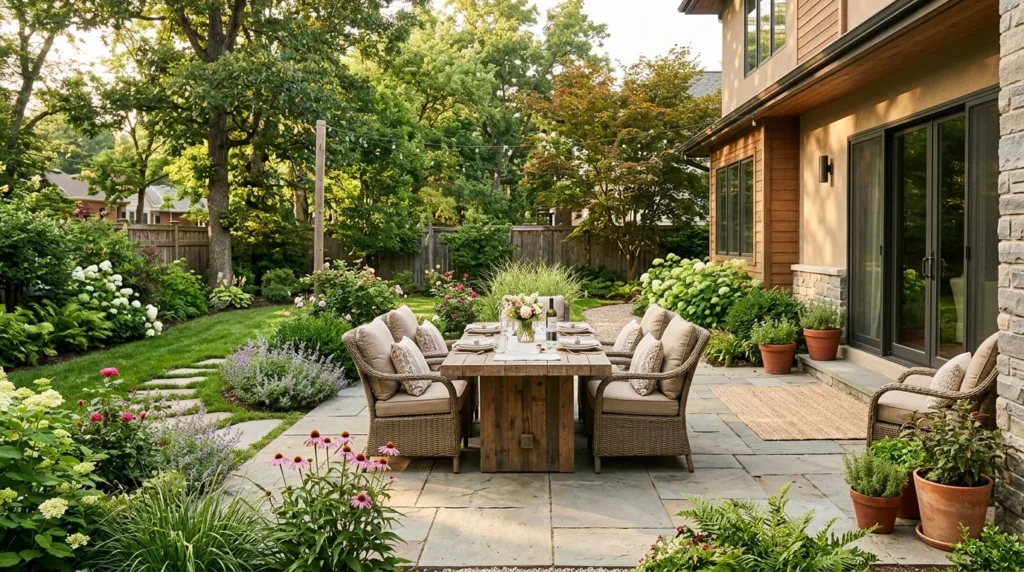
1. Garden Patio Dining
Quick Benefits
- Creates a defined outdoor dining zone
- Connects furniture with the landscape
- Works for medium and large backyards
- Makes entertaining easier
- Provides space for surrounding plants
Why It Works
A dedicated patio is one of the simplest ways to give an outdoor dining area a sense of permanence.
Rather than placing a dining table randomly on the lawn, a paved surface visually establishes the area as a destination. It also provides a more stable foundation for chairs and makes the space easier to use after rain.
The landscaping around the patio is just as important as the surface itself. Plants can soften hard edges and make the dining zone feel connected to the rest of the garden.
This approach works particularly well when the dining area is positioned close enough to the house for convenient access to the kitchen.
How To Style It
Choose a patio material that complements the home’s exterior. Concrete pavers, brick, natural stone, and other outdoor-rated surfaces can all work depending on the home’s architecture and budget.
Position the table so chairs can be pulled out comfortably without immediately hitting planting beds or walls.
Add planting around the perimeter rather than filling every available space. Low shrubs, ornamental grasses, container plants, and small trees can create a layered backdrop.
For furniture, choose materials designed for outdoor exposure and use cushions or seat pads where additional comfort is needed.
2. Pergola Dining Retreat
Quick Benefits
- Adds architectural interest
- Provides partial shade
- Creates a strong focal point
- Helps define the dining area
- Supports climbing plants and lighting
Why It Works
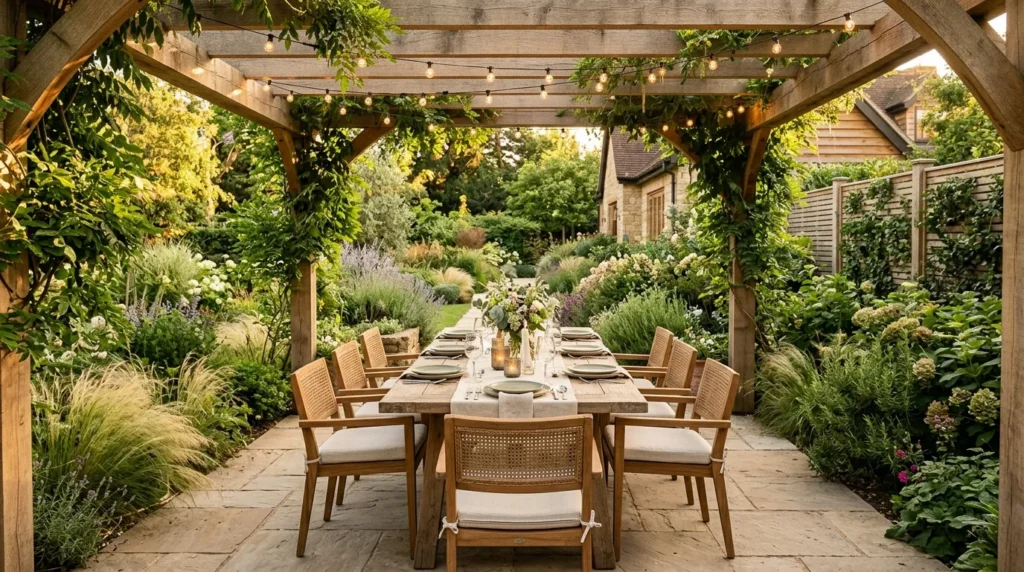
A pergola can transform an outdoor table from a piece of furniture into a complete outdoor room.
The vertical structure gives the eye something to focus on while creating a sense of enclosure without completely closing off the garden. It can also provide partial shade and a framework for lighting or climbing plants.
This is especially useful in larger backyards where an uncovered table might otherwise feel disconnected from the house.
A pergola doesn’t have to be elaborate. A simple structure with clean lines can fit beautifully into a modern landscape, while a more traditional wood design can suit cottage or farmhouse-inspired gardens.
How To Style It
Start by placing the dining table centrally beneath the pergola, leaving enough space around it for chairs and movement.
Consider adding weather-appropriate outdoor curtains if additional privacy is desired, but make sure they are suitable for outdoor conditions and safely installed.
String lights can be attached to the structure for evening illumination. Hanging planters or climbing plants can soften the overhead lines.
Keep the surrounding landscaping relatively simple so the pergola remains the visual anchor.
3. Lush Green Dining
Quick Benefits
- Creates a garden-like atmosphere
- Adds privacy
- Softens hard furniture
- Makes dining feel more secluded
- Works beautifully for entertaining
Why It Works
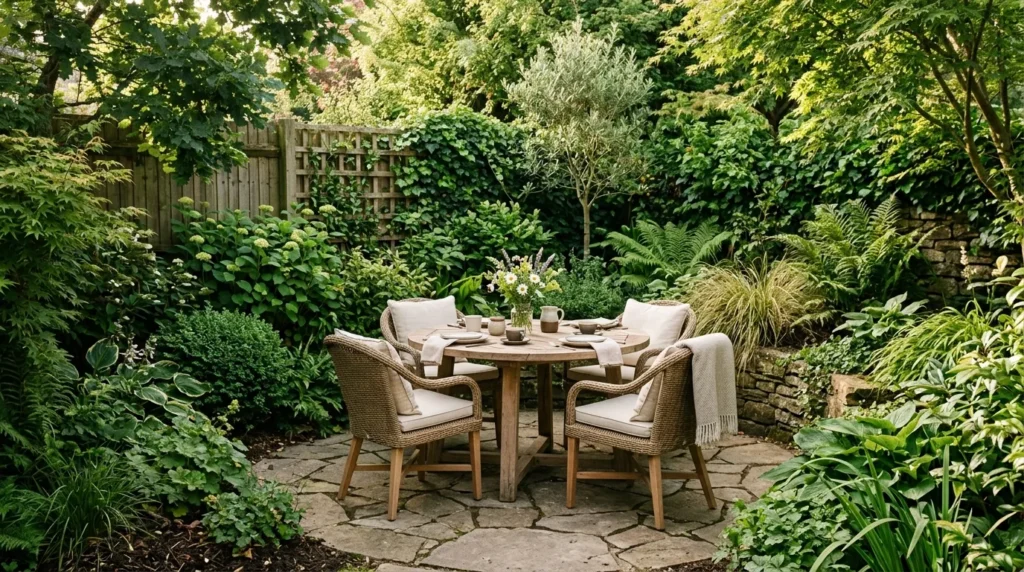
If you love the feeling of eating in a garden, surround your dining area with layers of greenery.
Plants can create a sense of privacy and make an outdoor table feel tucked away from the rest of the yard. They also introduce movement, color, and texture that furniture alone can’t provide.
The key is layering rather than simply planting one type of shrub around the table.
A combination of different heights can make the space feel more natural. Taller plants can provide a backdrop, medium-height planting can frame the dining area, and lower plants can soften the edges.
How To Style It
Start with the largest planting elements, such as suitable trees or shrubs, and work downward from there.
Use plants appropriate for your climate, available sunlight, soil, and watering conditions. Native and well-adapted plants can be particularly useful because they are often better suited to local growing conditions.
Keep the immediate area around the table practical. You don’t want branches, thorns, or dense planting interfering with chairs.
A simple wood or metal table surrounded by comfortable chairs can be enough when the landscaping provides the visual drama.
4. Gravel Dining Courtyard
Quick Benefits
- Relatively flexible layout
- Creates a casual atmosphere
- Works well in smaller spaces
- Provides a defined dining surface
- Complements natural landscaping
Why It Works
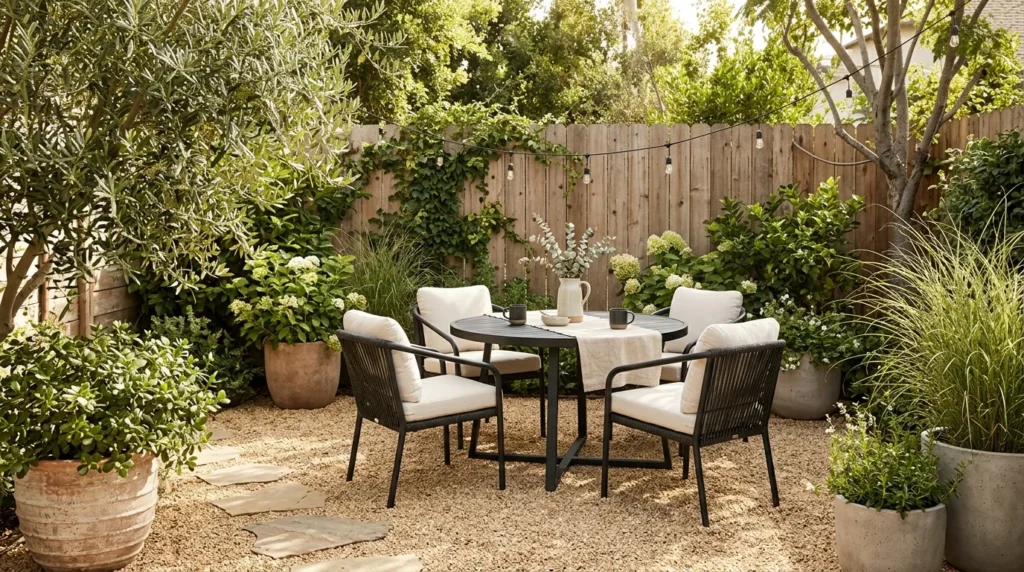
Gravel can create a relaxed outdoor dining area without the formal appearance of a large paved patio.
It works particularly well in garden-inspired landscapes where you want the dining zone to feel integrated with planting rather than separated from it.
A gravel courtyard can also be visually lighter than a solid surface, which can help a smaller backyard feel less built up.
The important consideration is creating a stable, comfortable surface. The gravel should be appropriate for the intended use and properly installed so the area remains practical.
How To Style It
Define the dining area with a clear border so the gravel doesn’t gradually spread into surrounding planting beds.
Choose an outdoor dining table with a sturdy base and chairs that sit comfortably on the finished surface.
Surround the courtyard with low planting, ornamental grasses, or larger containers.
A simple outdoor rug can sometimes help visually anchor the table, provided the rug is designed for outdoor use and won’t create a trip hazard.
Keep the color of the gravel coordinated with nearby stone, siding, or landscape materials.
5. Poolside Dining Zone
Quick Benefits
- Ideal for entertaining
- Connects dining with recreation
- Creates a resort-like atmosphere
- Provides convenient seating
- Can serve multiple purposes
Why It Works
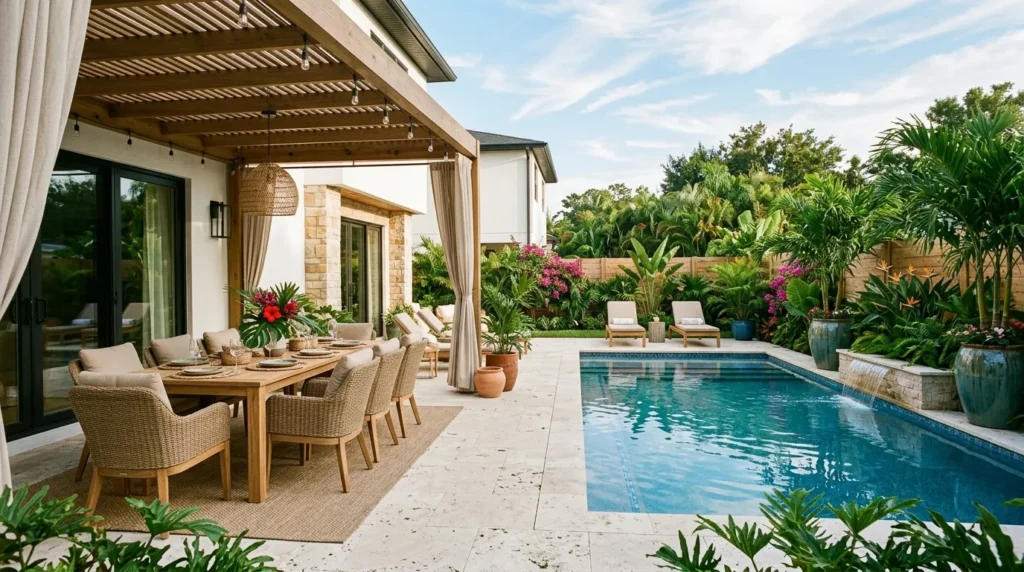
If your backyard includes a pool, placing an outdoor dining area nearby can make the entire landscape more functional.
Rather than treating the pool and dining area as separate zones, you can design them as part of one outdoor living environment.
The dining area can provide a convenient place for meals, snacks, or drinks while keeping the main indoor kitchen relatively separate from outdoor activities.
Safety and practicality should always come first around pools. Furniture, surfaces, lighting, and electrical features need to be appropriate for the environment.
How To Style It
Position the dining area far enough from the pool edge to allow comfortable circulation and to keep chairs and tables from interfering with pool access.
Choose durable outdoor furniture that can handle the local conditions.
Add large planters or suitable landscaping around the perimeter to soften the hard surfaces.
A nearby shade structure can make the dining zone more comfortable during sunny afternoons.
Keep the overall palette simple so the pool remains visually connected to the surrounding landscape.
6. Fire Pit Dining Area
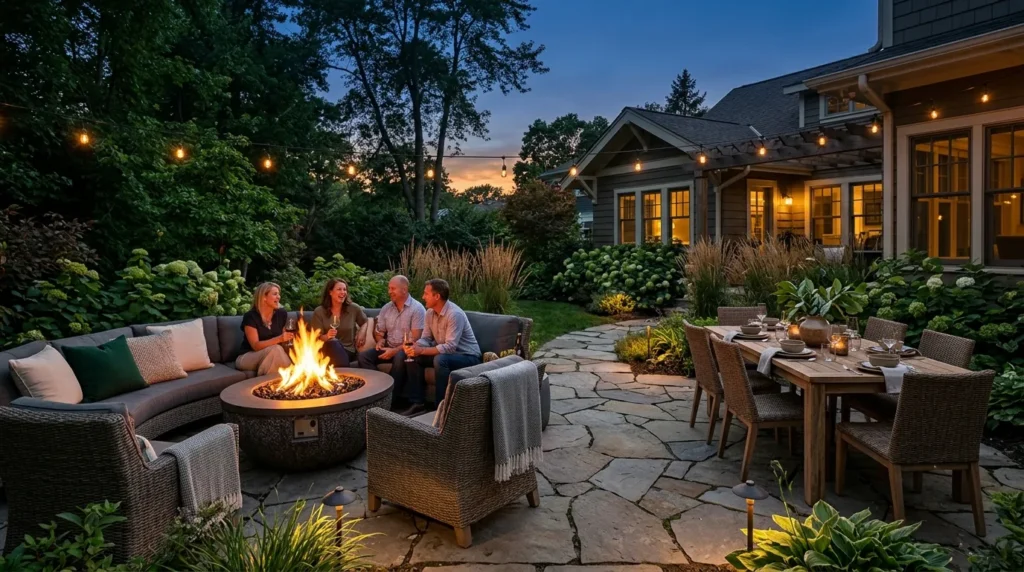
Quick Benefits
- Extends outdoor use into cooler evenings
- Creates a natural gathering point
- Adds visual interest
- Encourages conversation
- Works for entertaining
Why It Works
Fire naturally creates a sense of gathering, making it a useful focal point for an outdoor entertaining area.
A dining table positioned near—not immediately beside—a properly designed fire feature can create a backyard that works for both meals and evening relaxation.
The important distinction is that fire features require careful planning. The location, clearances, fuel source, local regulations, and surrounding materials all need to be considered.
You also don’t need to place the dining table directly around the fire. Separating the functions slightly can make the landscape more comfortable and practical.
How To Style It
Create distinct zones for dining and gathering. For example, position a dining table on one side of a patio and a fire feature with lounge seating on another.
Use compatible paving throughout both areas to make them feel connected.
Keep combustible furniture, plants, fabrics, and structures at appropriate distances from the fire feature.
For evening atmosphere, use outdoor-rated lighting around pathways and dining areas without making the space excessively bright.
7. Covered Patio Dining
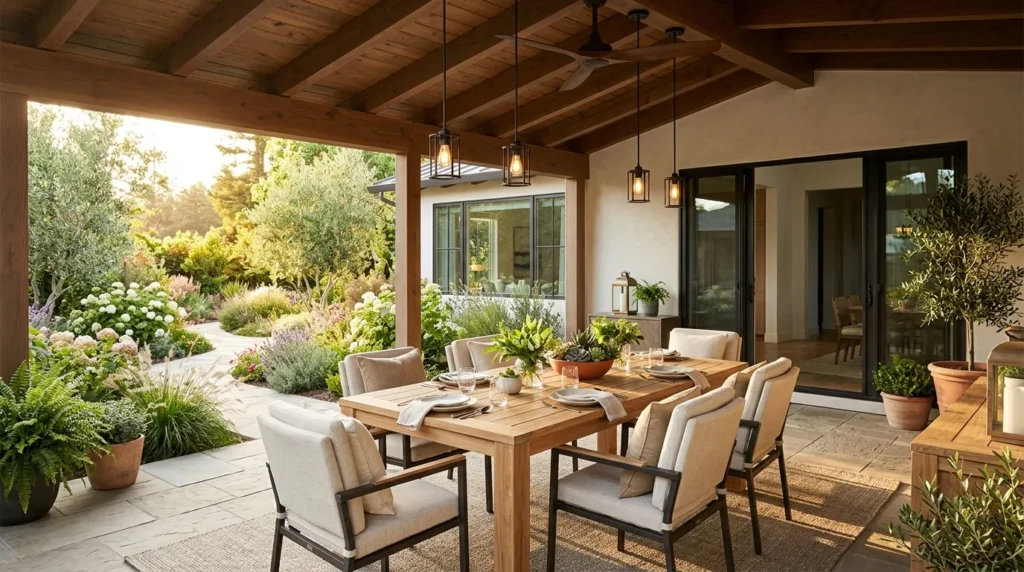
Quick Benefits
- Provides shade
- Helps protect furniture
- Makes dining more comfortable
- Extends outdoor use
- Creates an outdoor-room feeling
Why It Works
A covered dining area can make a backyard substantially more usable, especially in climates with intense sun or unpredictable weather.
It also gives the dining area a stronger architectural identity. A roof, covered patio, or appropriately designed outdoor structure can create the feeling of another room attached to the home.
Because the structure is visually substantial, it should be considered alongside the house rather than as a completely separate design element.
How To Style It
Choose materials and colors that complement the exterior of the home.
Use a dining table sized for the number of people you realistically host rather than selecting the largest possible option.
Outdoor-rated pendant-style fixtures can add visual interest when properly installed. Fans can also improve comfort where appropriate.
Add weather-resistant textiles and a few plants to soften the space.
Keep pathways between the kitchen, patio, and dining table clear so serving meals remains easy.
8. Small Backyard Bistro
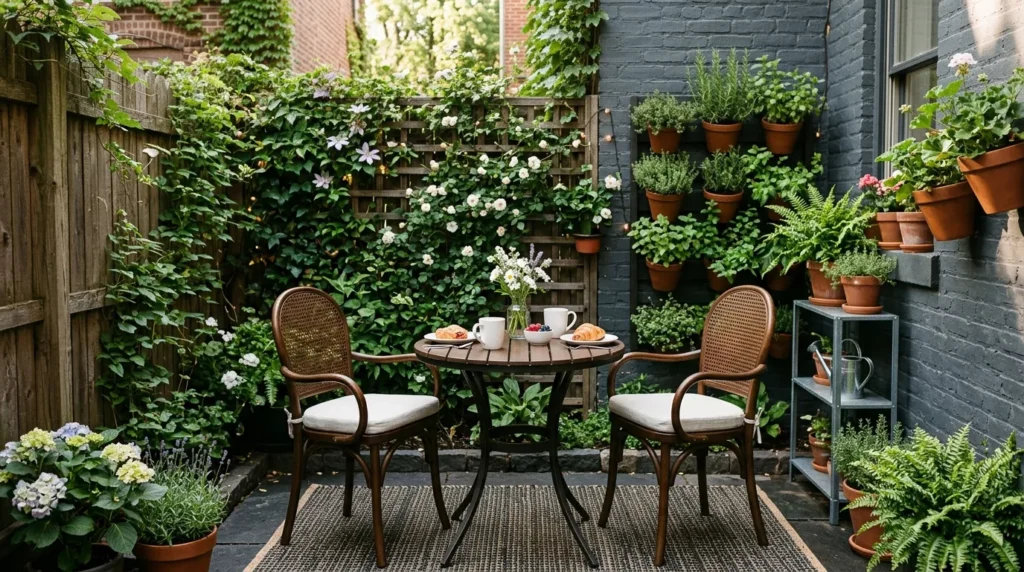
Quick Benefits
- Ideal for compact yards
- Creates an intimate atmosphere
- Requires less furniture
- Easy to maintain
- Can work in rental-friendly spaces
Why It Works
You don’t need a large backyard to enjoy outdoor dining.
A small bistro-style arrangement can turn even a narrow patio, side yard, or compact garden into a pleasant place for morning coffee or dinner for two.
The most important thing is scale. Oversized furniture can quickly make a small yard feel crowded.
A small table and two to four comfortable chairs may provide everything you actually need.
How To Style It
Choose a compact round or square table that leaves enough room to move around it.
Use vertical elements to create visual interest without taking up valuable floor space. Wall-mounted planters, narrow trellises, hanging baskets, or tall containers can help.
A small outdoor rug can define the area if the surface and conditions are suitable.
Use one or two larger planters instead of many tiny containers. This often creates a cleaner visual effect.
For renters, portable furniture and freestanding planters can provide flexibility without permanent landscaping changes.
9. Natural Stone Setting
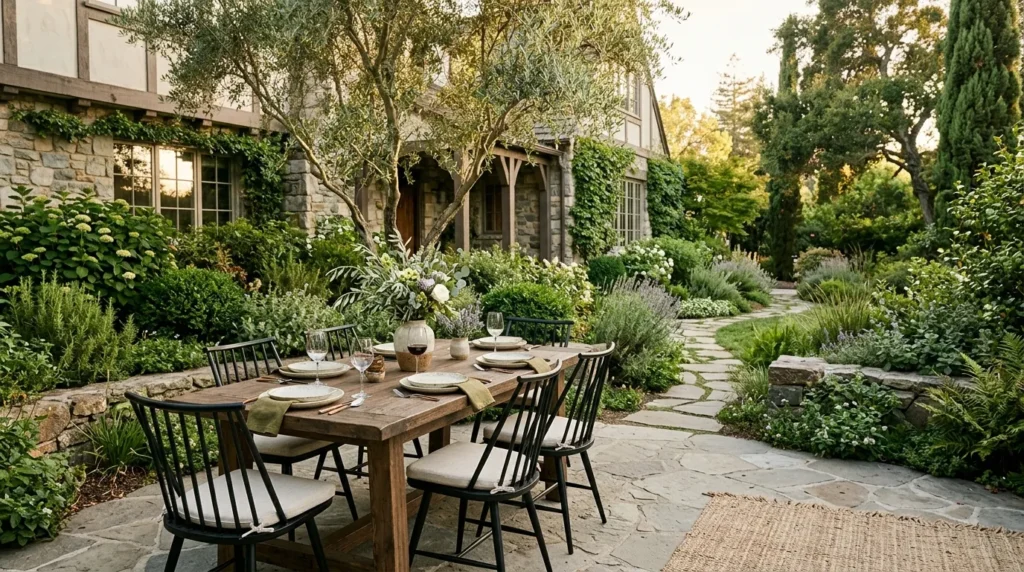
Quick Benefits
- Creates a timeless appearance
- Adds natural texture
- Complements greenery
- Works with many architectural styles
- Provides a durable foundation
Why It Works
Natural stone can give an outdoor dining area a sense of permanence and connection to the landscape.
Its variations in color and texture make it feel less uniform than some manufactured surfaces, while its organic appearance works beautifully with plants.
Stone can also visually connect different parts of a backyard when used thoughtfully in pathways, patios, retaining walls, or borders.
The right material depends on your climate, intended use, maintenance preferences, and local availability.
How To Style It
Use stone as the foundation and keep the furniture relatively simple.
A natural wood dining table can soften the harder surface, while metal chairs can create a more contemporary contrast.
Plant around the edges rather than completely covering the stone.
Repeat similar stone tones elsewhere in the landscape if possible to create continuity.
Consider how the surface feels underfoot, drains water, and performs in your local climate before making a final material choice.
10. String Light Garden
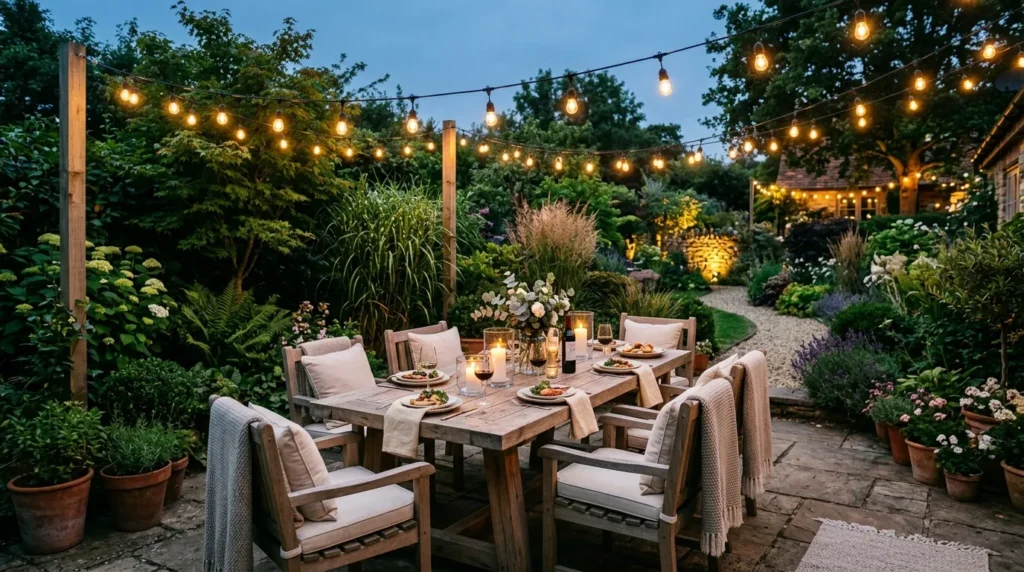
Quick Benefits
- Creates evening ambiance
- Makes dining feel special
- Adds visual warmth
- Works with many backyard styles
- Relatively simple to update
Why It Works
Lighting can completely change how a backyard feels after sunset.
String lights are popular because they create a soft, decorative glow while visually connecting the dining area to surrounding landscaping.
They can also help define the boundaries of an outdoor room. When lights are installed above or around a dining area, the space feels intentionally designed rather than simply furnished.
However, outdoor lighting should always be installed and supported appropriately for the environment.
How To Style It
Use outdoor-rated string lights and install them according to the manufacturer’s instructions. Avoid placing electrical equipment where it could be exposed to water in unsafe ways.
Attach lights to suitable structures such as posts, pergolas, or other properly designed supports.
Keep the lighting warm and relatively subtle. The goal is to create atmosphere while maintaining enough practical illumination for dining.
Combine the lights with greenery, simple furniture, and natural materials.
For the most polished appearance, run the lighting in a clean, intentional pattern rather than creating a tangled web.
Related Articles
- Outdoor Dining Area Ideas
- Backyard Patio Ideas
- Small Backyard Landscaping Ideas
- Backyard Seating Area Ideas
- Outdoor Entertaining Ideas
Frequently Asked Questions
How do I create an outdoor dining area in my backyard?
Start by choosing a location that is convenient to the house and has enough room for the table, chairs, and comfortable circulation. Create a defined surface using a patio, pavers, gravel, or another suitable material. Then add weather-appropriate furniture, shade where needed, lighting, and landscaping to make the area feel connected to the backyard.
What is the best surface for an outdoor dining area?
There isn’t one universal best surface. Pavers, concrete, natural stone, brick, and properly installed gravel can all work. Consider drainage, maintenance, comfort, local weather, budget, and how stable you need the surface to be for chairs and tables.
How much space should I leave around an outdoor dining table?
Leave enough space behind each chair for people to comfortably sit down and move around the table. The exact amount depends on the furniture and layout, but avoid pushing the table against walls or dense planting. A little extra circulation space can make an outdoor dining area significantly more comfortable.
How can I make an outdoor dining area feel more private?
Use landscaping strategically. Trees, shrubs, ornamental grasses, trellises, fences, pergolas, and appropriately placed planters can create separation from neighboring properties or other parts of the yard. Layering plants at different heights often looks more natural than creating one solid wall of greenery.
How do I shade an outdoor dining area?
Pergolas, covered patios, shade sails, umbrellas, and other appropriately designed structures can provide shade. The best choice depends on your yard, climate, budget, and whether you want permanent or flexible coverage. Consider the position of the sun throughout the day before deciding where to place the dining table.
What furniture is best for backyard dining?
Choose furniture specifically designed for outdoor use and appropriate for your local climate. Consider weather-resistant materials, comfortable seating, easy maintenance, and the available space. The table should be large enough for your normal household and entertaining needs without overwhelming the patio.
How can I make a backyard dining area usable at night?
Start with safe, appropriate outdoor lighting around the dining and circulation areas. String lights, wall fixtures, lantern-style fixtures, and other outdoor-rated options can provide both visibility and atmosphere. A nearby fire feature can also add warmth, provided it is properly designed, installed, and operated.
Conclusion
A well-designed outdoor dining area can completely change the way you experience a backyard. Instead of treating the table as an afterthought, consider it part of the landscape from the beginning.
Think about where you naturally want to spend time, how the sun moves across the yard, how easily food can travel from the kitchen, and where you need shade or privacy. These practical considerations will often lead to a better layout than choosing furniture based on appearance alone.
From a lush garden dining area to a compact bistro table, there is an approach for almost every type of backyard. Pergolas can provide structure, natural stone can establish a permanent foundation, and plants can soften the space. Simple lighting can then make the area just as inviting after sunset.
You don’t need to tackle the entire backyard at once. Start by defining the dining zone, then add the elements that improve comfort and atmosphere.
A table, a few comfortable chairs, thoughtful landscaping, and good lighting can be enough to create a place you’ll actually want to use all season long.