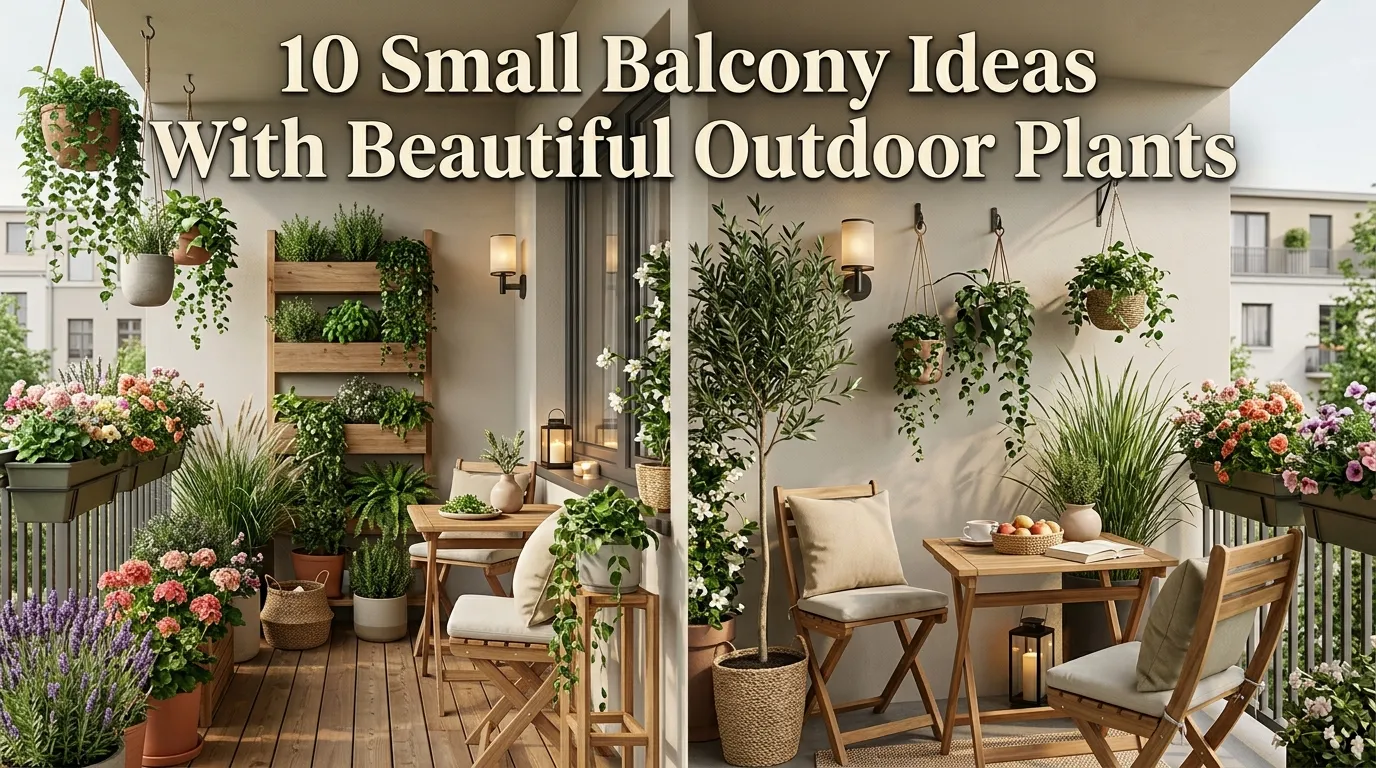
10 Small Balcony Ideas With Beautiful Outdoor Plants
A small balcony can become one of the most enjoyable spaces in your home, even when there isn’t enough room for a full outdoor dining set or a collection of large planters.
The secret is to think vertically, choose plants carefully, and make every inch work harder.
Plants can completely change the feeling of a compact balcony. A few leafy containers can soften hard railings and concrete, while trailing plants can create a lush look without taking up valuable floor space. Add a comfortable chair, a small table, warm lighting, or a weather-resistant rug, and the balcony can start feeling like a genuine outdoor room rather than an unused strip of space.
I’ve noticed that small balconies often look better when they aren’t overloaded. Choosing a few substantial plants and repeating similar pots can create a more intentional appearance than filling every available corner with different containers.
Your climate matters, too. A sunny balcony may be ideal for herbs, flowering plants, and drought-tolerant varieties, while a shaded balcony calls for plants that can handle lower light. Wind exposure is another consideration, especially on upper floors. A beautiful plant that cannot tolerate your balcony’s conditions won’t stay beautiful for long.
The ideas below focus on practical ways to combine plants with seating, privacy, color, and useful vertical space. They can be adapted for apartment balconies, condo patios, rental homes, and other compact outdoor areas.
You don’t need a huge budget either. Start with the plants that suit your conditions, then build the space gradually around them.
Table of Contents
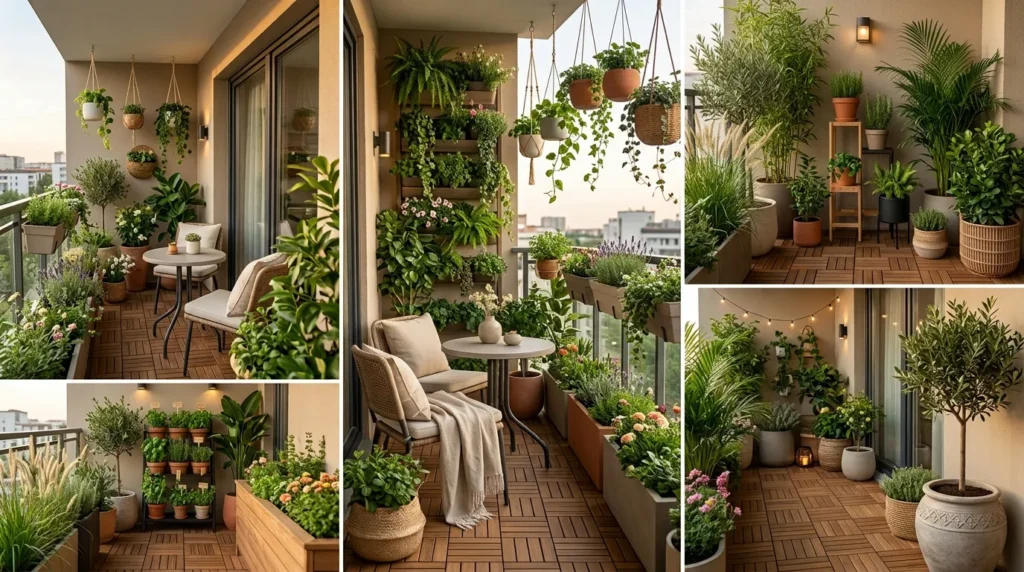
1. Vertical Plant Wall
Use vertical space to create a lush garden without sacrificing floor area.
2. Railing Planters
Turn an unused balcony railing into a practical growing area.
3. Corner Container Garden
Transform an overlooked corner into a layered plant display.
4. Hanging Plant Collection
Use overhead space for trailing and cascading greenery.
5. Compact Herb Garden
Grow useful culinary herbs in a sunny, organized arrangement.
6. Tropical Greenery
Create a lush retreat with bold foliage suited to outdoor conditions.
7. Flower-Filled Balcony
Introduce seasonal color through compact flowering plants.
8. Privacy Plant Screen
Combine greenery and screening plants to create a more secluded space.
9. Cozy Plant Nook
Pair beautiful plants with comfortable seating for a relaxing retreat.
10. Layered Plant Display
Combine different heights, textures, and containers for a fuller garden effect.
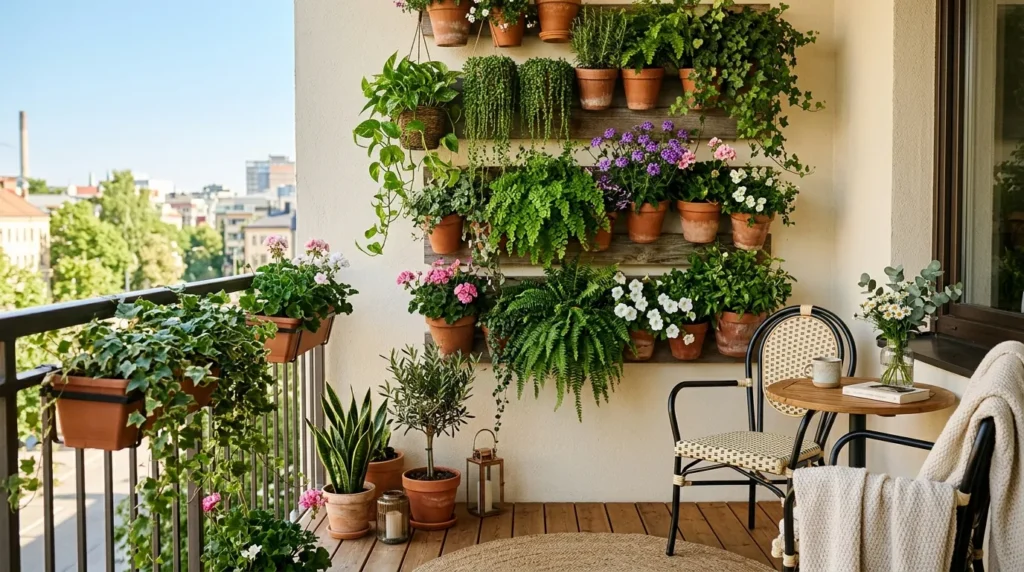
1. Vertical Plant Wall
Quick Benefits
- Saves floor space
- Creates a lush focal point
- Works well on narrow balconies
- Adds height
- Can improve privacy
Why It Works
When floor space is limited, the walls and vertical surfaces become valuable gardening areas.
A vertical plant arrangement allows you to grow several plants without covering the entire balcony floor.
You can use wall-mounted planters, a freestanding trellis, tiered shelves, or a narrow vertical garden system.
The most attractive arrangements usually combine different leaf shapes and heights instead of placing identical plants in every container.
How To Style It
Choose a vertical structure that suits the balcony and can be securely installed.
Use lightweight containers where appropriate.
Place sun-loving plants toward the brighter sections and shade-tolerant varieties where direct sunlight is limited.
Try combining upright foliage with trailing plants.
For a modern look, repeat matching pots.
For a more relaxed appearance, combine natural terracotta, wood, and woven textures.
Make sure the structure and containers are safely secured, particularly on balconies exposed to strong wind.
2. Railing Planters
Quick Benefits
- Uses otherwise wasted space
- Keeps the floor open
- Adds instant greenery
- Works well for flowers and herbs
- Easy to refresh seasonally
Why It Works
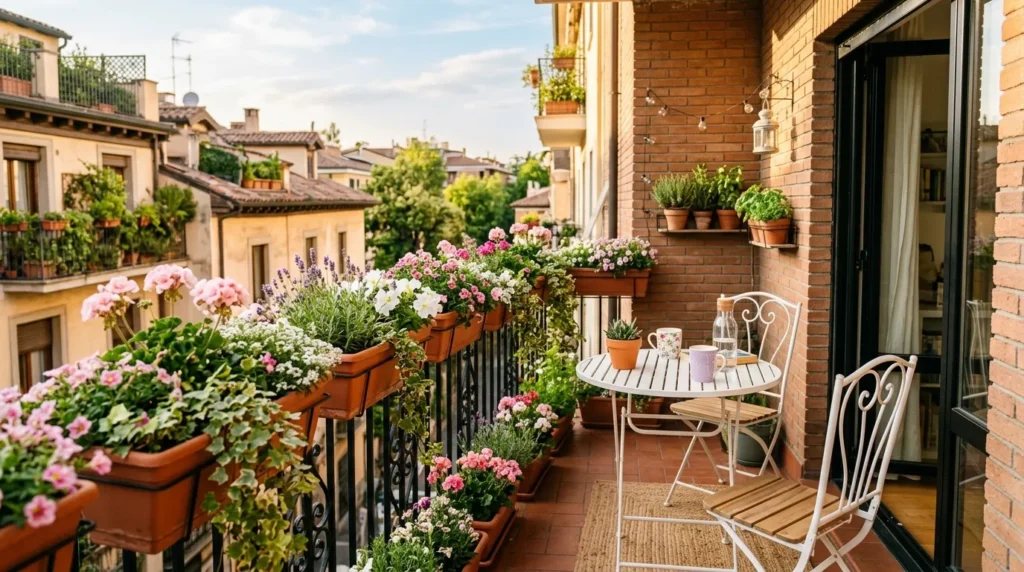
The balcony railing is one of the most useful areas for gardening when floor space is tight.
Railing planters can create a continuous band of greenery while leaving room underneath for seating.
They are particularly effective for compact flowering plants, herbs, trailing greenery, and seasonal displays.
Before installing them, check your building’s balcony rules and make sure the planters are specifically designed for secure railing installation.
How To Style It
Use several matching railing planters for a clean appearance.
Fill them with plants that have similar light and watering requirements.
For a colorful display, combine compact flowers with trailing greenery.
For a calmer look, use foliage in different shades of green.
Choose containers that complement your balcony furniture.
If your railing is dark, terracotta or light-colored planters can create attractive contrast.
3. Corner Container Garden
Quick Benefits
- Uses awkward corners
- Creates height
- Easy to rearrange
- Works for different plant sizes
- Adds visual depth
Why It Works
Corners are easy to overlook, but they can become valuable gardening zones.
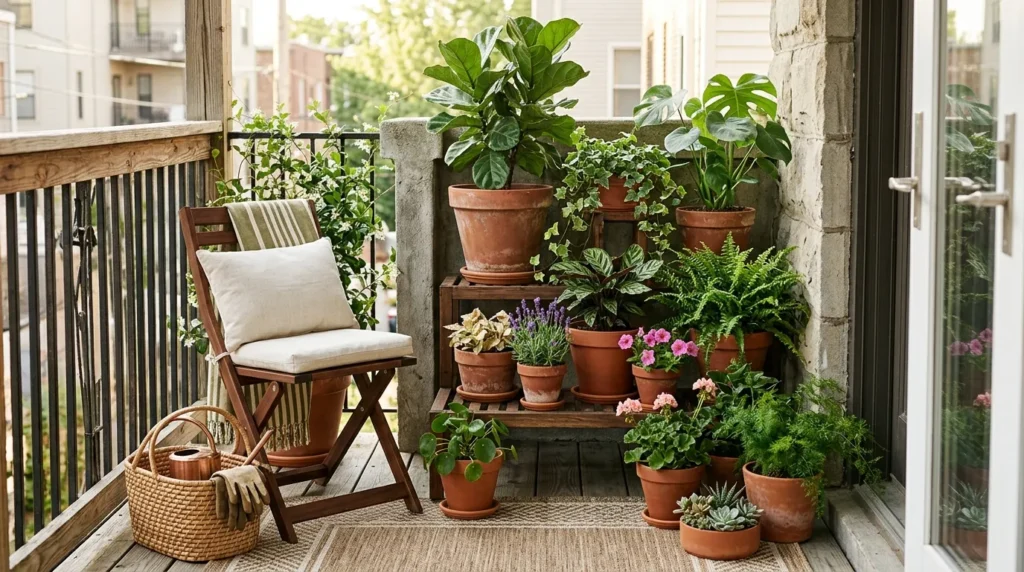
Instead of placing one large plant in the corner, create layers using containers at different heights.
A tall plant can form the background, medium containers can sit in front, and smaller plants can fill the lower spaces.
This creates a miniature garden composition without requiring much floor area.
How To Style It
Start with one taller plant suited to your balcony’s light conditions.
Add a medium-height planter beside it.
Finish with smaller pots or a low container in front.
Use a small plant stand to create another level if space permits.
Keep enough room for watering and maintenance.
Choose containers with drainage and protect the balcony surface from standing water according to your building’s requirements.
4. Hanging Plant Collection
Quick Benefits
- Frees floor space
- Adds vertical interest
- Creates a lush appearance
- Works with small balconies
- Highlights trailing plants
Why It Works
Hanging plants are especially useful when every square foot matters.
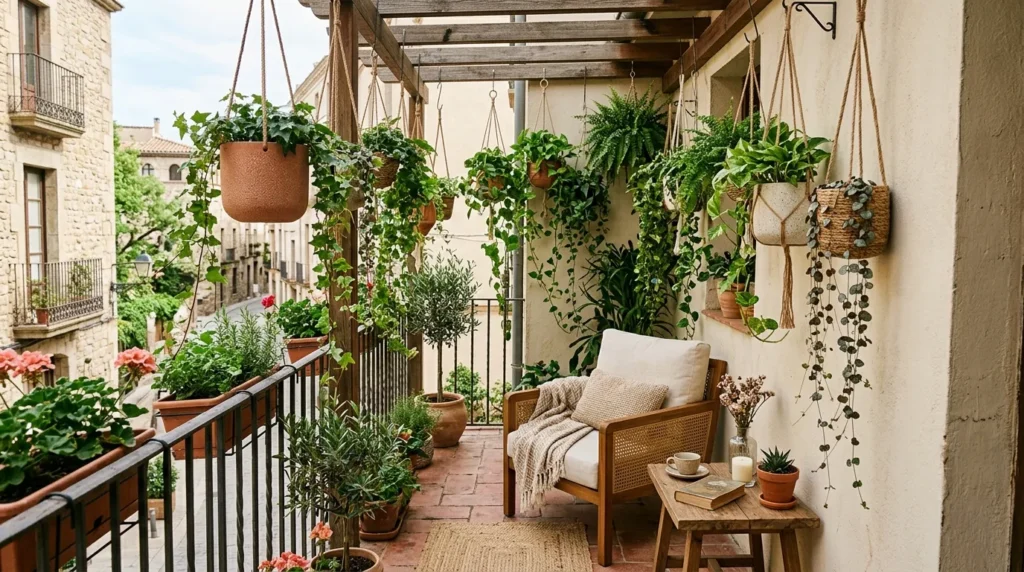
They draw the eye upward and allow greenery to occupy space that otherwise wouldn’t be used.
Trailing plants can soften balcony edges and create movement as the foliage grows.
Hanging containers also make a small balcony feel more layered.
How To Style It
Use a few hanging containers rather than filling the entire ceiling area.
Choose trailing plants that suit the amount of light and wind exposure.
Group containers at slightly different heights for a relaxed appearance.
Natural woven baskets can create a bohemian look, while simple ceramic or metal planters work well in modern spaces.
Use secure hardware appropriate for the structure and weight.
Avoid placing hanging pots where they could interfere with walkways or become hazardous in strong weather.
5. Compact Herb Garden
Quick Benefits
- Provides useful fresh herbs
- Works in small containers
- Adds fragrance
- Ideal for sunny balconies
- Combines beauty and function
Why It Works
A balcony garden doesn’t have to be purely decorative.
Many herbs can grow successfully in containers when they receive appropriate light and care.
A compact herb garden can also make the balcony feel connected to the kitchen.
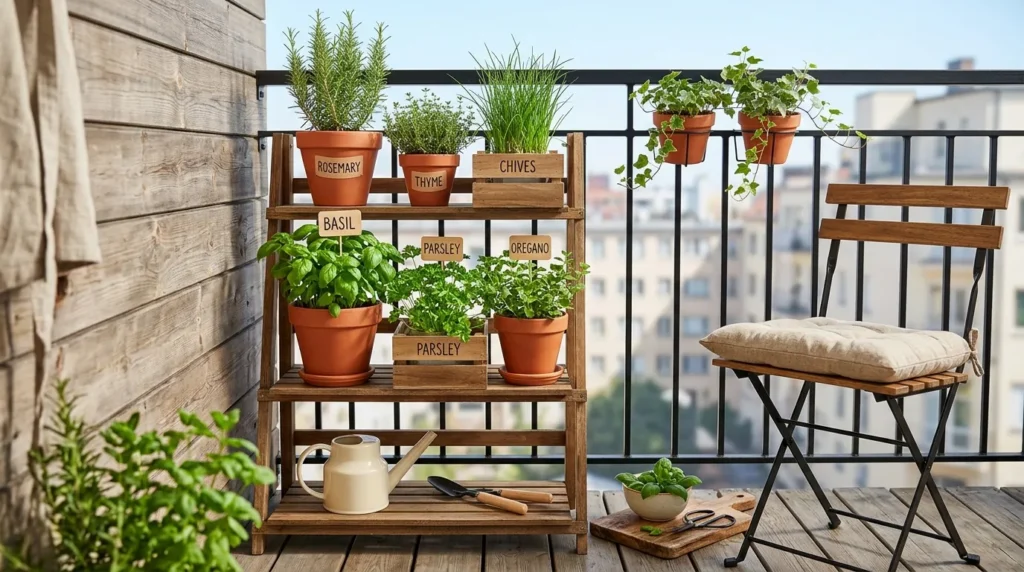
Basil, thyme, rosemary, mint, chives, parsley, and oregano are common choices, although the best options depend on your climate and growing conditions.
How To Style It
Use a narrow planter box or several small containers.
Place herbs with similar watering needs together.
Use plant labels for a practical touch.
Position sun-loving varieties where they receive sufficient light.
Keep aggressive spreaders such as mint in their own containers.
A small wooden shelf or tiered stand can keep the arrangement organized without using much floor space.
6. Tropical Greenery
Quick Benefits
- Creates a vacation-like atmosphere
- Adds bold foliage
- Makes a small balcony feel lush
- Works with natural textures
- Provides visual impact
Why It Works
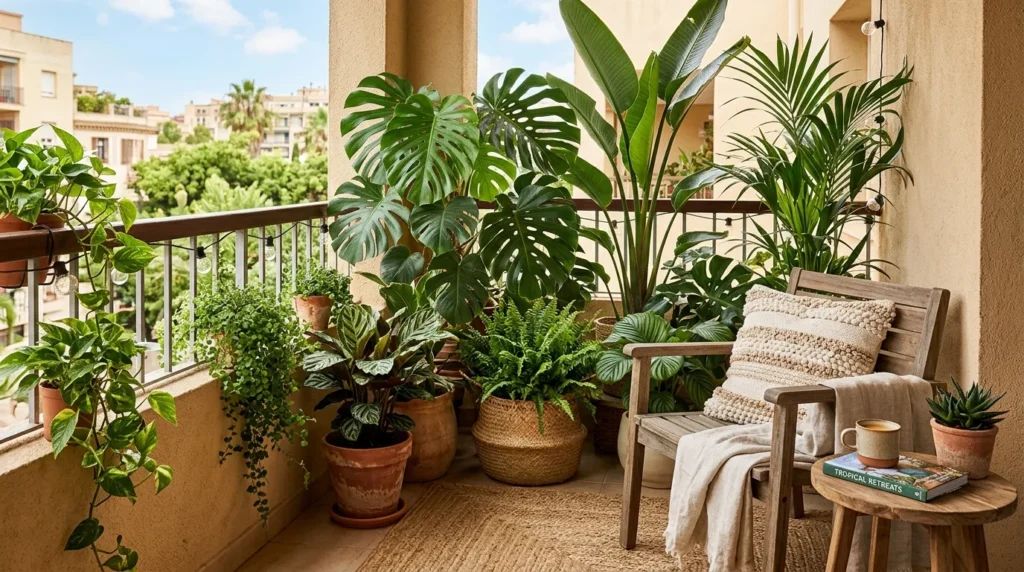
Large leaves can make a compact outdoor space feel dramatically greener.
The trick is choosing plants appropriate for your climate rather than selecting varieties based solely on appearance.
If your balcony is warm and receives suitable light, certain tropical or tropical-looking plants may thrive outdoors.
In cooler climates, some plants may need seasonal protection or to be moved indoors.
How To Style It
Choose one larger foliage plant as a focal point.
Surround it with smaller plants featuring contrasting leaf shapes.
Use terracotta, stone-look, or natural-fiber containers.
Add a wooden chair and woven cushion to reinforce the relaxed outdoor feeling.
Keep the rest of the decor simple so the foliage remains the visual focus.
7. Flower-Filled Balcony
Quick Benefits
- Adds seasonal color
- Creates visual interest
- Makes small spaces cheerful
- Works with railing planters
- Easy to refresh
Why It Works
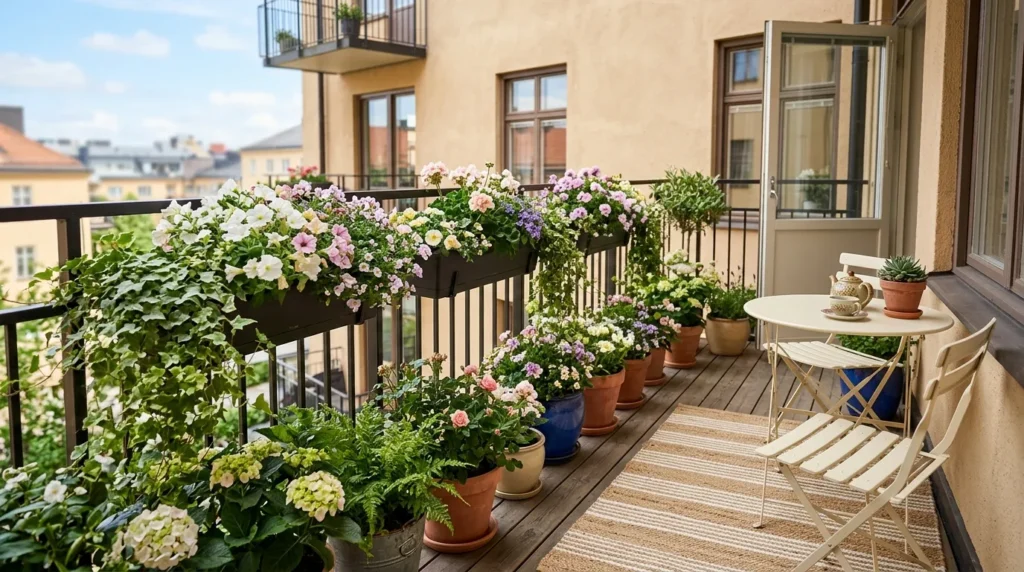
Flowering plants can bring immediate color to an otherwise neutral balcony.
Instead of using many unrelated colors, choose a simple palette.
White and green can create a calm appearance, while pink, lavender, blue, or warm yellow can create a more colorful garden.
Select varieties according to your local climate, sunlight, and container conditions.
How To Style It
Choose compact flowering plants for railing or window-style planters.
Combine upright flowers with trailing varieties.
Repeat the same color in several containers to create cohesion.
Use neutral pots if the flowers are colorful.
If the balcony is mostly neutral, colorful pots can become part of the design instead.
Deadhead and maintain flowering plants according to their specific care requirements.
8. Privacy Plant Screen
Quick Benefits
- Creates visual separation
- Adds greenery
- Makes seating feel more private
- Uses vertical space
- Softens hard architectural lines
Why It Works
Privacy is often one of the biggest concerns on apartment balconies.
Plants can provide a softer alternative to a completely solid screen.
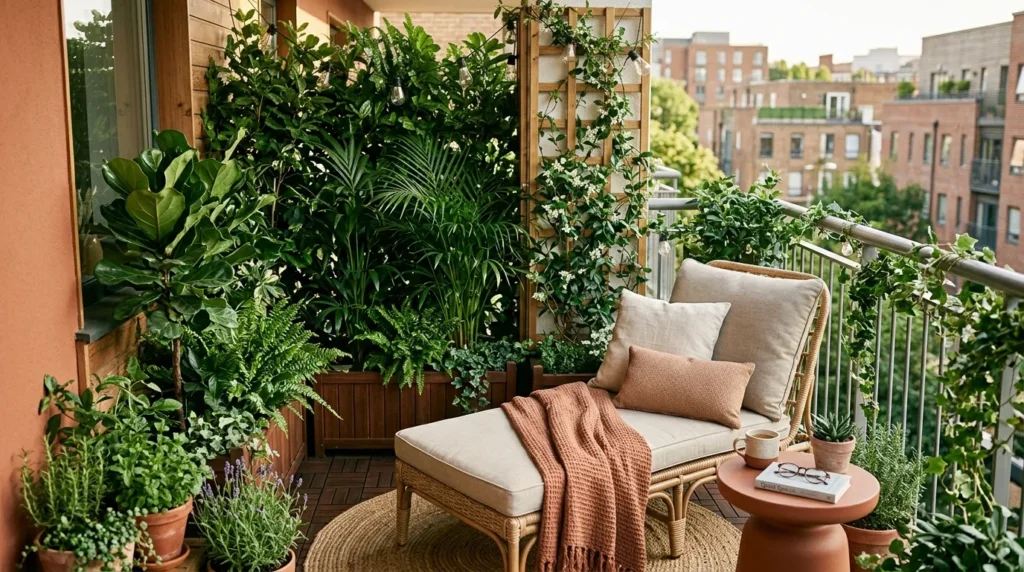
Tall container plants, climbing plants on an appropriate trellis, or dense foliage can partially block views while maintaining an outdoor feeling.
The right solution depends heavily on your balcony’s size, wind exposure, sunlight, and building regulations.
How To Style It
Place tall planters along the edge where privacy is most needed.
Use plants with an upright or naturally dense growth habit.
A narrow trellis can support suitable climbing plants.
Avoid overcrowding the balcony.
Choose sturdy containers that won’t easily tip in wind.
For rental properties, freestanding screens can provide flexibility without permanent installation.
9. Cozy Plant Nook
Quick Benefits
- Combines plants and seating
- Creates a relaxing retreat
- Makes the balcony more functional
- Works in very small spaces
- Encourages everyday use
Why It Works
Plants become much more enjoyable when they surround a place where you actually want to sit.
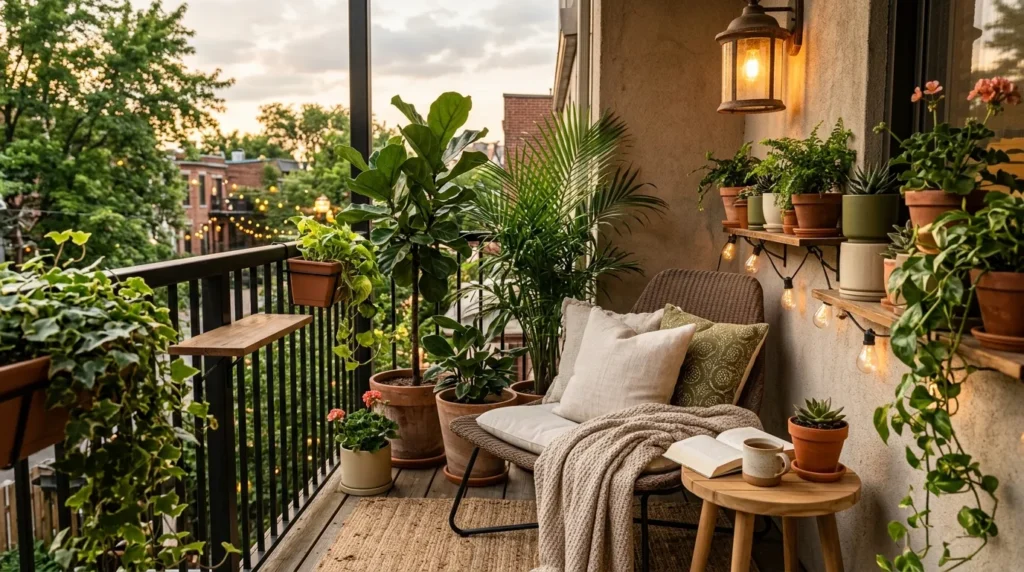
A single comfortable chair can transform a tiny balcony.
You don’t necessarily need a complete outdoor furniture set.
A compact bistro chair, folding chair, or slim lounge seat may be enough.
Surround it with a few carefully selected plants and the space can feel like a private garden corner.
How To Style It
Choose one comfortable weather-appropriate chair.
Add a small side table for coffee, books, or a drink.
Place one taller plant behind or beside the chair.
Add smaller pots around the perimeter.
Use a weather-resistant cushion in a neutral or botanical-inspired color.
Finish with soft outdoor lighting where permitted.
Keep the central walking area open.
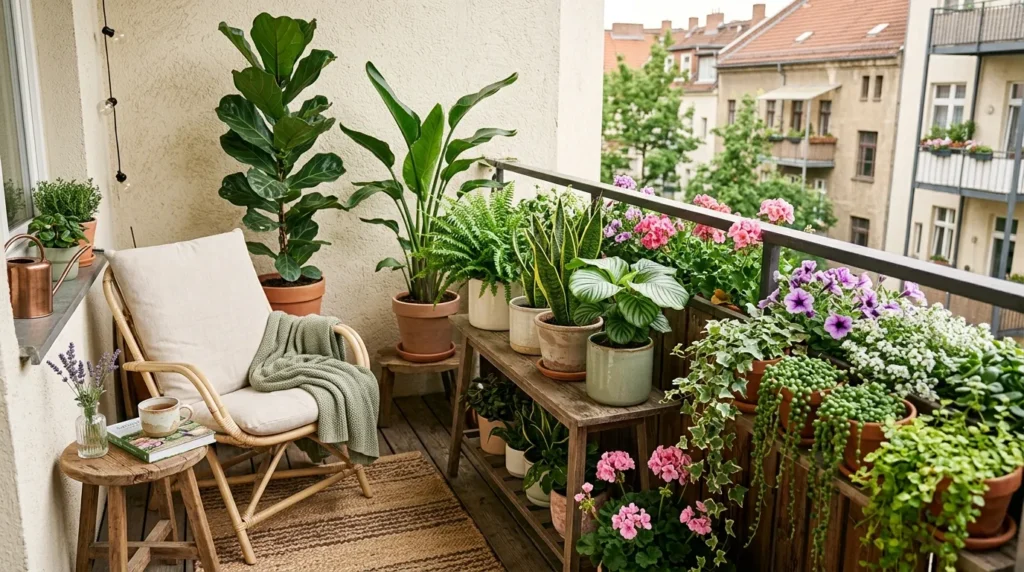
10. Layered Plant Display
Quick Benefits
- Creates a fuller garden look
- Uses different heights
- Adds visual depth
- Works with mixed containers
- Makes a compact balcony feel abundant
Why It Works
One of the easiest ways to make a small balcony garden look professionally designed is to vary plant height.
A collection of plants at exactly the same level can look flat.
Layering creates depth.
Use tall foliage toward the back, medium plants in the middle, and trailing or low-growing plants toward the front.
This approach makes even a small number of plants feel more substantial.
How To Style It
Start with one tall plant.
Add two or three medium-height containers.
Place smaller plants along the front edge.
Use a plant stand or narrow shelving to create additional levels.
Repeat a few container materials to keep the arrangement cohesive.
Combine different leaf shapes and textures while keeping their growing requirements compatible.
How To Choose Plants for a Small Balcony
The prettiest plant isn’t necessarily the right plant.
Start by observing your balcony for a full day.
Notice where direct sunlight falls in the morning and afternoon.
Then consider:
- How many hours of direct sun the space receives
- Wind exposure
- Summer temperatures
- Winter temperatures
- Available water
- Container size
- Drainage
- Maintenance time
- Building or rental restrictions
A south-facing balcony may have very different conditions from a shaded north-facing space.
Don’t assume that a plant labeled “outdoor” will thrive in every outdoor location.
Always check the plant’s growing requirements for your particular climate.
Best Plants for Small Balconies
The right plants depend on your local conditions, but several categories are particularly useful for compact outdoor spaces.
Trailing Plants
Trailing plants are useful for railings and hanging containers because their growth moves outward rather than occupying much floor space.
Herbs
Herbs can combine beauty and practicality, particularly on balconies with plenty of sunlight.
Compact Flowers
Small flowering varieties can provide seasonal color without requiring enormous containers.
Upright Foliage Plants
Tall, narrow-growing plants can create height and privacy while using relatively little floor width.
Climbing Plants
Suitable climbers can turn a trellis into a living wall when growing conditions are appropriate.
How To Make a Small Balcony Look Bigger
You don’t need to remove all your plants to make the balcony feel spacious.
Instead, control their placement.
Keep the center of the balcony relatively open.
Use vertical gardening along walls and railings.
Choose furniture with slim profiles.
Avoid filling every corner with separate small objects.
Repeating similar containers can also make the space feel more organized.
A limited color palette helps.
For example, cream furniture, terracotta pots, green foliage, and natural wood can create a cohesive look without feeling busy.
Small Balcony Planting Tips
Container gardening is different from planting directly in the ground.
Containers dry out faster and can become much hotter than surrounding garden soil.
Choose containers with adequate drainage.
Use a potting mix appropriate for the plant rather than ordinary garden soil when recommended.
Check moisture regularly, particularly during hot weather.
Remember that dark containers can become very warm in strong sun.
Also consider the weight of your containers.
Large pots filled with wet growing medium can become extremely heavy, so balcony load limits and building requirements should always be respected.
How To Decorate Around Balcony Plants
Plants don’t have to be the only feature.
A few carefully chosen outdoor elements can make the space more comfortable.
Consider:
- A compact chair
- Small bistro table
- Outdoor rug
- Weather-resistant cushions
- Lantern-style lighting
- Narrow plant stand
- Foldable furniture
- Woven baskets
- Small decorative screen
Keep the proportions appropriate for the balcony.
A large sectional might consume most of the available floor space, while a compact chair can leave enough room for plants and movement.
Common Small Balcony Mistakes
Using too many large pots: Containers can quickly consume usable floor space.
Ignoring wind: Upper balconies can experience surprisingly strong gusts.
Choosing plants only for appearance: Growing conditions matter more.
Blocking the doorway: Keep entry and exit areas clear.
Overwatering: Containers need appropriate drainage and watering practices.
Forgetting plant growth: A small plant can become a large one.
Using unsafe hanging systems: Hardware must support the container and plant weight.
Ignoring building rules: Apartment and condominium properties may have specific requirements for railings, attachments, water runoff, and exterior decor.
FAQ
What are the best plants for a small balcony?
The best plants depend on sunlight, temperature, wind, and your local climate. Herbs, compact flowering plants, trailing varieties, upright foliage plants, and suitable climbers can all work well. Choose plants based on their growing requirements rather than size alone, and remember that some plants will become considerably larger as they mature.
How can I decorate a very small balcony with plants?
Use vertical space first. Railing planters, hanging baskets, narrow shelves, wall-mounted planters, and compact plant stands can add greenery without consuming much floor area. Keep the center open and choose one comfortable piece of seating rather than filling the balcony with bulky furniture.
How do I create privacy with balcony plants?
Tall container plants, dense foliage, and suitable climbing plants on a secure trellis can create partial visual screening. Choose sturdy containers and plants appropriate for the balcony’s wind and sunlight conditions. Freestanding screens can be useful for renters because they don’t require permanent installation.
Can I grow herbs on a small balcony?
Yes. Many herbs can grow successfully in containers when they receive suitable light and water. Basil, thyme, rosemary, parsley, chives, oregano, and mint are common choices. Keep mint in its own container because it can spread aggressively. Select herbs according to your climate and balcony conditions.
How many plants should I put on a small balcony?
There isn’t a fixed number. Start with enough plants to create visual layers while keeping pathways, doors, seating, and railings usable. A few well-positioned plants can look more attractive than dozens of small pots. Think about the mature size of each plant before buying.
How do I protect balcony plants from strong wind?
Use stable, appropriately weighted containers and place vulnerable plants in more sheltered locations. Secure tall plants and trellises where necessary. Avoid lightweight objects that can become hazards during strong winds. Balcony-specific building rules and safety requirements should always be considered.
What is the easiest way to make a balcony feel like a garden?
Combine plants at several heights. Use a tall focal plant, medium containers, and trailing plants around the edges. Add one comfortable chair, a small table, and warm outdoor lighting where permitted. Repeating natural materials such as terracotta, wood, and woven textures can make the balcony feel cohesive and garden-like.
Conclusion
A small balcony doesn’t need a large footprint to become a beautiful outdoor retreat.
The most effective approach is to use the space vertically and choose plants that genuinely suit your growing conditions.
Start with the basics: sunlight, wind, temperature, container size, and maintenance requirements.
Then decide how you want the balcony to feel.
A vertical plant wall can create a lush focal point. Railing planters can add flowers without taking away floor space. Herbs can turn a sunny balcony into a useful little garden, while tall plants can provide a softer sense of privacy.
If you want the balcony to become a place where you actually spend time, add a comfortable chair and a small table rather than filling the floor with containers.
You can build the space gradually.
Start with two or three plants that thrive in your conditions, then add height, texture, and color as you discover what works.
The goal isn’t to squeeze as many plants as possible into a tiny area.
It’s to create a thoughtful outdoor space where every plant, pot, and piece of furniture has a purpose.
Even a compact balcony can feel surprisingly lush, comfortable, and personal when you combine smart planting with simple outdoor styling.
Related Articles
- 10 Small Patio Ideas for Cozy Outdoor Spaces
- 10 Patio Garden Ideas for Small Spaces
- 10 Outdoor Summer Styling Ideas
- 10 Backyard Seating Ideas for Relaxing Outdoors
- 10 Garden Decor Ideas With DIY Walkways