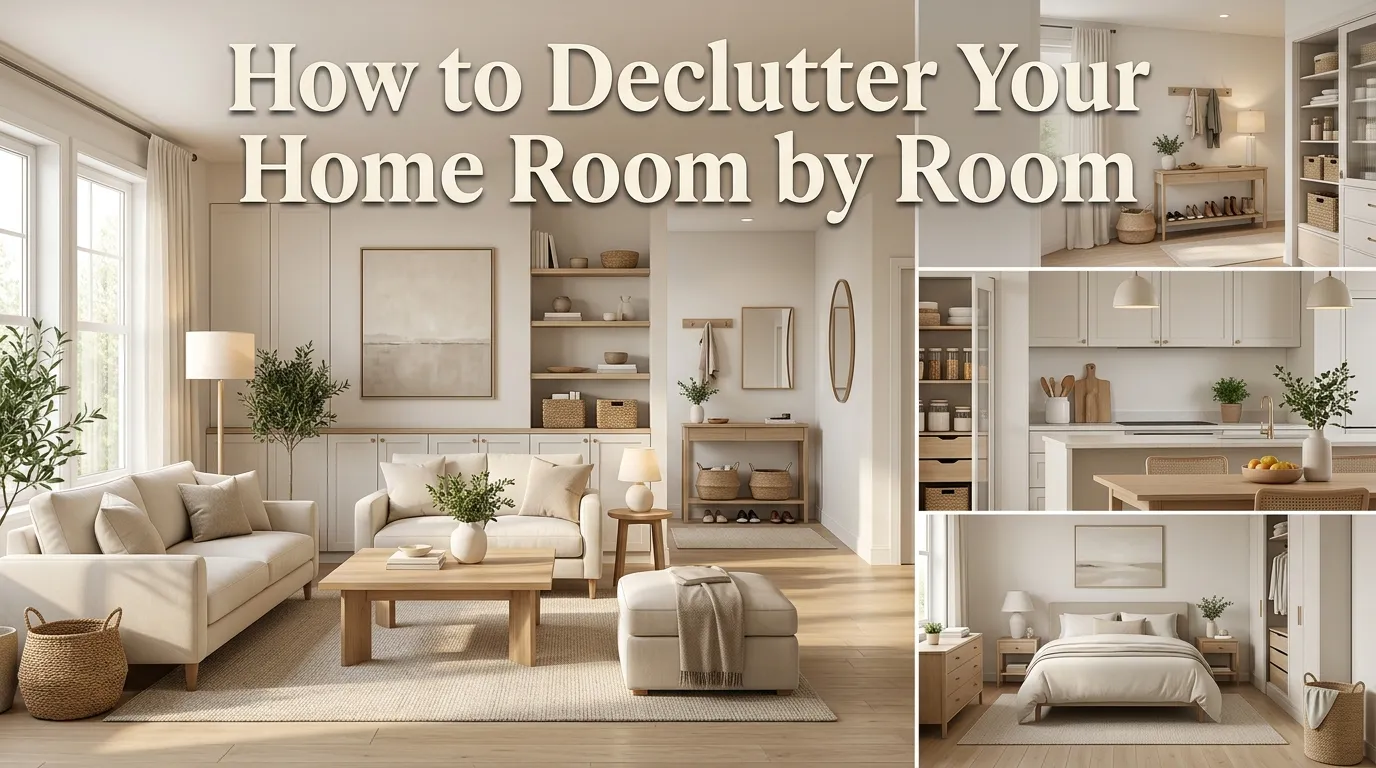
How to Declutter Your Home Room by Room
Decluttering your home can feel overwhelming when every room seems to need attention at the same time. You may have a crowded kitchen drawer, a closet full of clothes you rarely wear, a bathroom cabinet packed with half-used products, and a garage filled with items you haven’t touched in years.
The easiest way to make progress is to stop thinking about the entire house as one enormous project.
Instead, work room by room.
Breaking the process into smaller areas gives you a clear starting point and makes it easier to see progress. You can finish one space before moving to the next rather than constantly moving piles from one room to another.
A good decluttering session also isn’t about throwing away as much as possible. The goal is to create a home where the things you own are useful, loved, or genuinely meaningful—and where everyday items have logical places to live.
I’ve found that the most effective approach is to make decisions before organizing. Buying baskets and storage containers too early can simply give clutter a nicer-looking home. First decide what stays, what leaves, and what belongs somewhere else. Then organize what’s left.
This guide walks through the main areas of a typical American home, from the entryway and living room to the kitchen, bedrooms, bathrooms, home office, laundry room, and garage.
You’ll also find practical questions to ask when you’re stuck, tips for dealing with sentimental belongings, and simple habits that can prevent clutter from quickly returning.
You don’t have to finish the whole house in one weekend.
Choose one room, set aside a realistic amount of time, and start with the easiest category. Once you see an empty drawer, clear countertop, or organized closet, the next step usually feels much easier.
Table of Contents
1. Entryway Reset
Create a calmer first impression by removing unnecessary items from the home’s entrance.
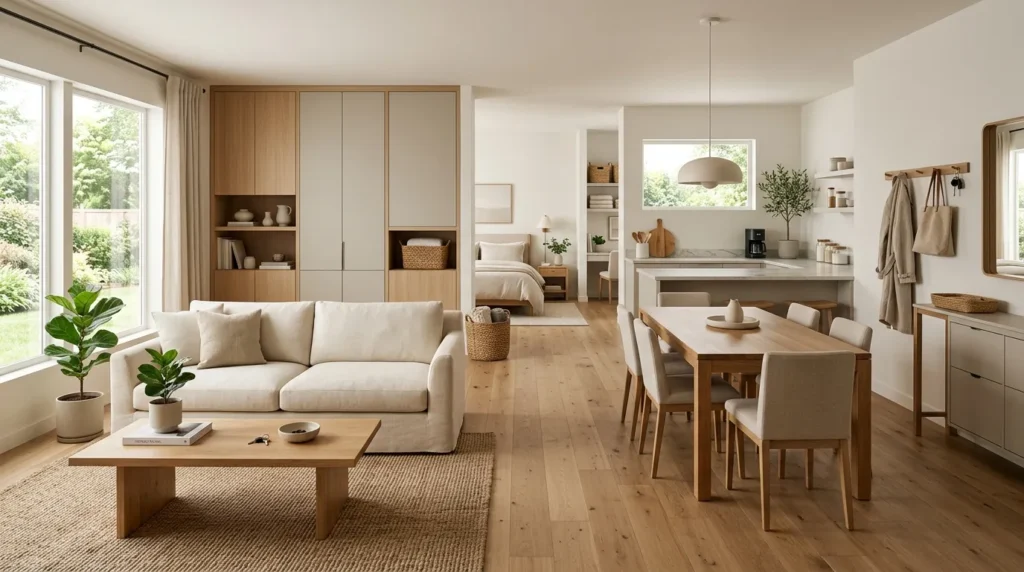
2. Living Room Declutter
Clear surfaces, furniture, shelves, and entertainment areas without losing personality.
3. Kitchen Simplify
Reduce duplicate cookware, expired food, unused appliances, and crowded cabinets.
4. Bedroom Refresh
Create a more restful room by reducing clothing, accessories, and unnecessary objects.
5. Bathroom Cleanout
Remove expired products and organize everyday toiletries for easier routines.
6. Home Office Reset
Clear paperwork, supplies, electronics, and digital clutter from your workspace.
7. Kids’ Room Edit
Reduce outgrown clothing, broken toys, and unused belongings while keeping favorites accessible.
8. Laundry Room Organize
Simplify cleaning supplies, linens, laundry products, and miscellaneous storage.
9. Garage Declutter
Create usable storage by sorting tools, seasonal items, sports equipment, and forgotten boxes.
10. Sentimental Items
Handle meaningful possessions thoughtfully without allowing memories to overwhelm your space.
1. Entryway Reset
Quick Benefits
- Makes coming home easier
- Reduces visible clutter
- Creates useful drop zones
- Improves everyday organization
- Prevents items from spreading into other rooms
Why It Works
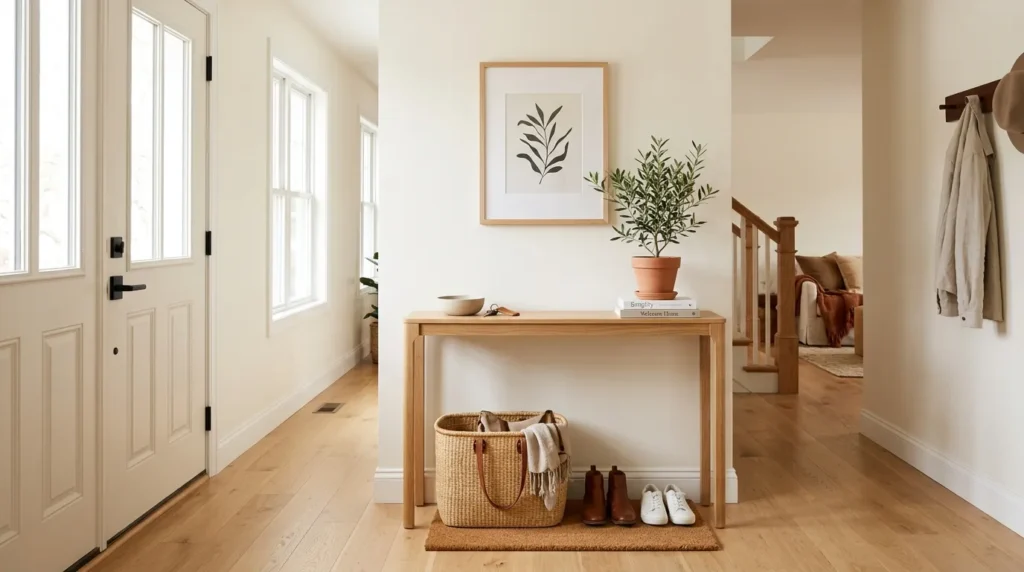
The entryway is where clutter often begins.
Keys, shoes, bags, mail, jackets, packages, umbrellas, and miscellaneous items can quickly accumulate because everyone naturally drops things there when they walk through the door.
Start by removing anything that doesn’t belong in the entryway.
Then identify what genuinely needs to stay.
A useful entryway doesn’t need dozens of storage accessories. It needs logical places for the few things your household uses regularly.
How To Declutter It
Remove everything from the entryway.
Create separate groups for:
- Keep here
- Move elsewhere
- Donate
- Recycle
- Discard
Keep only frequently used shoes and outerwear near the entrance.
Create a designated place for keys and everyday bags.
Sort mail as soon as possible instead of allowing it to become a permanent pile.
If you have a console table, leave some clear surface area.
A small basket can collect items temporarily, but make a habit of emptying it regularly.
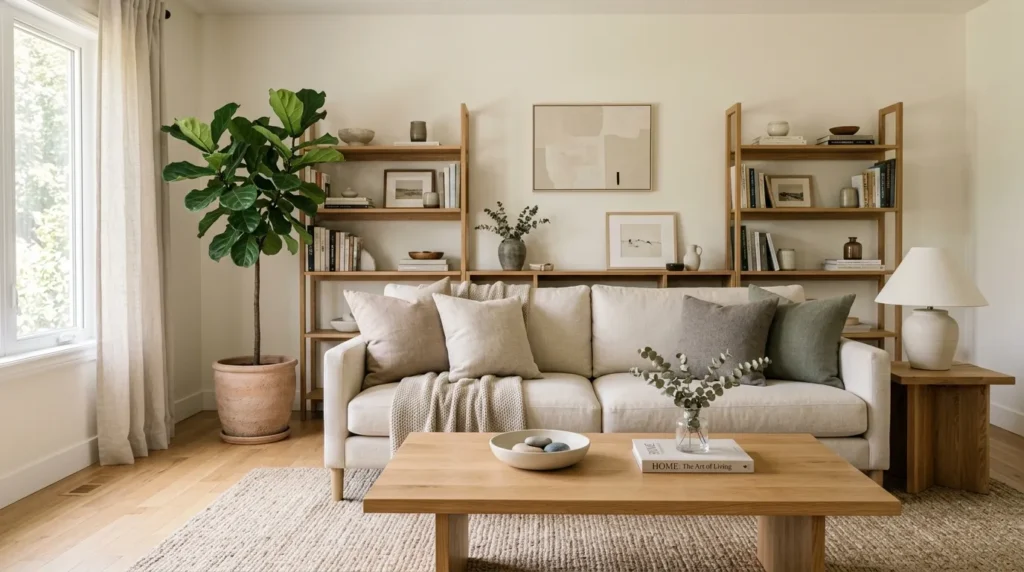
2. Living Room Declutter
Quick Benefits
- Creates more breathing room
- Makes cleaning easier
- Improves visual calm
- Highlights favorite decor
- Makes seating more comfortable
Why It Works
Living rooms tend to collect things because they’re shared spaces.
Books, blankets, toys, remotes, chargers, magazines, decor, paperwork, and random household objects can gradually take over tables and shelves.
The solution isn’t necessarily a minimalist living room.
You can keep artwork, books, plants, photographs, and decorative objects while still creating a room that feels organized.
The key is editing rather than emptying.
How To Declutter It
Start with coffee tables and side tables.
Remove anything that doesn’t belong.
Then look at shelves and entertainment units.
Ask yourself:
- Do I use this?
- Do I enjoy looking at it?
- Does it belong in this room?
- Is it worth the space it occupies?
Remove duplicate blankets and pillows.
Sort books you no longer want.
Recycle old magazines and unnecessary papers.
Keep cords organized and remove electronics that are no longer used.
Finish by vacuuming and cleaning the newly cleared surfaces.
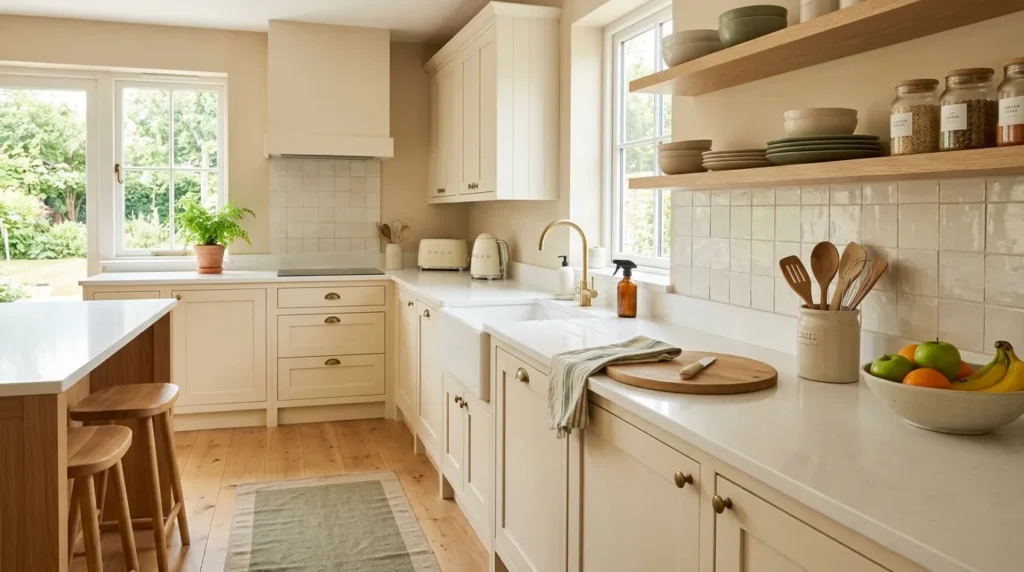
3. Kitchen Simplify
Quick Benefits
- Makes cooking easier
- Creates more cabinet space
- Reduces duplicate items
- Improves food visibility
- Makes cleaning simpler
Why It Works
Kitchens can become cluttered surprisingly quickly because they contain so many different categories of belongings.
Cookware, appliances, utensils, food containers, serving pieces, pantry ingredients, cleaning supplies, and specialty gadgets all compete for limited space.
Start with one category rather than opening every cabinet simultaneously.
This keeps the process manageable.
How To Declutter It
Begin with one drawer or cabinet.
Remove everything.
Discard expired food and products.
Group similar items together.
Look for duplicates.
You may discover several spatulas, water bottles, travel mugs, food storage containers, or kitchen gadgets that serve the same purpose.
Keep the best versions and remove the rest if they’re genuinely unnecessary.
Check food storage containers for missing lids.
Remove appliances you rarely use if they take up valuable space.
For pantry items, group foods by category and keep frequently used ingredients easy to reach.
Avoid buying storage organizers until you know what you’re keeping.
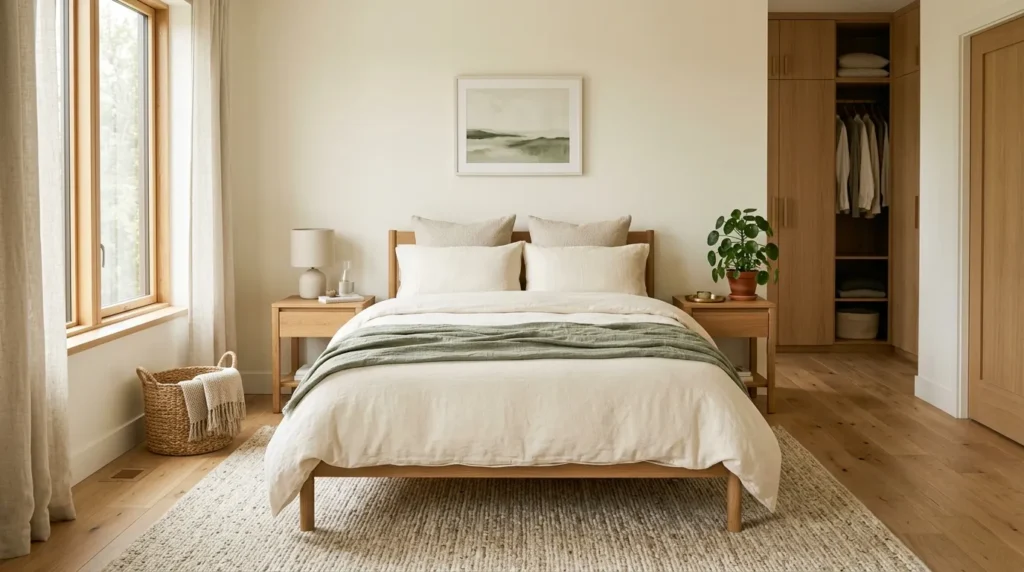
4. Bedroom Refresh
Quick Benefits
- Creates a calmer environment
- Makes getting dressed easier
- Reduces visual distractions
- Improves closet accessibility
- Makes cleaning simpler
Why It Works
Bedrooms are supposed to support rest, but they can easily become storage areas.
Clothing gets piled on chairs.
Shoes collect under the bed.
Nightstands become covered with chargers, books, cosmetics, and miscellaneous items.
The most effective bedroom decluttering starts with clothing because wardrobes often contain the largest volume of unnecessary belongings.
How To Declutter It
Take clothing one category at a time.
Start with shirts, then pants, dresses, jackets, shoes, and accessories.
Ask:
- Does it fit?
- Have I worn it recently?
- Is it comfortable?
- Would I choose it again today?
- Is it damaged beyond reasonable repair?
Create a separate repair pile for items worth fixing.
Donate clean, wearable clothing that no longer serves you.
Remove worn-out items according to appropriate local textile recycling or disposal options.
Then declutter your nightstand, dresser, under-bed storage, and bedroom surfaces.
Keep only items that support your daily routine or make the room feel personal.
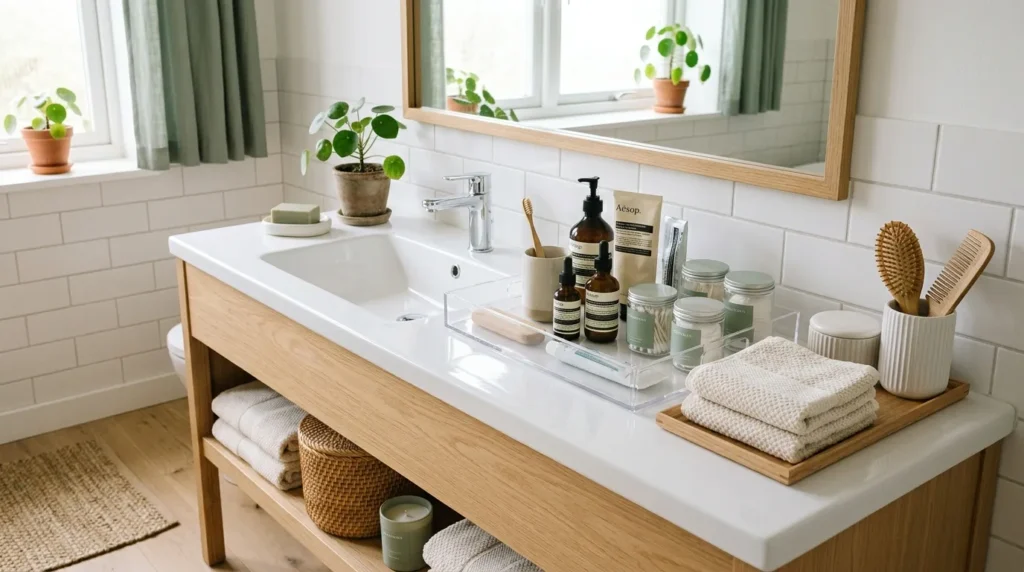
5. Bathroom Cleanout
Quick Benefits
- Makes daily routines easier
- Removes expired products
- Frees cabinet space
- Improves visibility
- Simplifies cleaning
Why It Works
Bathrooms are notorious for accumulating products that seemed useful when purchased but eventually sit untouched.
Skincare, hair products, cosmetics, medications, cleaning supplies, towels, and toiletries can quickly fill every available cabinet.
Start by checking expiration dates and product condition.
Be particularly careful with products that have changed color, smell, or texture.
How To Declutter It
Remove products from one cabinet at a time.
Group similar items together.
Create categories such as:
- Hair care
- Skincare
- Dental care
- Bath products
- First-aid supplies
- Cleaning products
Discard products that are expired or no longer suitable for use according to their labels and local disposal guidance.
Check cosmetics and personal-care items for age and condition.
Reduce duplicate towels.
Keep everyday products accessible while storing occasional-use items elsewhere.
Use small organizers only after you’ve finished editing the collection.
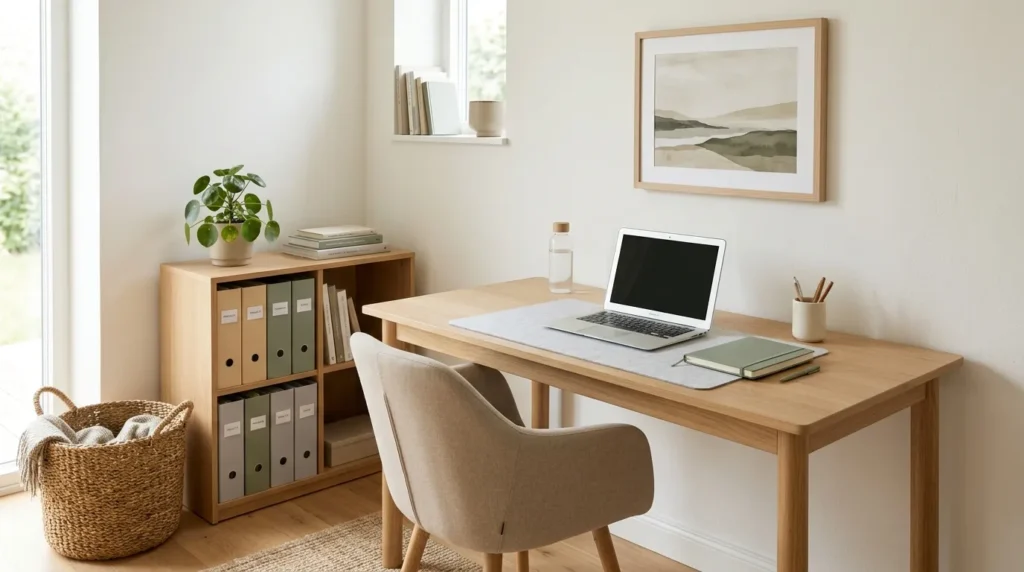
6. Home Office Reset
Quick Benefits
- Improves concentration
- Reduces paper clutter
- Makes supplies easier to find
- Creates more workspace
- Simplifies administrative tasks
Why It Works
Paper is one of the easiest forms of clutter to underestimate.
A few bills, receipts, printed documents, manuals, school papers, and notes can quickly become several piles.
Office supplies can create a similar problem.
Pens, notebooks, cables, folders, and miscellaneous electronics often accumulate because they’re small and easy to keep.
How To Declutter It
Start with your desk.
Remove everything that doesn’t belong.
Sort papers into:
- Action required
- File
- Shred
- Recycle
Be careful with documents containing sensitive personal information and use appropriate secure disposal methods.
Sort office supplies by type.
Test pens before keeping large quantities.
Recycle or properly dispose of obsolete electronics according to local requirements.
Keep frequently used items within easy reach.
Create one designated location for important paperwork.
If possible, digitize documents that don’t need to be retained physically, while keeping records required for legal, tax, financial, or other practical purposes.
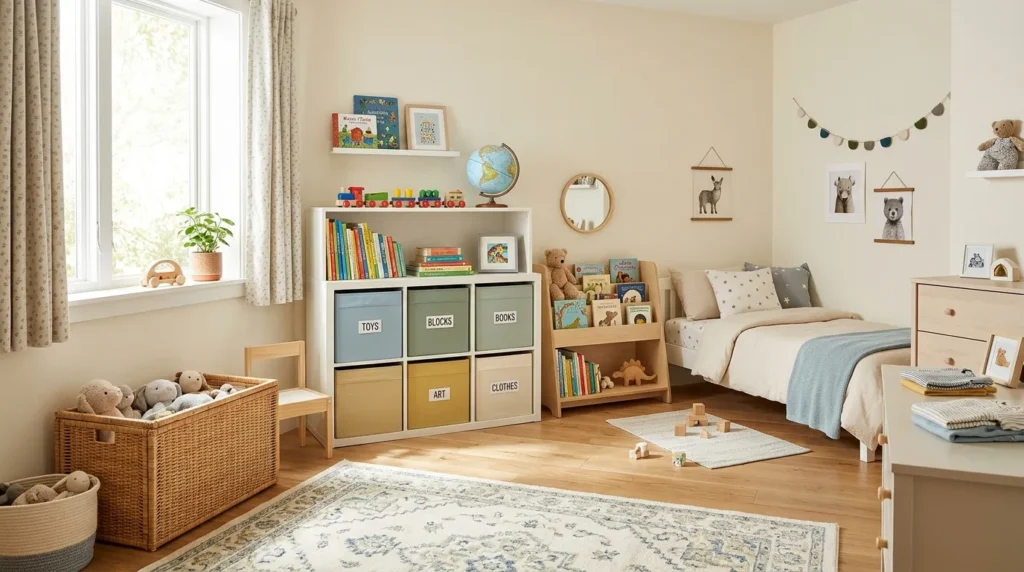
7. Kids’ Room Edit
Quick Benefits
- Makes toys easier to manage
- Creates more usable floor space
- Keeps favorite items accessible
- Reduces outgrown belongings
- Simplifies cleanup
Why It Works
Children’s belongings change constantly.
Clothes become too small.
Toys break.
Interests change.
Craft supplies accumulate.
Trying to organize everything without removing anything usually creates more work.
The goal is to create an environment where children can actually see and use what they have.
How To Declutter It
Start with broken toys.
Remove items that are incomplete, unsafe, or no longer usable.
Sort clothing by size.
Create a clearly labeled storage area for sentimental baby clothes or special keepsakes if you want to preserve them.
Group toys by type.
Consider keeping fewer toys accessible at one time and rotating others if your household finds that helpful.
Use open bins for frequently used toys.
Keep small parts contained where appropriate.
Involve older children in age-appropriate decisions about belongings.
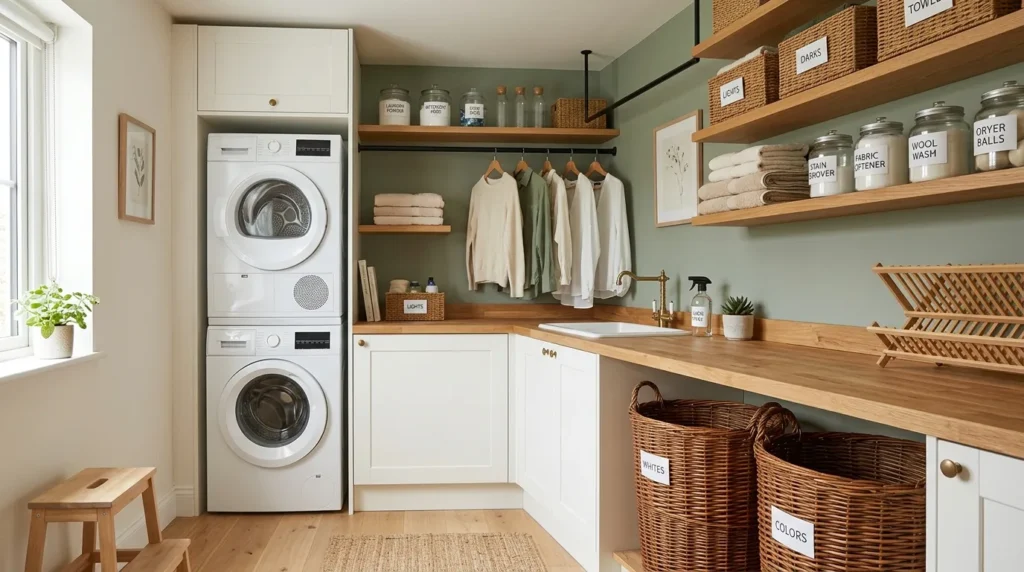
8. Laundry Room Organize
Quick Benefits
- Creates useful storage
- Makes laundry routines faster
- Reduces duplicate products
- Keeps supplies visible
- Improves safety
Why It Works
Laundry rooms often become unofficial storage closets.
Extra cleaning products, old hangers, random tools, empty containers, seasonal items, and miscellaneous household objects can gradually take over.
Because laundry rooms are functional spaces, clutter here can make simple chores feel more difficult than they need to be.
How To Declutter It
Remove everything from shelves and cabinets.
Check cleaning products and laundry supplies.
Follow label instructions for storage and disposal.
Do not mix cleaning chemicals.
Group laundry products together.
Keep frequently used supplies near the washer and dryer.
Remove broken baskets and unused hangers.
Create a small designated area for items waiting to be repaired or treated.
Use vertical shelving when floor space is limited.
Keep ventilation areas, appliance controls, and access points clear.
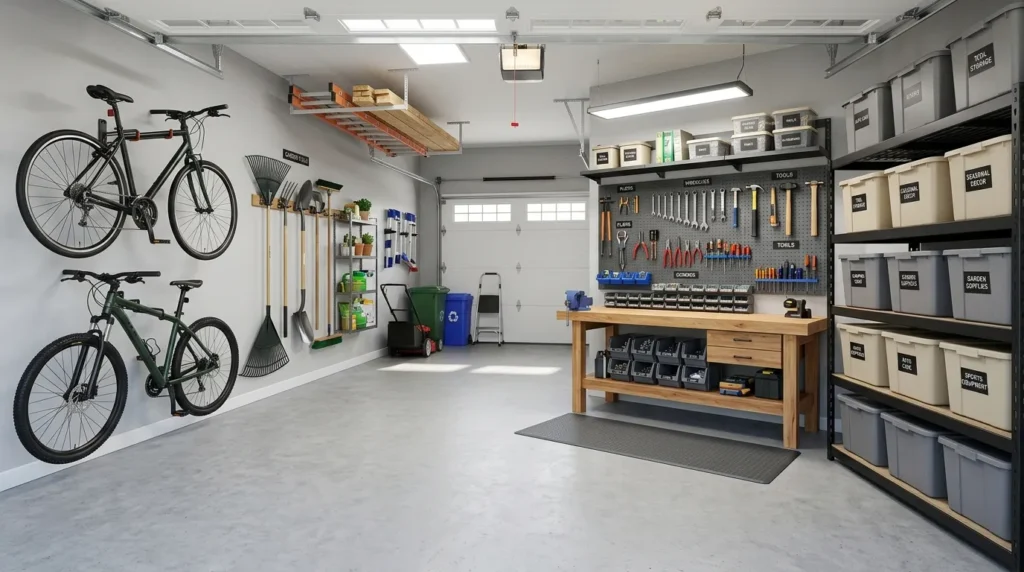
9. Garage Declutter
Quick Benefits
- Creates usable floor space
- Makes tools easier to find
- Improves vehicle access
- Reduces forgotten storage
- Makes seasonal items easier to manage
Why It Works
Garages often become the final destination for things that don’t have a clear home.
Boxes get pushed against walls.
Old furniture gets stored “temporarily.”
Sports equipment gets mixed with tools.
Seasonal decorations disappear into piles.
The garage should be treated as another room that deserves an intentional system.
How To Declutter It
Work in sections rather than emptying the entire garage at once.
Create categories for:
- Tools
- Gardening equipment
- Sports gear
- Automotive supplies
- Seasonal decorations
- Household storage
- Donation items
- Recycling
Remove broken tools and equipment.
Identify duplicate items.
Use wall-mounted storage where appropriate to keep the floor clear.
Label seasonal bins.
Keep frequently used equipment accessible.
Avoid storing items in ways that block electrical panels, water heaters, vents, doors, or other important access points.
For hazardous materials, follow local disposal requirements rather than putting them in ordinary household trash.
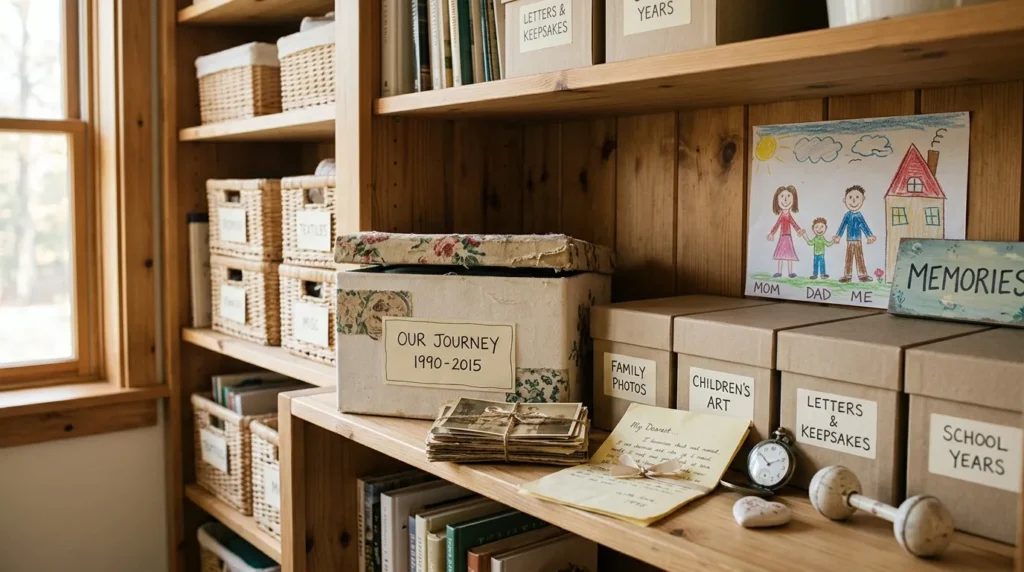
10. Sentimental Items
Quick Benefits
- Makes difficult decisions easier
- Protects meaningful memories
- Prevents unnecessary storage
- Reduces guilt
- Creates intentional keepsakes
Why It Works
Sentimental belongings are usually the hardest part of decluttering.
A shirt may remind you of someone.
A child’s drawing may represent an important moment.
Old photographs can carry decades of memories.
The answer isn’t to throw away everything that isn’t practical.
Instead, separate emotional value from the physical object.
You can honor a memory without keeping every version of it.
How To Declutter It
Save your sentimental items for last.
When you’re more comfortable making ordinary decluttering decisions, emotional belongings may become easier to evaluate.
Ask:
Do I love the object itself, or do I love the memory attached to it?
If the memory matters more than the physical item, consider photographing it before letting it go.
Create one intentional memory box per person or category if that works for your household.
For children’s artwork, select favorites rather than saving every page.
Never feel pressured to discard meaningful belongings simply because a decluttering method says you should.
The goal is intentional ownership, not an empty home.
A Simple Decluttering Method
If you’re unsure where to begin, use five categories:
Keep: Items you use, need, or genuinely value.
Move: Things that belong somewhere else in the house.
Donate: Useful items you no longer need.
Recycle: Materials that can appropriately enter a recycling stream.
Discard: Items that are broken, unusable, or otherwise unsuitable for donation or recycling.
For certain categories—especially documents, electronics, medications, batteries, paint, and household chemicals—use appropriate local disposal or recycling programs rather than automatically placing everything in the trash.
What Should You Declutter First?
If the whole house feels overwhelming, start with a small, visible area.
Good starting points include:
- Junk drawer
- Bathroom counter
- Entryway
- Coffee table
- Kitchen utensil drawer
- Nightstand
- One shelf
- Closet floor
Completing a small area creates a visible result quickly.
Then move to another manageable space.
There’s no requirement to declutter the entire house in one day.
What To Do With Things You No Longer Want
Decluttering creates a second problem: where everything goes.
Try to avoid creating enormous “donation piles” that remain in your home for weeks.
Create a realistic plan.
Donate: Clean, functional items that are appropriate for donation.
Sell: Valuable items that are worth the time and effort involved.
Recycle: Materials accepted by appropriate local recycling programs.
Repair: Items worth fixing and realistically likely to be repaired.
Dispose: Items that are broken, unsafe, contaminated, or otherwise unsuitable for reuse.
If you’re selling items, set a reasonable deadline.
If something remains unsold after that period, reconsider whether donating it would be more useful.
How To Declutter Without Getting Overwhelmed
One of the biggest mistakes is creating a massive project that you don’t have the time or energy to finish.
Instead, use short sessions.
Set a timer for 20–30 minutes.
Choose one drawer, shelf, cabinet, or category.
Finish that area before moving somewhere else.
You can also use a “one category at a time” approach.
For example, gather all your shoes before deciding what to keep.
This can make duplicates much easier to recognize.
Most importantly, stop when your planned session ends if you are tired.
A sustainable decluttering routine is more useful than an exhausting weekend that leaves you frustrated.
How To Keep Your Home Decluttered
Decluttering isn’t finished when the donation bags leave the house.
The next challenge is preventing clutter from returning.
Try a few simple habits:
- Put things away immediately after use.
- Deal with mail regularly.
- Keep a donation box in an accessible location.
- Review clothes seasonally.
- Avoid buying storage before editing belongings.
- Use the “one in, one out” approach for categories where it makes sense.
- Give frequently used objects designated homes.
- Reset high-traffic areas at the end of the day.
You don’t need a complicated organizing system.
A simple home where everything has a reasonable place is easier to maintain.
Common Decluttering Mistakes
Trying to finish the entire house at once: Large projects can become overwhelming.
Organizing before decluttering: Storage doesn’t solve excess.
Keeping items out of guilt: An unused item doesn’t become useful because it was expensive.
Creating huge undecided piles: Make a decision or set a specific time to revisit it.
Keeping broken items indefinitely: If you’re realistically going to repair something, give yourself a reasonable deadline.
Buying too many containers: Determine what remains first.
Decluttering someone else’s belongings without permission: Shared spaces require communication.
Expecting perfection: Homes are lived in. The goal is easier living, not a showroom.
FAQ
What is the fastest way to declutter a house?
The fastest sustainable approach is to work systematically rather than randomly. Choose one room or category, remove obvious trash and items that don’t belong, then sort the remaining belongings into keep, move, donate, recycle, and discard categories. Start with visible areas that affect daily life so you can see progress quickly.
What room should I declutter first?
Start with a small, high-impact area you can realistically finish. An entryway, kitchen drawer, bathroom counter, nightstand, or living room coffee table can be a good starting point. Completing one manageable area can build momentum before you tackle larger spaces such as closets, bedrooms, or garages.
How do I decide what to get rid of when decluttering?
Ask whether you use the item, whether it fits your current life, whether you have duplicates, and whether you genuinely value it. Also consider whether it is worth the space it occupies. For sentimental belongings, separate the memory from the physical object and decide whether the item itself needs to be preserved.
Should I organize or declutter first?
Declutter first and organize second. If you buy containers before deciding what you actually need, you may simply create attractive storage for items you don’t use. Once unnecessary belongings have left the room, measure the remaining items and choose storage that fits the space and your everyday routines.
How long should I spend decluttering each room?
There is no universal time limit. A small drawer might take 15 minutes, while a garage can require several sessions. Short, focused sessions of about 20–30 minutes can make the process more manageable. The important thing is to finish the area you start rather than creating unfinished piles throughout the home.
How do I declutter sentimental items without feeling guilty?
Leave sentimental belongings until you’ve completed easier categories. When you’re ready, keep the objects that genuinely carry meaning and consider photographing others before letting them go. Memory boxes can help create a physical limit. You don’t have to discard meaningful possessions simply to achieve a minimalist home.
How do I stop clutter from coming back?
Give frequently used items designated homes and return them after use. Regularly process mail, maintain a donation box, review clothes and pantry items periodically, and think carefully before bringing new belongings into the house. A small daily reset can prevent minor clutter from becoming a major weekend project.
Conclusion
Decluttering your home room by room is much more manageable than trying to transform the entire house at once.
Start small.
Clear the entryway so coming home feels easier. Edit the living room so surfaces have room to breathe. Simplify the kitchen by removing duplicates and unused items. Work through your bedroom closet, bathroom cabinets, home office, laundry room, and garage one manageable section at a time.
Don’t focus on how much you can throw away.
Focus on creating a home that supports the way you actually live.
Some belongings deserve to stay because they’re useful. Others stay because they bring genuine happiness or preserve important memories. The goal is to make those choices intentionally rather than allowing clutter to make the decisions for you.
And don’t underestimate small wins.
A single organized drawer may not seem significant, but it demonstrates that the process works. One clear countertop can make a room feel different. One edited closet can make getting dressed easier every morning.
Once you’ve finished a room, give everything that remains a sensible home and create simple habits that help maintain the space.
You don’t need a perfectly minimalist house.
You simply need a home where the things you own have enough room to be useful, appreciated, and easy to manage.
Start with one room today, finish one small area, and let the progress build from there.
Related Articles
- 10 Simple Home Organization Ideas for Every Room
- 10 Small Space Storage Ideas for a Clutter-Free Home
- 10 Bedroom Organization Ideas for a Calmer Space
- 10 Kitchen Organization Ideas That Save Space
- 10 Closet Organization Ideas for Everyday Living