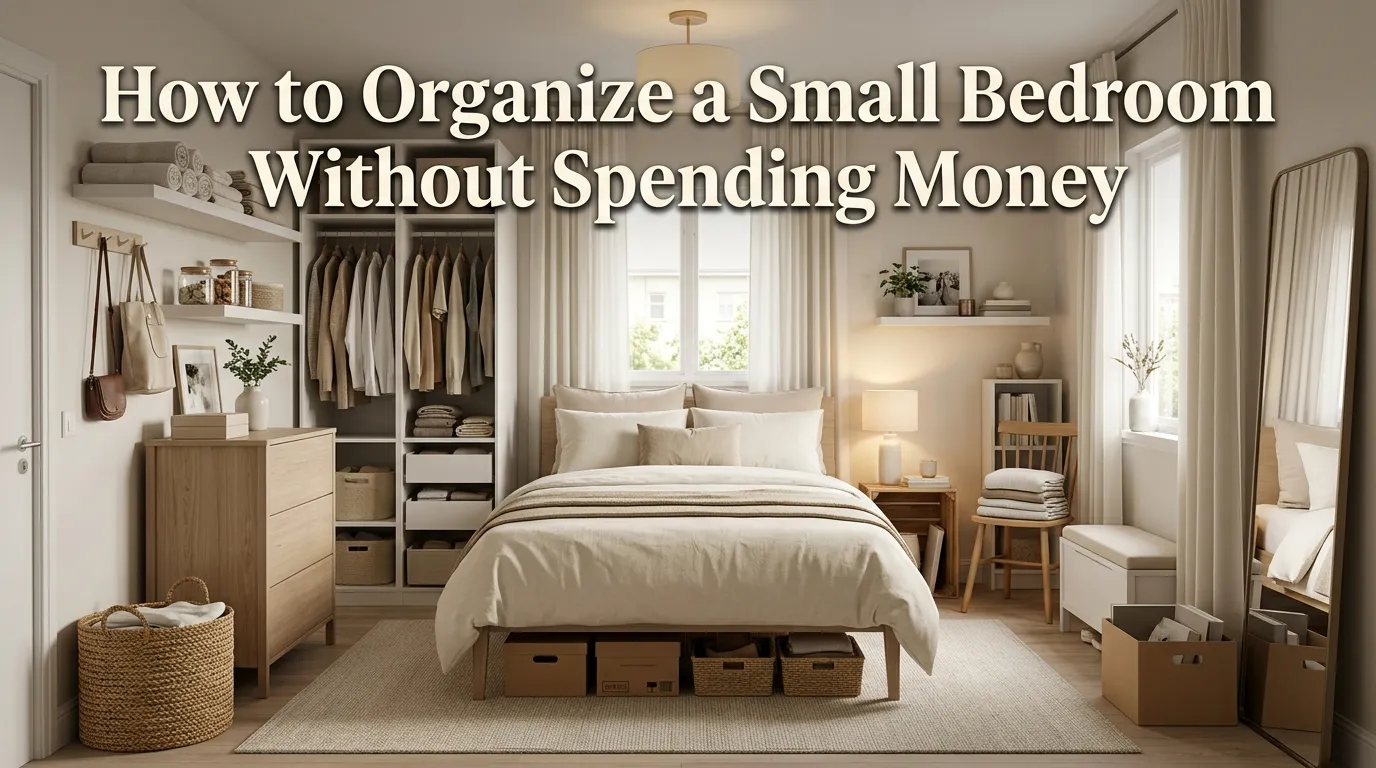
How to Organize a Small Bedroom Without Spending Money
Organizing a small bedroom can feel impossible when there simply isn’t enough room for everything you own. Clothes pile up on chairs, nightstands become catch-all surfaces, and the floor seems to disappear under shoes, bags, books, and laundry.
But you don’t necessarily need new storage bins, expensive organizers, or a trip to the furniture store to make a small bedroom feel more organized.
In many cases, the first step is simply using the space you already have more intentionally.
I’ve noticed that small bedrooms often become cluttered because items don’t have a clearly defined home. When storage is limited, every surface starts doing several jobs at once. The nightstand becomes an office, the chair becomes a closet, and the floor becomes temporary storage—which eventually stops feeling temporary.
The good news is that your existing furniture and everyday household items can often solve more of the problem than you might expect.
An empty drawer can be reorganized. A suitcase can hold seasonal clothing. A clean shoebox can become a drawer divider. The space underneath your bed can be used more effectively. Even the back of a door can become useful storage without buying anything new.
The goal isn’t to make your bedroom look like a perfectly staged organizing photo. It’s to make everyday life easier.
These ideas focus on decluttering, rearranging, repurposing, and creating simple systems using things you already own. They’re especially useful for renters, students, families, and anyone working with a genuinely small bedroom.
Before buying another organizer, walk around your room and look at what you already have. You may discover that the storage solution you need is already there.
Table of Contents
1. Declutter First
Remove items you no longer need before reorganizing anything.
2. Use Under-Bed Space
Turn forgotten space beneath the bed into practical storage.
3. Rearrange Your Furniture
Improve storage and movement by changing the room’s layout.
4. Repurpose Household Boxes
Transform existing boxes into free organizers for small belongings.
5. Organize Your Closet
Make better use of the closet space you already have.
6. Use Door Space
Take advantage of overlooked vertical storage around the bedroom.
7. Create Clothing Zones
Give different categories of clothing clear homes.
8. Clear Flat Surfaces
Reduce visual clutter by giving nightstands and dressers specific purposes.
9. Rotate Seasonal Items
Move rarely used belongings out of your everyday storage areas.
10. Maintain the System
Create simple habits that keep the bedroom organized long-term.
1. Declutter First
Quick Benefits
- Creates immediate space
- Makes organizing easier
- Reduces visual clutter
- Helps identify what you actually use
- Costs absolutely nothing
Why It Works
The easiest storage problem to solve is often the one created by things you don’t need.
When a small bedroom is packed with clothes, accessories, papers, empty boxes, unused products, and miscellaneous belongings, even a well-designed storage system can become overwhelmed.
That’s why decluttering should come before rearranging.
You don’t need to throw everything away. The goal is simply to separate the things you regularly use from things that no longer belong in your bedroom.
A smaller number of useful possessions also makes daily tidying much easier.
How To Style It
Work in small categories rather than emptying the entire room at once.
Start with clothing, then shoes, books, accessories, paperwork, and miscellaneous items.
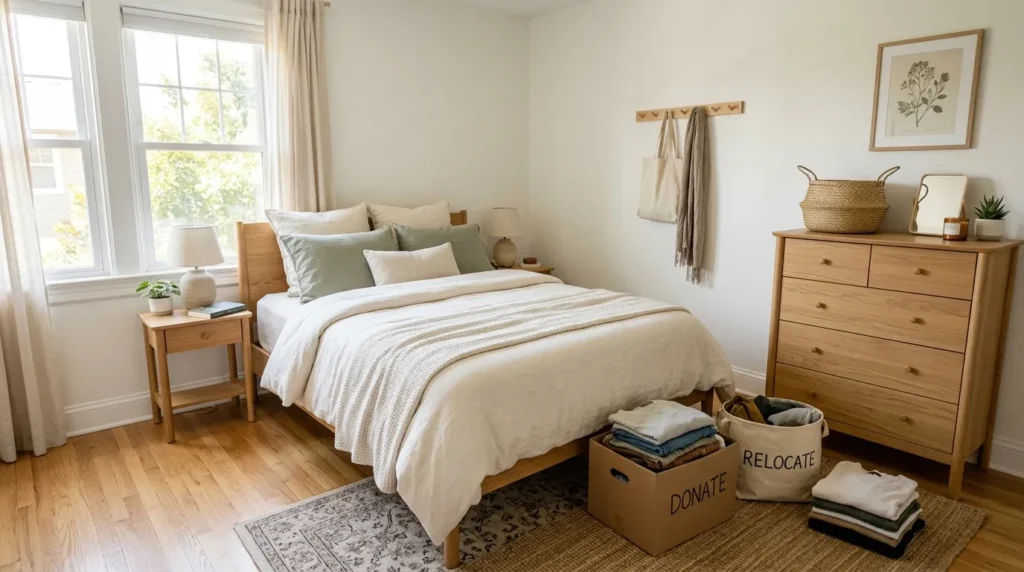
Create simple groups:
- Keep
- Donate
- Recycle
- Move elsewhere
- Decide later
Be honest about what you actually use.
If something belongs in another room, move it immediately instead of creating a new pile in the bedroom.
Once you’ve removed obvious clutter, you’ll have a much clearer idea of what storage you actually need.
2. Use Under-Bed Space
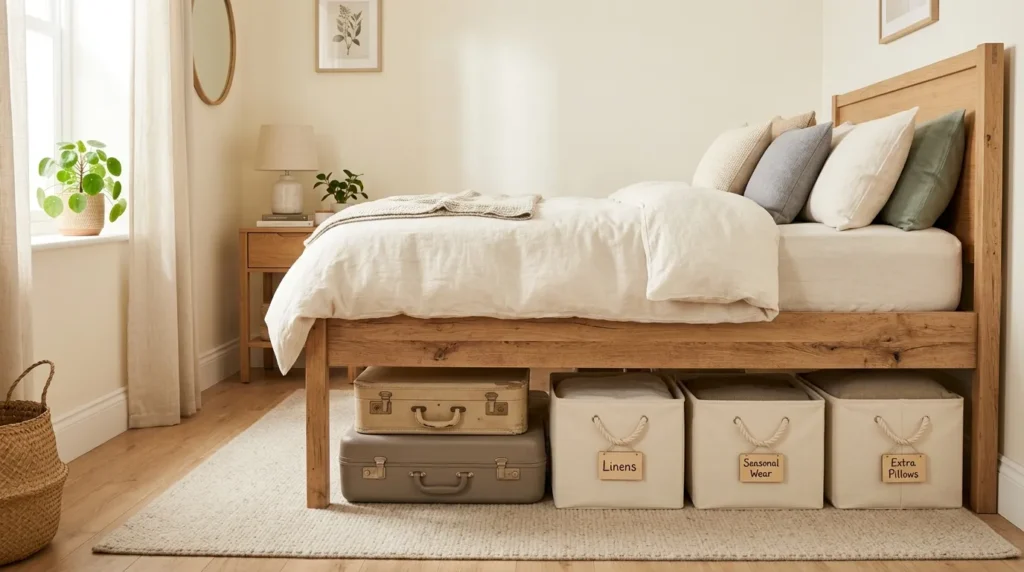
Quick Benefits
- Uses overlooked space
- Keeps belongings out of sight
- Works without new furniture
- Ideal for seasonal items
- Frees closet and drawer space
Why It Works
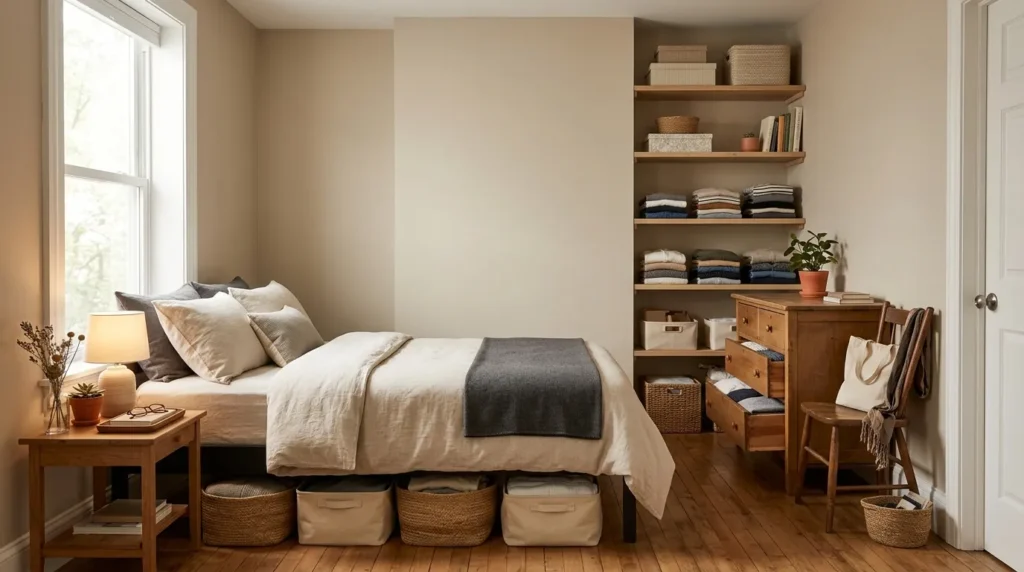
The area underneath your bed is often one of the largest unused storage zones in a small bedroom.
You don’t need expensive under-bed containers to use it.
If there is enough clearance, existing luggage, sturdy boxes, reusable bags, or other suitable household containers can hold items you don’t need every day.
This is especially useful for things that are bulky but rarely accessed, such as seasonal clothing, spare bedding, or shoes.
The important thing is to keep the system simple enough that you can still retrieve items when necessary.
How To Style It
First, remove everything from underneath the bed and clean the area.
Sort what belongs there based on frequency of use.
Place less frequently used items toward the back and things you may need sooner toward the front.
Use existing suitcases for clothing or linens.
Clean cardboard boxes can hold shoes, accessories, or folded clothing.
Label containers using paper and tape if you need to remember what’s inside.
Don’t fill every inch simply because the space is available. Leave enough room to pull things out easily.
3. Rearrange Your Furniture
Quick Benefits
- Costs nothing
- Can improve walking space
- Reveals hidden storage opportunities
- Makes the room feel larger
- Improves everyday functionality
Why It Works
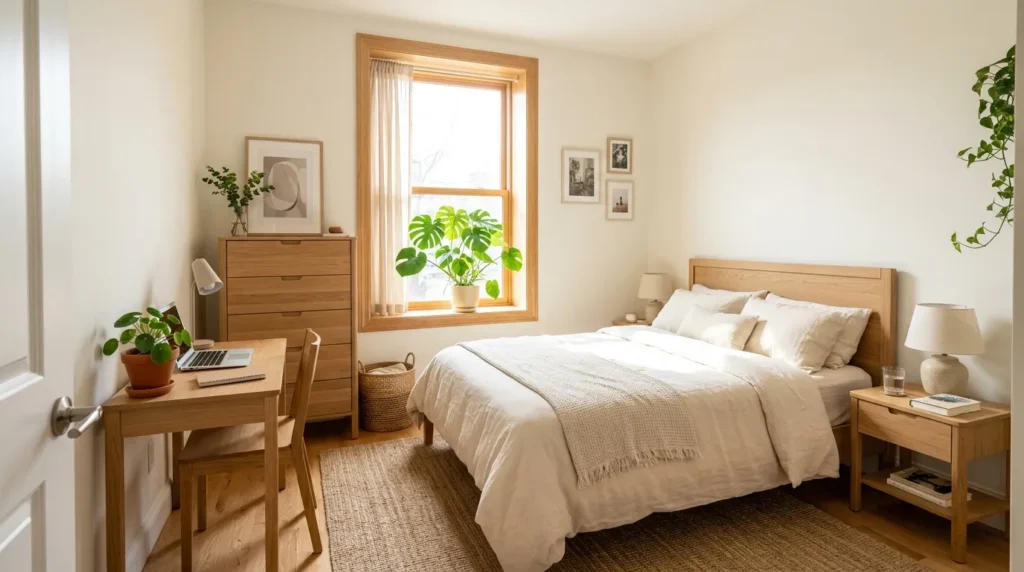
Sometimes the problem isn’t a lack of storage but a layout that isn’t using the available space efficiently.
A bed positioned in the wrong place can block a closet door, create awkward corners, or make other furniture difficult to access.
Moving just one or two pieces can change how the entire room functions.
You don’t need to follow a particular decorating rule. Focus on how you move through the room and which areas are currently difficult to use.
How To Style It
Measure your largest furniture pieces before moving them.
Start with the bed because it usually has the biggest impact on the room.
Then consider the dresser, desk, nightstand, and other furniture.
Keep the main walking paths clear.
Avoid placing furniture where it blocks doors, drawers, windows, or closet access.
If possible, move smaller furniture away from the busiest areas.
Once you find a promising layout, live with it for a day before deciding whether it’s truly better.
4. Repurpose Household Boxes
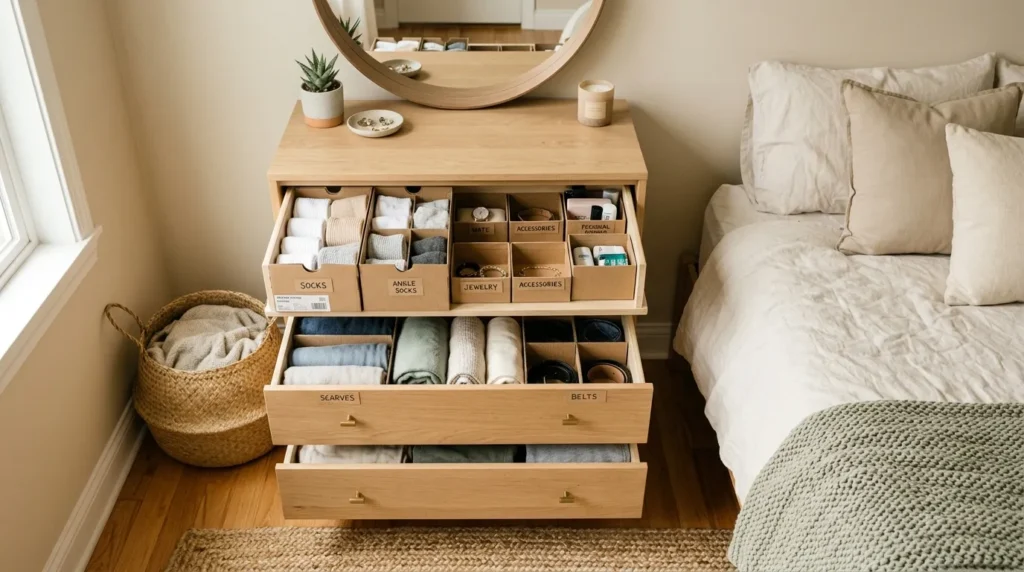
Quick Benefits
- Creates free storage
- Keeps small items together
- Makes drawers easier to use
- Reduces wasted space
- Gives everyday packaging a second purpose
Why It Works
You probably already have several potential organizers around your home.
Shoe boxes, delivery boxes, small gift boxes, sturdy food containers, and other clean household packaging can become useful storage dividers.
The trick is to use boxes based on the dimensions of your drawers and shelves rather than forcing every available box into the room.
Small containers are particularly useful for preventing accessories from becoming one large tangled pile.
How To Style It
Measure the drawer or shelf first.
Group similar items together.
Use shoeboxes for larger categories such as scarves, belts, or shoes.
Cut down larger cardboard boxes to create drawer dividers.
Use small clean boxes for hair accessories, cables, jewelry, or other tiny belongings.
If appearance matters, cover boxes with leftover wrapping paper or plain paper you already have.
The goal isn’t perfection. It is creating a system that makes items easy to find.
5. Organize Your Closet
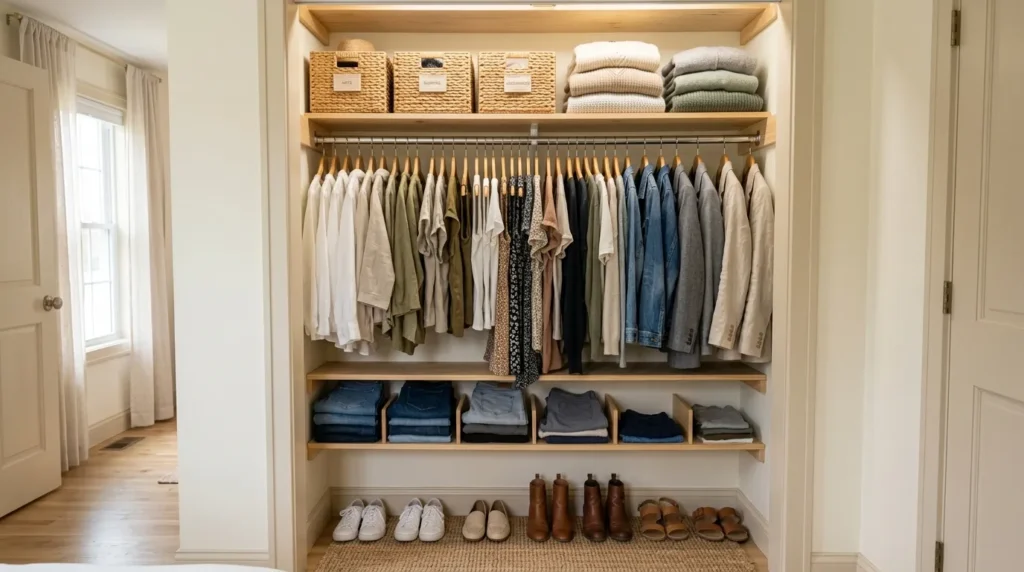
Quick Benefits
- Creates more usable clothing space
- Makes getting dressed easier
- Reduces duplicate purchases
- Prevents clothes from piling up
- Improves visibility
Why It Works
A crowded closet can make a small bedroom feel even smaller.
When clothing is packed tightly together, you may forget what you own and end up leaving frequently worn items on chairs or the floor.
Organizing the closet by category and frequency can make a surprisingly large difference.
You don’t necessarily need additional hangers or organizers. You can begin simply by removing clothing you no longer wear and rearranging what remains.
How To Style It
Group similar clothing together.
For example:
- Shirts
- Pants
- Dresses
- Jackets
- Workwear
- Everyday clothing
Within each group, arrange items by frequency of use.
Keep your most-worn pieces easiest to reach.
Fold items that don’t need hanging.
Use the upper closet shelf for less frequently used belongings.
If you have extra empty hangers after decluttering, don’t feel obligated to fill them. Empty space makes the closet easier to use.
6. Use Door Space
Quick Benefits
- Uses vertical space
- Keeps items off the floor
- Doesn’t require floor space
- Works especially well in tiny rooms
- Makes accessories easier to reach
Why It Works
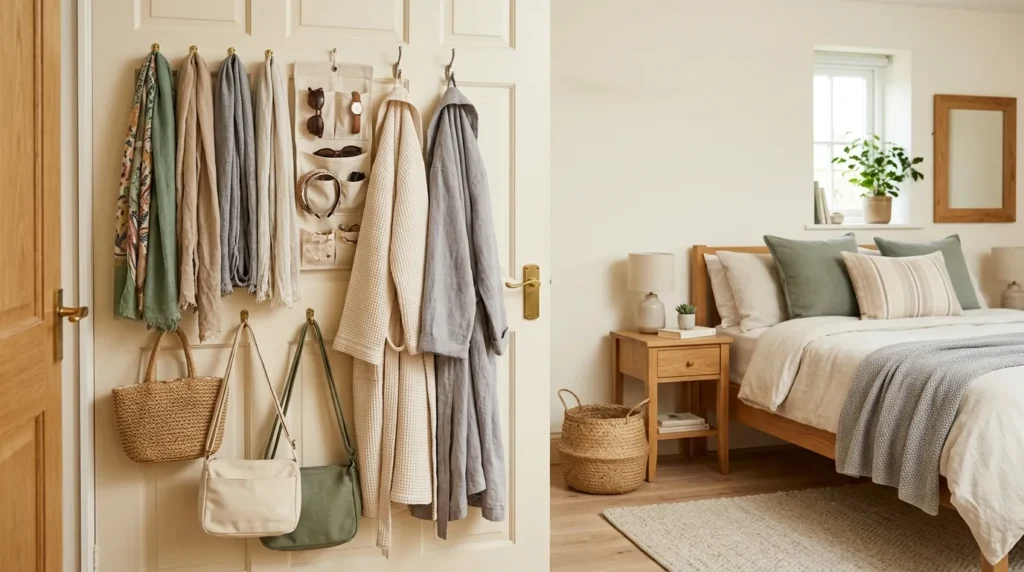
Doors are often overlooked when organizing a small bedroom.
The back of a bedroom or closet door can provide useful vertical space for lightweight belongings.
You don’t necessarily need to purchase an over-the-door organizer. If you already have hooks, hanging organizers, or suitable storage pieces at home, they may be repurposed.
Even without additional hardware, simply using existing hanging space more intentionally can help.
How To Style It
Keep the door area relatively lightweight.
Use it for items such as scarves, robes, bags, or frequently used accessories when your existing hardware is suitable.
Avoid hanging heavy objects from hardware that isn’t designed to support them.
If you have a closet door, use the inside surface for items that you need regularly.
Keep door storage organized by category so it doesn’t become another clutter zone.
7. Create Clothing Zones
Quick Benefits
- Makes clothes easier to find
- Reduces daily mess
- Speeds up morning routines
- Helps maintain organization
- Uses existing furniture more effectively
Why It Works
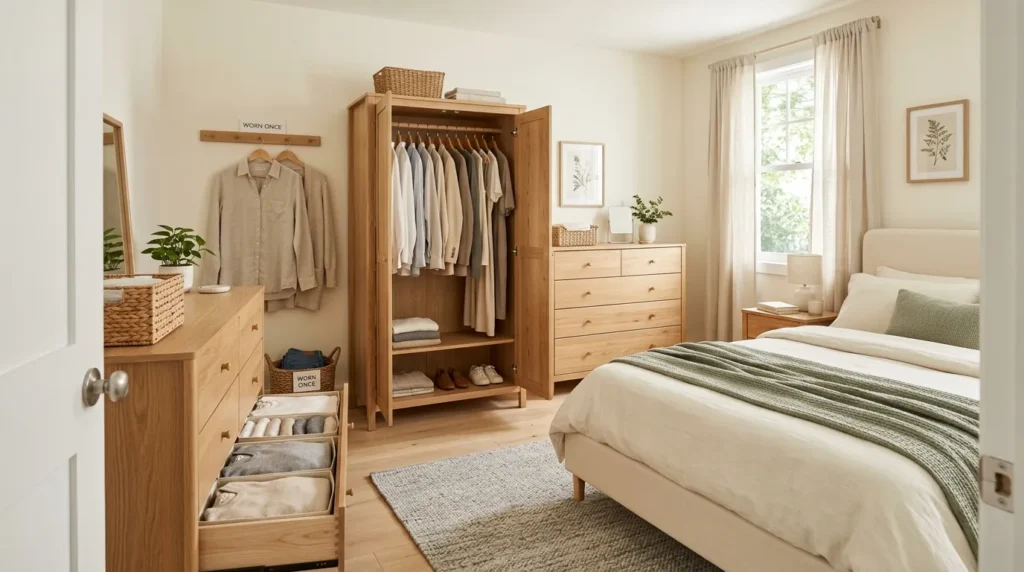
A small bedroom becomes much easier to manage when every category of clothing has a predictable home.
Without defined zones, clean laundry often ends up wherever there’s an empty surface.
The solution isn’t necessarily more storage. It can simply be a clearer system.
You might use one drawer for everyday tops, another for underwear, and a section of the closet for outerwear.
The exact arrangement doesn’t matter as much as consistency.
How To Style It
Think about how you naturally use your clothing.
Keep everyday items at easy-to-reach heights.
Place occasional clothing in less convenient areas.
Fold clothes vertically where your drawer dimensions allow so you can see individual pieces.
Keep pajamas, workout clothing, or lounge clothes together.
Create one designated place for clothes that are worn once but aren’t ready for washing.
That small system can prevent the classic “clothes on the chair” problem.
8. Clear Flat Surfaces
Quick Benefits
- Makes the room look cleaner
- Reduces visual stress
- Creates useful working space
- Makes cleaning easier
- Prevents clutter accumulation
Why It Works
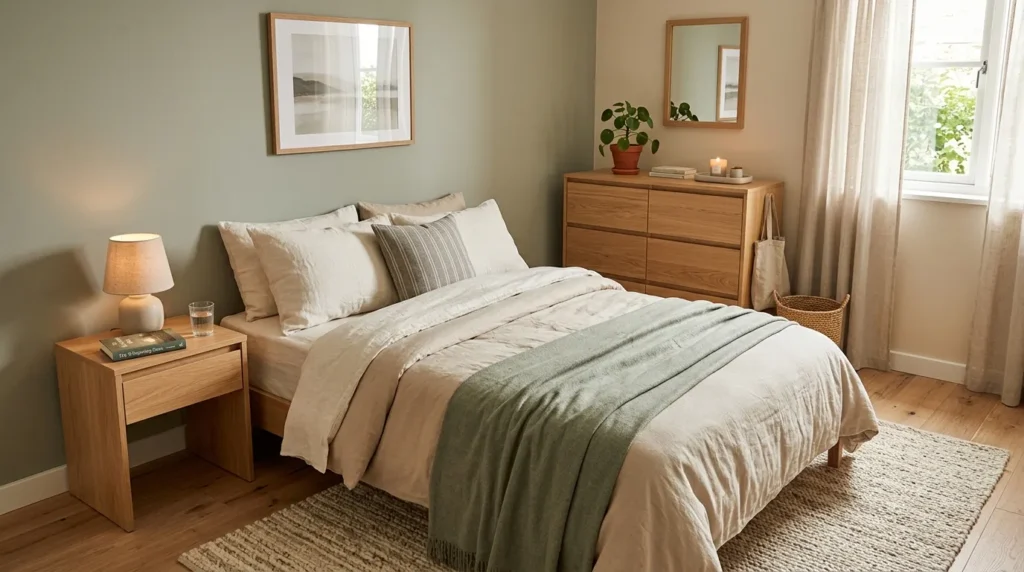
A small room can feel crowded even when the floor is reasonably clear.
That’s because visible horizontal clutter attracts attention.
Nightstands, dressers, desks, shelves, and window ledges can quickly become collection points for random objects.
Clearing these surfaces can make the room feel noticeably more spacious without moving a single piece of furniture.
How To Style It
Give every major surface a specific purpose.
For example, your nightstand might hold only a lamp, book, and water glass.
Your dresser can become a dedicated area for everyday accessories.
Your desk should ideally remain available for its primary purpose.
Remove objects that don’t belong in the room.
Before going to bed, spend two minutes returning loose items to their designated homes.
That tiny habit can prevent clutter from rebuilding.
9. Rotate Seasonal Items
Quick Benefits
- Frees everyday storage
- Reduces closet crowding
- Makes clothing easier to find
- Uses existing containers
- Simplifies seasonal transitions
Why It Works
You don’t need every item you own to be immediately accessible all year.
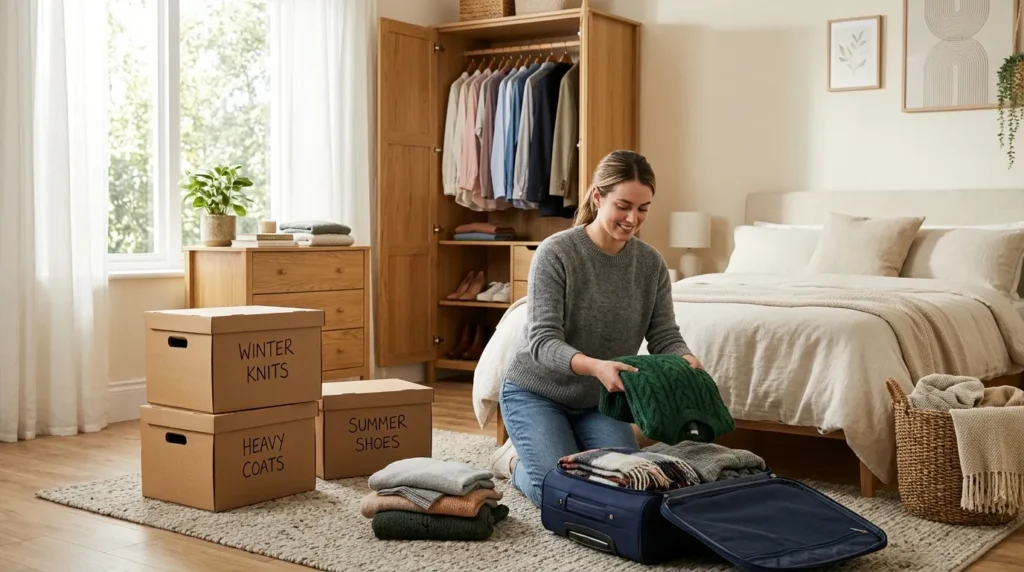
Winter coats, heavy blankets, summer accessories, and seasonal clothing can occupy a surprising amount of valuable storage space.
Rotating these items means the things you actually use remain easier to reach.
This is especially helpful when your bedroom has a small closet or limited drawers.
How To Style It
At the beginning of each season, review your clothing.
Move rarely used seasonal pieces into existing suitcases, storage boxes, or suitable containers.
Place them under the bed, on a high closet shelf, or in another appropriate storage area.
Bring the upcoming season’s clothing into your easiest-to-reach spaces.
Before storing anything, make sure it is clean and completely dry.
Don’t forget to review the items when rotating them. If you didn’t wear something during the season, consider whether it still deserves valuable storage space.
10. Maintain the System
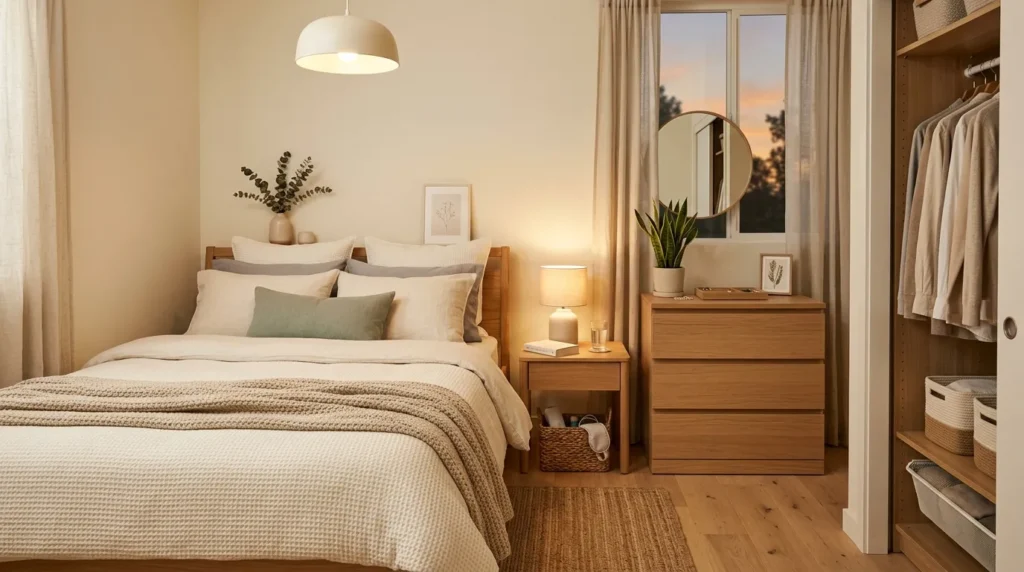
Quick Benefits
- Prevents clutter from returning
- Makes cleaning easier
- Saves time
- Keeps storage functional
- Requires no money
Why It Works
The best organizing system is one you can maintain.
A beautifully organized bedroom won’t stay that way if putting things away requires too many steps.
Keep the system simple.
If an item doesn’t have an obvious home, that’s a sign that the system may need adjusting.
You don’t need to spend an entire weekend reorganizing your bedroom every month. Small daily habits can make a much bigger difference.
How To Style It
Create a simple five-minute reset at the end of each day.
Put clothing away.
Return books and accessories to their places.
Clear the floor.
Straighten the bed.
Remove cups, dishes, and miscellaneous objects that don’t belong.
Once a week, choose one small area to review.
If something repeatedly ends up in the same wrong location, don’t blame yourself. Consider changing its storage location so the system better matches how you actually live.
Related Articles
- Small Bedroom Ideas
- Small Bedroom Storage Ideas
- Bedroom Organization Ideas
- Small Closet Organization Ideas
- DIY Bedroom Storage Ideas
Frequently Asked Questions
How can I organize a small bedroom without buying anything?
Start by decluttering, rearranging furniture, and using storage you already own. Suitcases, shoe boxes, existing baskets, drawers, shelves, and under-bed space can all become useful storage. The biggest improvement often comes from removing things you no longer use and giving the remaining items clear homes.
How do I make a small bedroom look less cluttered?
Clear visible surfaces, keep the floor as open as possible, and reduce the number of items on display. Group similar belongings together and store less frequently used items in closets, drawers, suitcases, or under the bed. A tidy bed and clear walking paths can also make a surprisingly large visual difference.
What can I use instead of storage bins?
You can repurpose clean shoe boxes, sturdy delivery boxes, suitcases, baskets you already own, reusable bags, or other suitable containers. Choose containers based on what you’re storing and where they’ll be placed. For drawers, smaller boxes can work as inexpensive dividers.
How do I organize clothes in a very small bedroom?
First remove clothing you no longer wear. Then group the remaining clothes by type and frequency of use. Keep everyday pieces in the easiest-to-reach drawers and closet areas. Seasonal clothing can go into suitcases, boxes, or under-bed storage when appropriate.
How do I use the space under my bed for storage?
Clean the area first, then use suitable existing containers such as suitcases, sturdy boxes, or storage bags. Store seasonal clothing, spare bedding, shoes, or other less frequently used items there. Keep the contents organized so you don’t have to pull everything out to find one item.
How do I keep a small bedroom organized?
Create simple habits rather than relying on occasional major cleanups. Put clothing away after changing, return objects to their designated homes, clear surfaces regularly, and spend a few minutes resetting the room each evening. If clutter repeatedly accumulates in one location, change the storage system rather than simply cleaning the same area over and over.
What should I remove first when decluttering a bedroom?
Start with obvious items you no longer use, broken belongings, empty packaging, duplicates, clothing that no longer fits or gets worn, and objects that belong in another room. Removing these easy categories first creates momentum before you tackle more difficult sentimental or undecided items.
Conclusion
You don’t need to spend money to make a small bedroom feel significantly more organized.
In many cases, the biggest improvements come from removing unnecessary belongings, rearranging furniture, using forgotten storage areas, and creating simple systems for the things you already own.
Start with the clutter you can easily identify. Then look underneath the bed, inside your closet, behind doors, and inside drawers for space that’s currently being wasted.
Repurpose boxes and suitcases when they make sense, rotate seasonal belongings, and give frequently used items the easiest homes to reach.
Most importantly, don’t create an organizing system that’s harder to maintain than the mess itself. Your bedroom should work for your actual routines.
A five-minute reset each evening can be more valuable than an elaborate storage system you never use.
You may be surprised by how much space appears once you stop trying to fit everything into the room and start deciding what truly deserves to stay there.
Start with one drawer, one closet shelf, or the area beneath your bed. Small changes can quickly make a small bedroom feel calmer, clearer, and much easier to live in.