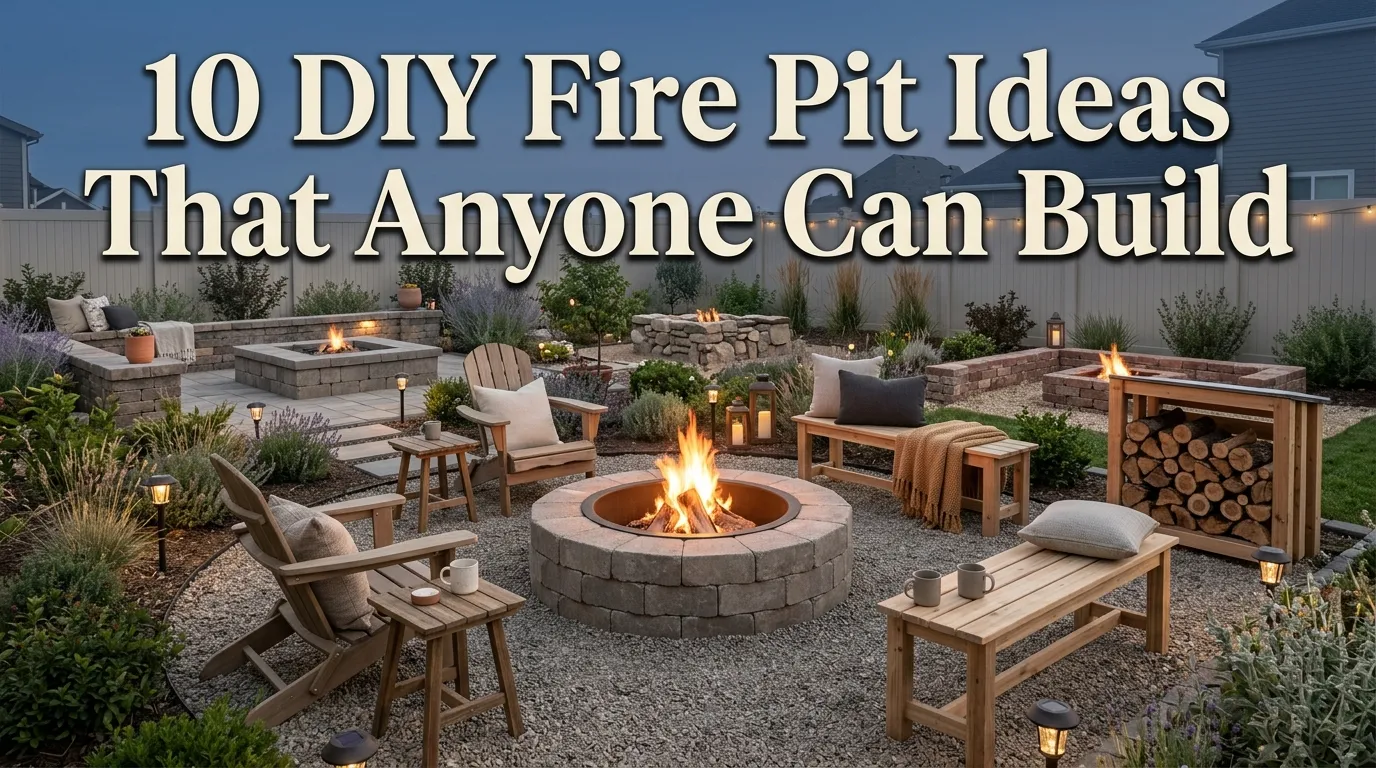
10 DIY Fire Pit Ideas That Anyone Can Build
A fire pit can completely change the way a backyard feels after sunset. It gives everyone a natural place to gather, adds warmth on cool evenings, and can turn an ordinary patio or garden into a cozy outdoor living area.
The best part is that a fire pit doesn’t necessarily need to look complicated or expensive. With the right design, you can create a simple focal point using readily available landscaping materials and a little planning.
That said, a good DIY fire pit should be approached as a fire-safety project first and a decorating project second. Local regulations, required clearances, wind conditions, fuel type, and the materials you use all matter. A beautiful fire pit isn’t useful if it is positioned too close to the house, placed under combustible structures, or built from materials that aren’t suitable for high heat.
I’ve noticed that the most successful backyard fire-pit projects tend to be simple. Rather than trying to recreate an elaborate outdoor fireplace, homeowners often get better results by choosing a straightforward shape, preparing the site properly, and surrounding it with comfortable seating.
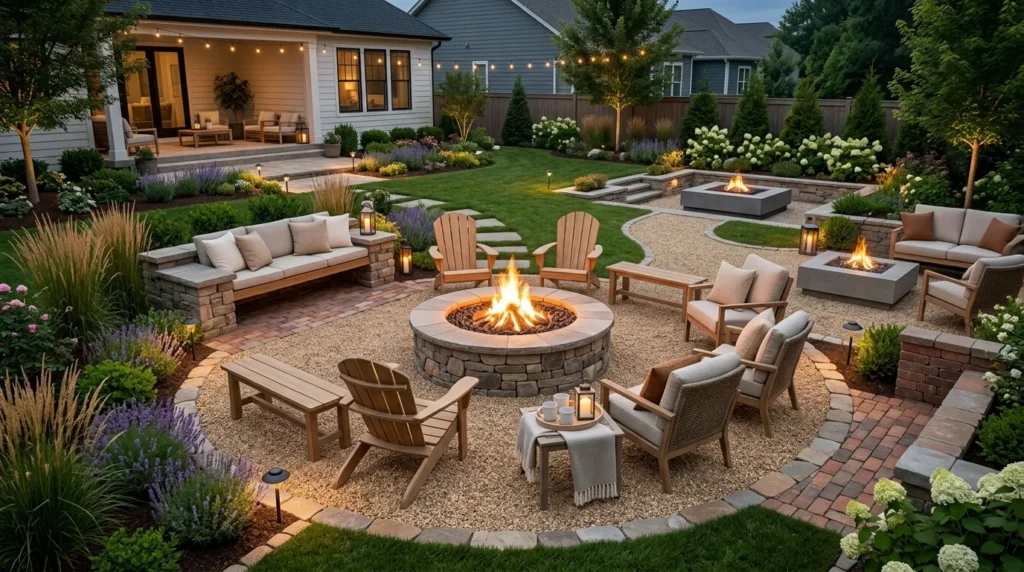
You can also make the area feel much more finished by thinking beyond the fire pit itself. Gravel, pavers, stone borders, Adirondack-style chairs, benches, outdoor cushions, landscape lighting, and nearby planting can turn a basic fire feature into a complete backyard destination.
Whether you’re working with a spacious lawn, a small patio, or a tucked-away garden corner, these ideas can help you find a design that suits your space and your style.
Before building, always check your local fire codes, HOA rules, permit requirements, and manufacturer’s instructions where applicable. Never use a DIY fire pit indoors or beneath a combustible roof, and keep people, pets, vegetation, furniture, and other combustible materials at appropriate distances.
Table of Contents
1. Stone Ring Fire Pit
Create a classic circular gathering area with properly selected fire-rated materials.
2. Gravel Fire Pit Area
Build a relaxed backyard destination using a simple fire pit surrounded by gravel.
3. Paver Patio Fire Pit
Combine a compact fire feature with a defined paver seating area.
4. Sunken Fire Pit
Create a dramatic gathering space by setting the fire feature within a lower outdoor area.
5. Steel Bowl Fire Pit
Use a ready-made metal fire bowl as the centerpiece of a simple DIY seating zone.
6. Brick Fire Pit
Bring traditional character to the backyard with a carefully constructed brick design.
7. Square Fire Pit
Choose clean geometric lines for a contemporary backyard entertaining area.
8. Fire Pit With Benches
Build the surrounding seating into the landscape for a cozy gathering space.
9. Rustic Garden Fire Pit
Blend a simple fire feature into a natural garden setting with stone and greenery.
10. Portable Fire Pit Zone
Create a flexible fire area that can be rearranged or stored when not in use.
1. Stone Ring Fire Pit
Quick Benefits
- Classic backyard appearance
- Simple circular layout
- Easy to incorporate into landscaping
- Creates a natural gathering point
- Works with rustic and modern gardens
Why It Works
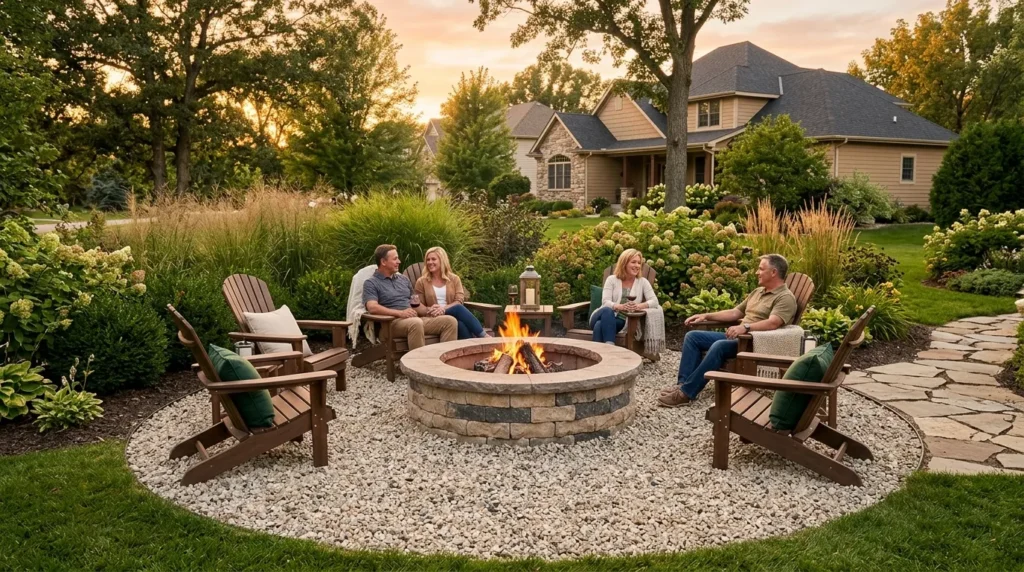
The traditional stone-ring fire pit remains popular because the circular shape naturally encourages conversation. Everyone can face the center, making the arrangement feel social without requiring complicated furniture placement.
A stone ring also has a timeless appearance that can blend into many landscape styles. Surrounded by gravel or a suitable noncombustible surface, it can look intentional rather than like a fire feature simply placed on the lawn.
The important part is choosing materials appropriate for the intended fire use. Not every landscaping stone is suitable for direct exposure to high heat, and ordinary river rocks or porous stones can potentially crack or behave unpredictably when heated.
How To Style It
Start with a properly prepared, level location that meets applicable local requirements for fire pits and clearances.
Use materials specifically rated or recommended for fire-pit construction. Build the ring according to the material manufacturer’s instructions rather than assuming any decorative retaining wall block is suitable.
Surround the pit with a noncombustible surface such as properly installed gravel or pavers where appropriate.
For seating, arrange durable outdoor chairs in a broad circle around the fire feature while maintaining the required safety distance.
2. Gravel Fire Pit Area
Quick Benefits
- Creates a defined outdoor zone
- Complements natural landscaping
- Provides visual separation from the lawn
- Works well with casual furniture
- Can be adapted to many backyard sizes
Why It Works
Sometimes the biggest improvement isn’t the fire pit itself but everything surrounding it.
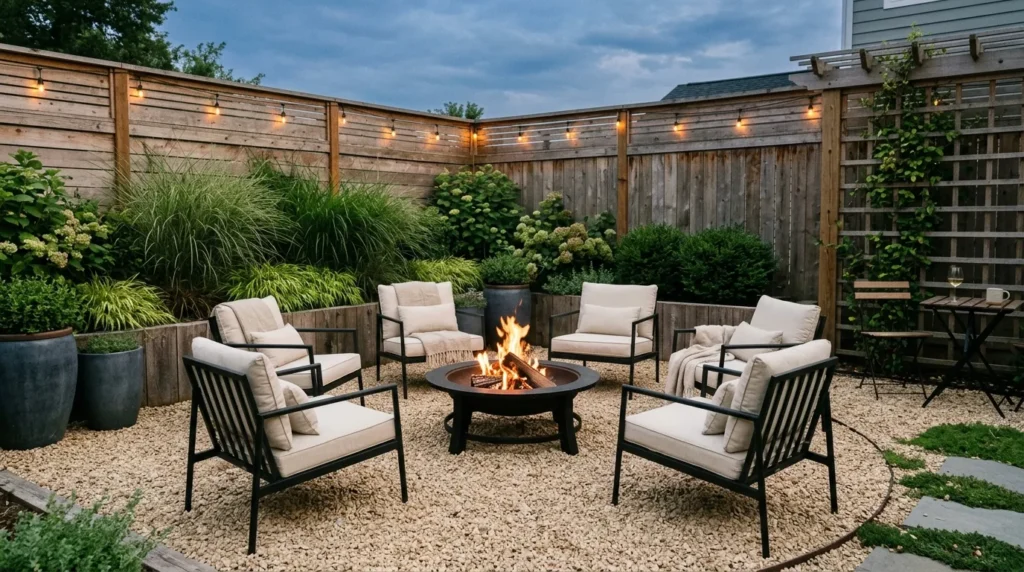
A gravel area creates a clear boundary between the fire feature and the rest of the backyard. This helps the fire pit feel like a purposeful outdoor room rather than an isolated object.
Gravel can also complement natural stone, wood furniture, and garden planting beautifully. Its informal appearance works especially well in relaxed landscapes.
The surface needs to be planned carefully, however. Loose material should not create unstable seating or walking conditions, and the area should be kept free of dry vegetation and other combustible debris.
How To Style It
Define a generous circular or geometric area with an appropriate border.
Choose a gravel type suitable for landscaping and local conditions, then prepare the base properly so the surface drains and remains reasonably stable.
Place the fire feature in the center and position chairs around the outside.
Add larger stones, planters, or low-maintenance planting around the perimeter rather than immediately beside the fire.
For a cohesive look, repeat the gravel color elsewhere in pathways or garden borders.
3. Paver Patio Fire Pit
Quick Benefits
- Creates a polished outdoor room
- Provides a stable seating surface
- Works with modern homes
- Can connect to an existing patio
- Offers flexible furniture arrangements
Why It Works
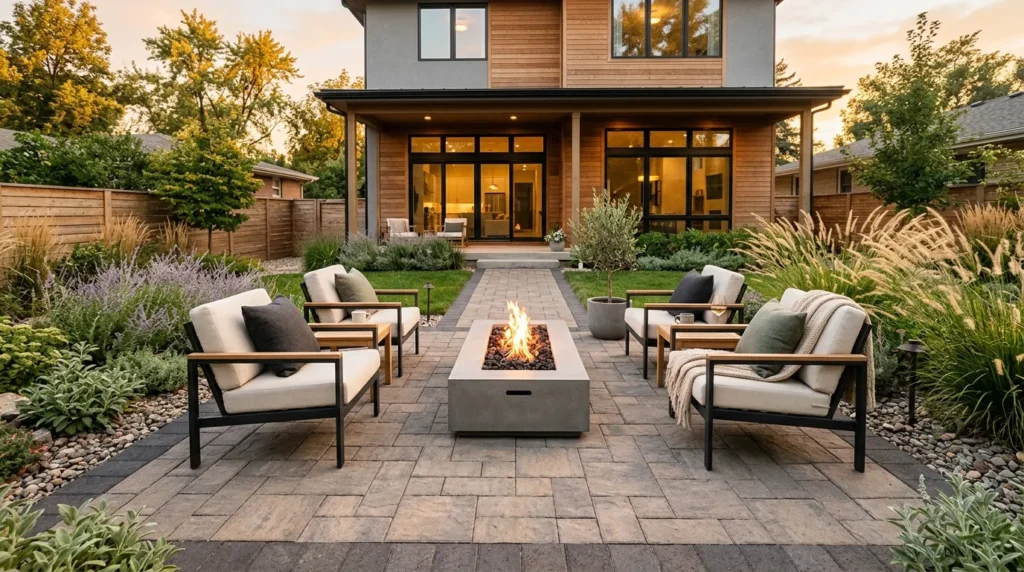
A paver patio can make a fire pit area feel like a true extension of the home.
Instead of placing the fire feature directly on grass, you create a defined hardscape zone where chairs, benches, and side tables can be arranged comfortably.
This approach is especially useful when you want the fire pit to function as part of a larger outdoor entertaining area.
The patio doesn’t have to be enormous. A modest circular or square arrangement can provide enough space for a few chairs while leaving the rest of the backyard open.
How To Style It
Choose pavers that coordinate with the home’s exterior or existing patio.
Lay out the furniture before finalizing the fire-pit location so you can understand the actual circulation space.
The fire feature should be appropriately separated from structures, combustible surfaces, furniture, and vegetation according to applicable requirements.
Add simple outdoor chairs and a few side tables around the perimeter.
If you want more visual warmth, combine the pavers with nearby planting beds, timber accents, or low landscape walls that remain appropriately separated from the fire.
4. Sunken Fire Pit
Quick Benefits
- Creates a dramatic focal point
- Gives the seating area a sense of enclosure
- Visually separates the fire zone
- Works well in larger landscapes
- Creates an outdoor-room effect
Why It Works
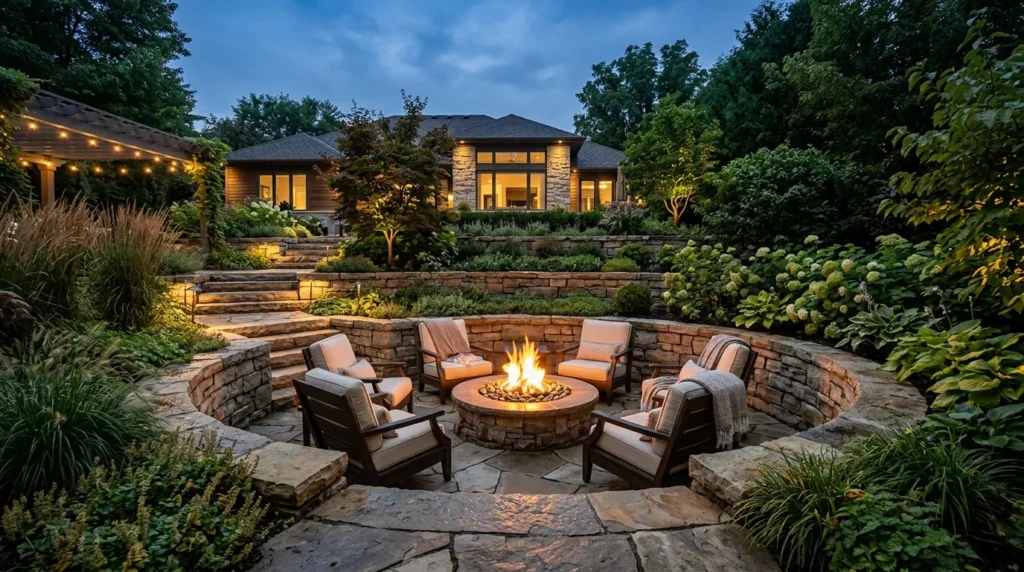
A sunken seating area can give a backyard a completely different character. The lowered space naturally feels intimate and encourages people to gather together.
However, this is one idea where professional planning can be particularly valuable. Excavation, drainage, retaining walls, structural stability, accessibility, and fire safety all need to be considered.
A sunken area should never simply be dug into the yard and filled with chairs. Water management is especially important because the lower area needs a reliable way to handle rainfall.
How To Style It
If you’re considering this design, start with the landscape structure rather than the fire feature.
Use appropriate retaining-wall systems or professionally designed construction where required.
Create broad, comfortable steps into the space and make sure the area drains properly.
Place seating around the fire feature while maintaining safe clearances.
Keep plants and combustible materials away from the immediate fire zone.
For a polished appearance, repeat the same stone or paver material throughout the retaining walls and surrounding landscape.
5. Steel Bowl Fire Pit
Quick Benefits
- Simple installation
- Portable in many designs
- Modern appearance
- No complicated masonry construction
- Easy to pair with different landscapes
Why It Works
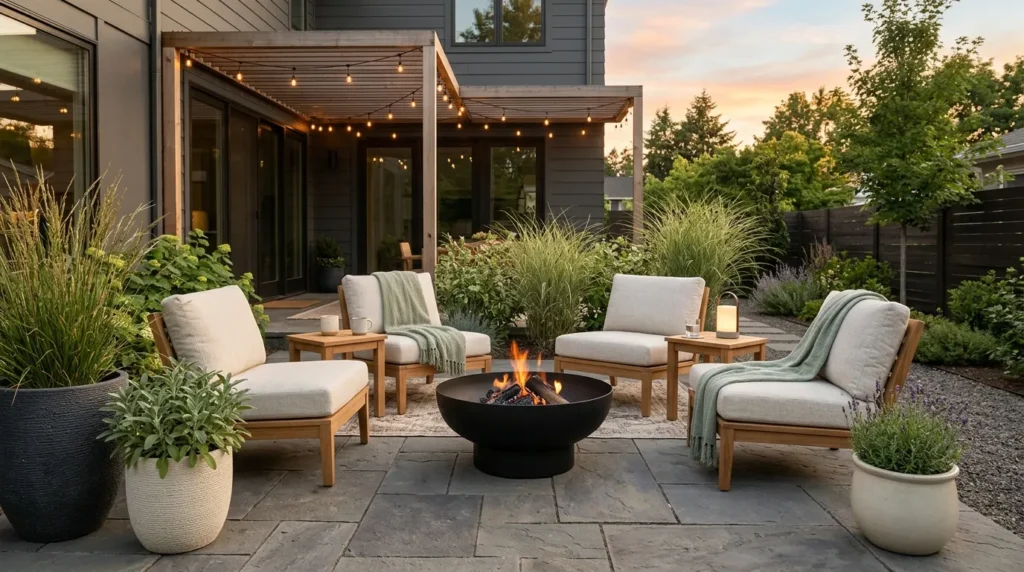
A steel fire bowl can be one of the simplest ways to create a fire-pit area without constructing a permanent masonry ring.
Because the fire bowl is a manufactured product, you can choose a model designed specifically for outdoor fire use and follow the manufacturer’s installation and clearance requirements.
It can also provide flexibility. Some designs can be repositioned when the backyard layout changes, although they should only be moved or stored according to the manufacturer’s instructions.
How To Style It
Choose a fire bowl that is appropriately sized for your backyard and seating arrangement.
Place it on a suitable noncombustible surface and maintain all required clearances.
Pair a dark steel bowl with natural stone and light gravel for contrast, or use it as a modern accent in a landscaped patio.
Surround the area with comfortable outdoor chairs rather than overcrowding it with furniture.
A few large planters placed well outside the required fire-clearance zone can help connect the fire feature to the garden.
6. Brick Fire Pit
Quick Benefits
- Adds traditional character
- Complements brick homes
- Creates a permanent focal point
- Works well in cottage landscapes
- Can coordinate with existing hardscape
Why It Works
Brick has a warm, familiar appearance that can make a backyard feel established and welcoming.
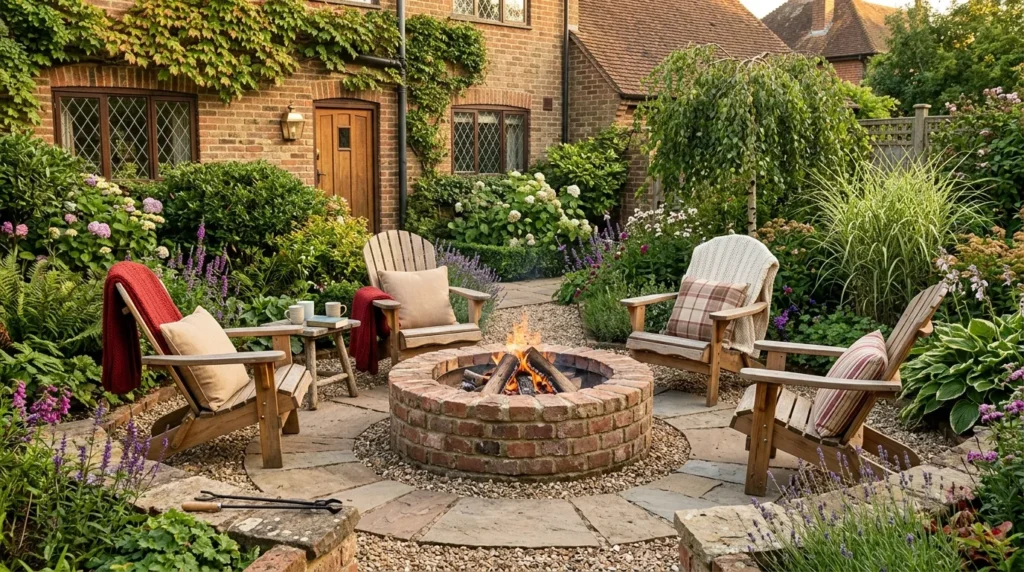
A brick fire pit can be particularly attractive when the home already uses brick in its exterior, walkway, chimney, or patio. Repeating the material helps create a visual connection between the house and landscape.
But appearance should never determine material suitability. Ordinary construction bricks and masonry products are not automatically appropriate for direct, repeated fire exposure.
How To Style It
Use a fire-pit system or materials specifically designed for the temperatures involved.
Keep the design simple. A circular brick ring can provide traditional character, while a square arrangement creates a more structured appearance.
Surround the feature with a suitable noncombustible surface.
Add wooden or metal seating around the perimeter and soften the broader landscape with shrubs, ornamental grasses, or containers positioned safely away from the fire.
7. Square Fire Pit
Quick Benefits
- Clean contemporary appearance
- Works with modern landscaping
- Creates strong visual geometry
- Easy to coordinate with square patios
- Can complement linear furniture
Why It Works
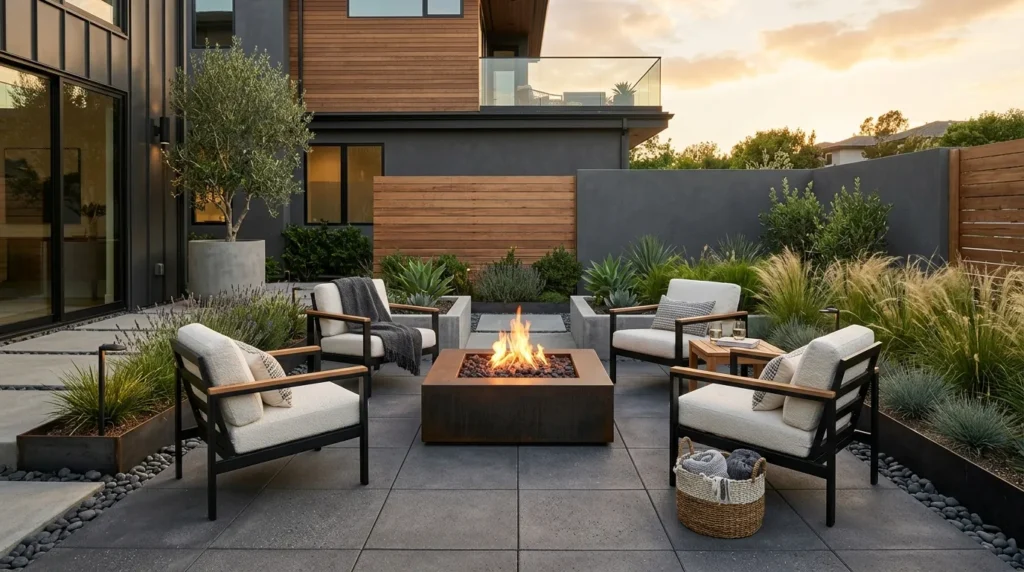
If your backyard has a modern design, a square fire feature can fit more naturally than a traditional circular pit.
Geometric shapes work especially well with rectangular patios, linear planting beds, concrete surfaces, and contemporary architecture.
The clean lines also make it easier to visually organize the surrounding furniture.
A square design doesn’t necessarily mean the project has to be complicated. A manufactured fire table or appropriately designed fire feature can provide the same geometric effect with less construction.
How To Style It
Align the fire feature with the surrounding patio or landscape lines.
Use a simple outdoor sectional, paired chairs, or benches positioned according to the manufacturer’s safety requirements.
Keep the color palette restrained. Charcoal, gray, warm stone, black metal, and natural wood can create a sophisticated combination.
Add greenery around the outer edges of the seating area rather than filling the immediate fire zone with plants.
8. Fire Pit With Benches
Quick Benefits
- Provides plenty of seating
- Creates a social atmosphere
- Works well for larger families
- Can integrate with landscape design
- Makes efficient use of space
Why It Works
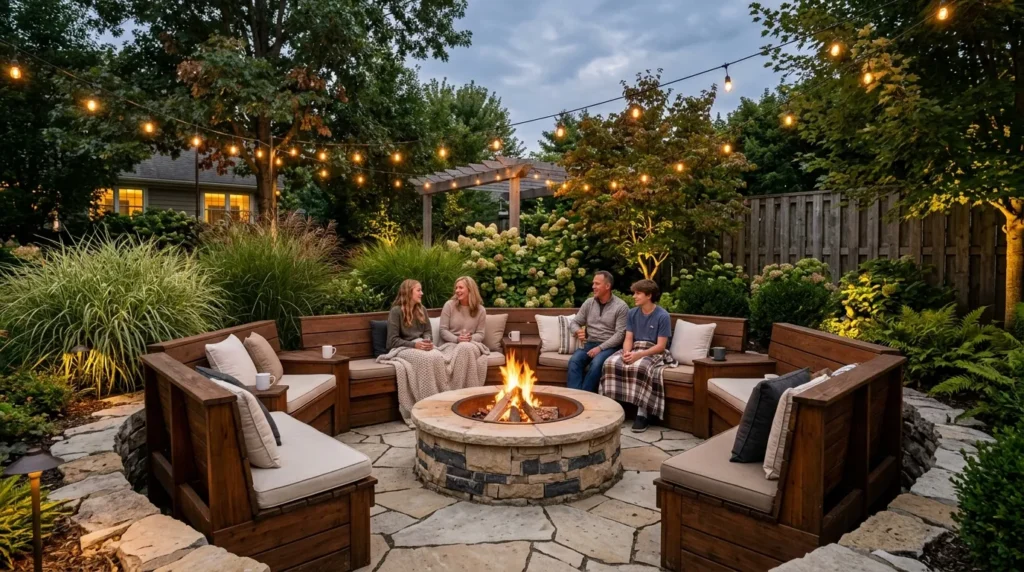
Benches can be a practical alternative to individual outdoor chairs, particularly when you regularly have several people gathering around the fire.
They also give the space a more permanent, architectural appearance.
A pair of simple benches positioned around a fire feature can create a strong sense of symmetry, while an L-shaped arrangement can define a larger outdoor room.
Comfort still matters. A beautiful bench that is uncomfortable won’t encourage people to stay.
How To Style It
Choose durable outdoor materials appropriate for your climate.
If using cushions, select outdoor-rated fabrics and store them appropriately when they’re not in use.
Position benches at safe distances from the fire feature and maintain required clearances from combustible structures and landscaping.
A low stone or masonry seat wall can be attractive, but construction should be appropriate for the location and local conditions.
Use a few movable chairs to provide additional flexibility when hosting larger gatherings.
9. Rustic Garden Fire Pit
Quick Benefits
- Blends naturally into landscaping
- Creates a relaxed atmosphere
- Works with cottage gardens
- Adds texture
- Feels less formal
Why It Works
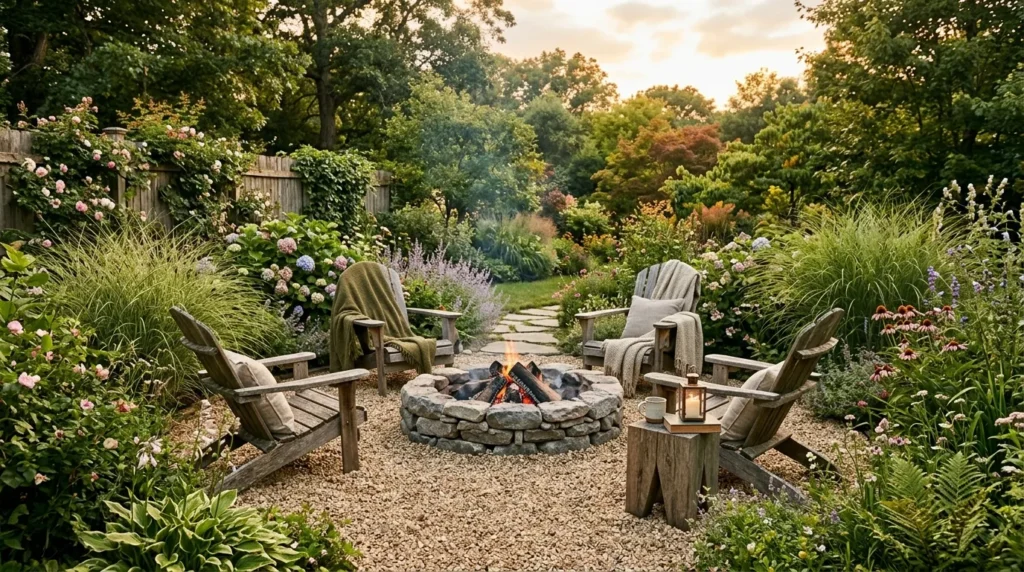
Not every fire pit needs to become the dominant feature of the backyard.
A rustic garden design can make the fire area feel as though it belongs naturally within the landscape.
The key is choosing simple materials and surrounding the area with appropriate planting without compromising fire safety.
Natural stone, gravel, weathered-looking furniture, and mature greenery can create a relaxed outdoor retreat.
How To Style It
Choose a simple fire feature that complements the existing landscape.
Use a restrained material palette—perhaps natural stone, gravel, wood, and muted metal.
Create a clear noncombustible zone around the fire feature before adding planting farther away.
Use low-maintenance shrubs and grasses to frame the broader seating area.
A few comfortable chairs and a small side table can be all you need.
Let the surrounding garden provide most of the visual interest.
10. Portable Fire Pit Zone
Quick Benefits
- Flexible layout
- Useful for renters
- Doesn’t require permanent construction
- Easy to redesign
- Works in smaller backyards
Why It Works
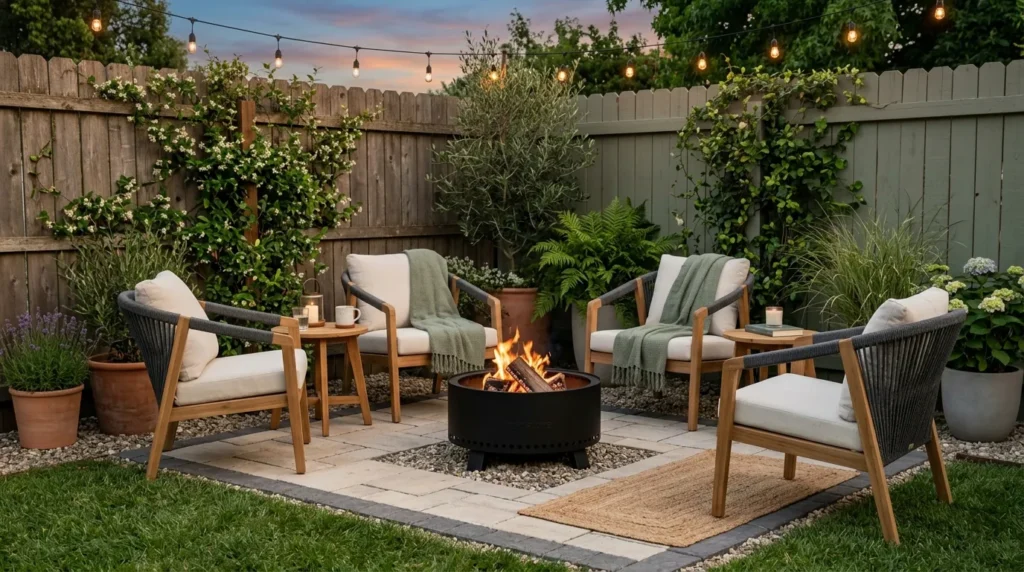
A portable fire pit can be an excellent choice if you don’t want a permanent landscape feature.
It allows you to create a designated outdoor gathering space while retaining flexibility. You can change the seating arrangement or landscape around it as your needs evolve.
This can also make sense for smaller yards where a permanent structure would take up too much valuable space.
However, portable doesn’t mean you can ignore safety requirements. The unit still needs to be operated according to its instructions and local regulations.
How To Style It
Choose a purpose-built outdoor fire feature from a reputable manufacturer.
Create a suitable noncombustible area for the unit and maintain the required clearances.
Use lightweight outdoor chairs that can be rearranged when needed.
For a more finished appearance, define the surrounding area with a small outdoor rug rated for the intended environment, pavers, or appropriate landscaping.
When the fire feature isn’t being used, follow the manufacturer’s recommendations for covering, cooling, moving, or storing it.
Related Articles
- Backyard Landscaping Ideas
- Outdoor Dining Area Ideas
- Backyard Patio Ideas
- Outdoor Fire Pit Area Ideas
- Cozy Backyard Ideas
Frequently Asked Questions
What is the easiest DIY fire pit to build?
A simple fire pit using a purpose-designed fire-pit kit or appropriately rated manufactured components is generally easier than constructing a complex masonry feature from scratch. Always follow the product instructions and local requirements. The site preparation and surrounding safety zone are just as important as the visible fire pit.
Can I build a fire pit anywhere in my backyard?
No. Fire pits need appropriate placement and clearance from homes, fences, trees, structures, utilities, and combustible materials. Requirements vary by location, and some communities restrict or prohibit certain types of outdoor fires. Check local regulations and HOA rules before starting a project.
What should I put under a DIY fire pit?
The appropriate base depends on the fire-pit design and manufacturer’s requirements. Noncombustible materials such as certain types of gravel, pavers, concrete, or masonry may be suitable when properly installed. Avoid assuming that any landscape material is automatically safe for high heat.
Can I use regular rocks in a fire pit?
It’s safer to use materials specifically intended or recommended for fire-pit applications. Some ordinary rocks can contain moisture and may crack or break when heated. Follow the fire-pit manufacturer’s material recommendations rather than collecting random stones from outdoors.
How far should a fire pit be from my house?
The required clearance depends on the fire-pit type, fuel source, local regulations, and manufacturer instructions. There isn’t one universal distance that applies everywhere. Before building or operating a fire pit, check your local fire authority and the specific instructions for your unit.
What is the best surface around a fire pit?
A properly prepared noncombustible surface is generally preferable around a fire pit. Depending on the design and local requirements, this might include appropriate pavers, concrete, stone, or gravel. The surface should also provide stable footing and suitable drainage.
Can I put a fire pit under a pergola?
You should not assume that a fire pit is safe beneath a pergola. Clearance requirements depend on the fire feature and the structure, and combustible overhead materials can create serious hazards. Follow the manufacturer’s instructions and local fire regulations, and use only configurations specifically approved for that setting.
Conclusion
A DIY fire pit can become one of the most enjoyable features in a backyard, but the best projects start with safety and practicality rather than appearance.
Choose the location carefully, understand your local rules, use materials appropriate for the fire feature, and maintain the required clearances. Once those fundamentals are handled, you can focus on creating a space that feels beautiful and comfortable.
A simple stone ring can give a garden a timeless gathering point. A gravel courtyard can create a relaxed retreat, while a paver patio can feel more polished. If permanent construction isn’t right for your backyard, a properly designed portable fire feature can offer much more flexibility.
Don’t forget the surrounding space. Comfortable seating, appropriate landscaping, safe lighting, and a clear walking path can make the difference between a fire pit that looks good and one that actually becomes part of your everyday outdoor life.
Start small if you’re unsure. Create the seating zone first, test how your family uses the space, and then build from there.
The goal is a backyard gathering place that feels warm, inviting, and thoughtfully designed—while always putting safe fire practices first