What Is the Minimum Ceiling Height Needed for a 4×8 Overhead Storage Rack?
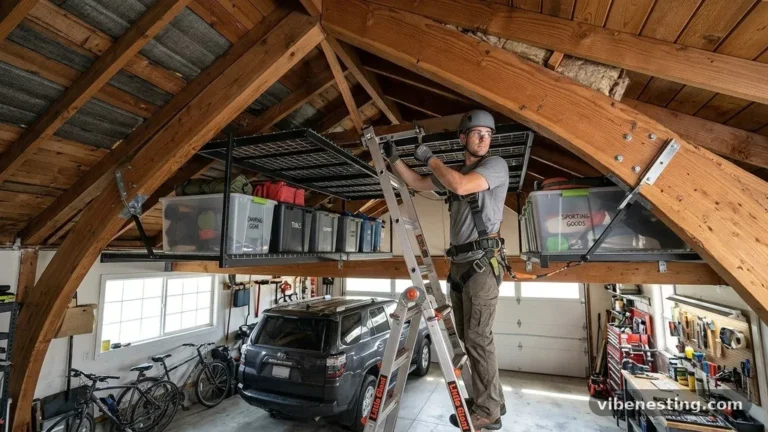
Determining the minimum ceiling height needed for a 4×8 overhead storage rack is a crucial first step for anyone looking to maximize their garage space. Many homeowners underestimate the clearance required to operate a garage door or move vehicles safely beneath these units. Understanding the vertical requirements prevents common installation errors that could lead to property damage or restricted access.
By carefully measuring your vertical space and accounting for the hanging depth of the rack, you ensure that your storage solution remains both functional and safe. This article outlines the precise measurements and planning strategies required to successfully integrate these storage systems into your home.
The Baseline Height Requirement
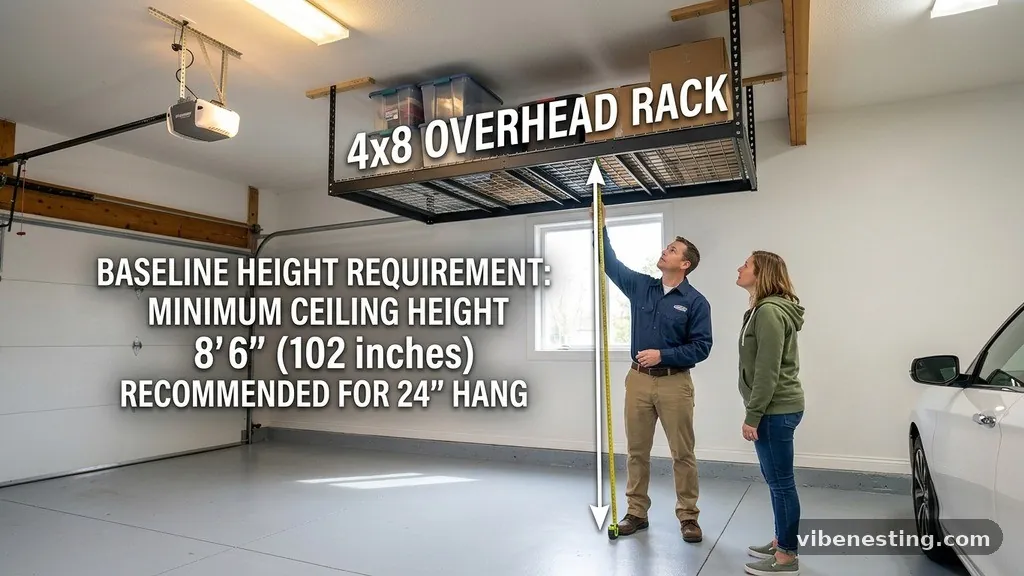
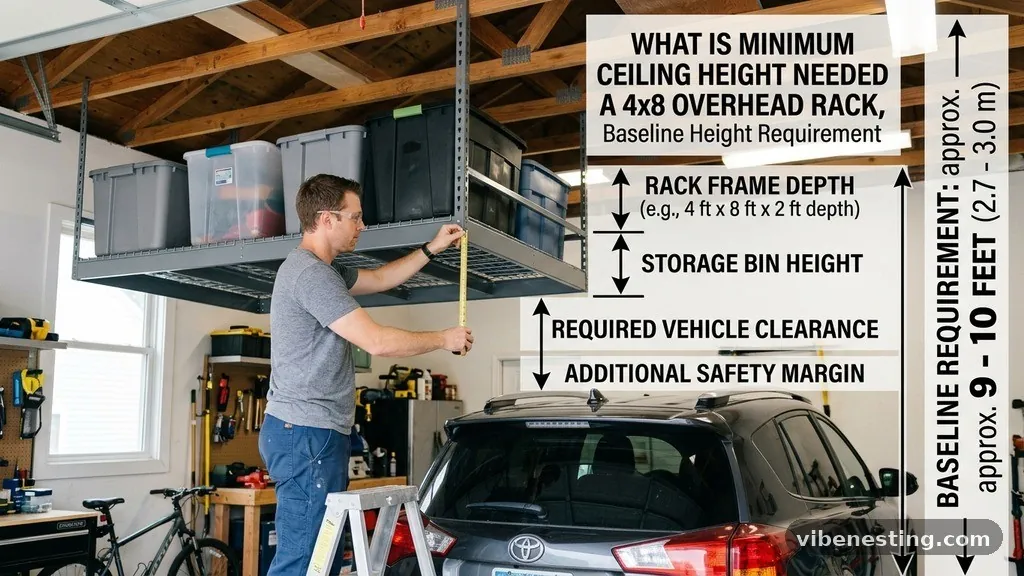
When asking about the minimum ceiling height needed for a 4×8 overhead storage rack, the standard answer revolves around the height of your vehicle and the mechanics of your garage door. Most manufacturers suggest a minimum ceiling height of 8 feet to accommodate a rack that hangs about 12 to 24 inches from the ceiling.
If your ceiling is exactly 8 feet, you have enough room to store items without them interfering with a standard garage door assembly. However, you must account for the thickness of the items you plan to place on the racks.
If you have a 9-foot ceiling, you gain significantly more flexibility in what you can store. A 9-foot ceiling allows you to hang the rack lower, which makes it easier to access bins without needing a tall ladder.
Conversely, in a 7-foot ceiling, you are severely limited by the height of your car or the clearance required for the garage door tracks. Always check the lowest point of your garage door assembly, as this is the true limiting factor for your storage installation.
Accounting for Garage Door Clearance
The garage door track is often the most overlooked obstacle when installing overhead storage. Most sectional garage doors travel along tracks that sit just inches below the ceiling, but they also require a “high lift” or standard radius curve to operate.
If your rack hangs in the path of these tracks, the door will strike the unit during its operation. You must measure the distance from the ceiling to the top of the garage door when it is in the fully open position.
If the rack hangs lower than the top of the open garage door, you risk a collision every time you pull into the garage. Most installers recommend keeping the rack at least 6 inches above the path of the garage door.
If your ceiling height is low, consider mounting the rack in a location that is not directly above the door’s travel path. This might mean placing the rack over the front end of the car or along the side walls of the garage.
Measuring Your Available Vertical Space
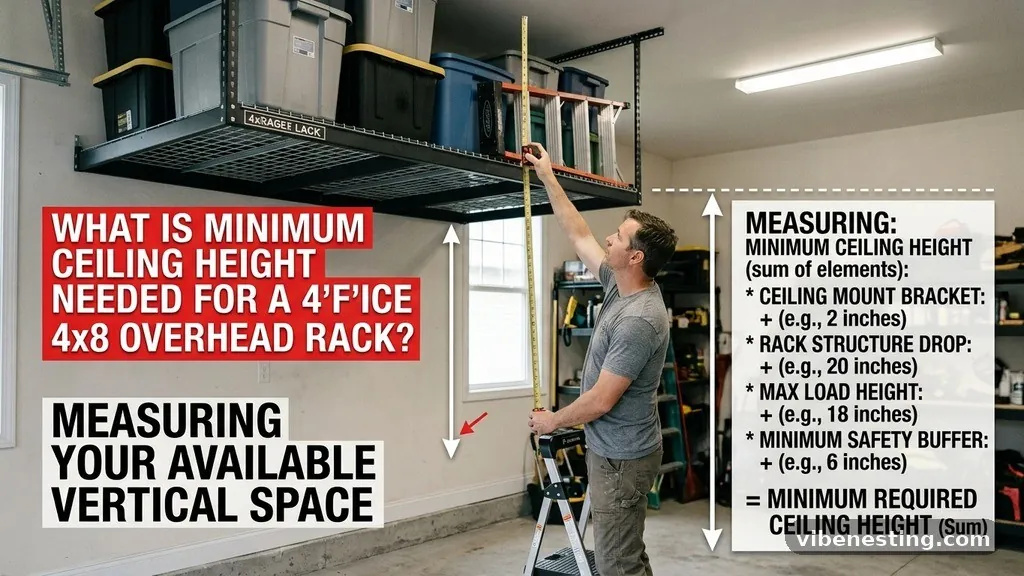
To accurately determine if your space is suitable, start by using a reliable tape measure to find the distance from the floor to the ceiling. Subtract the height of your tallest vehicle from this total measurement to see what remains for storage.
For example, if you have a 10-foot ceiling and a 6-foot SUV, you have 4 feet of potential vertical space. This 4-foot gap must account for the rack itself, the storage bins, and a safety buffer.
Remember that the rack hangs from brackets that are bolted into the ceiling joists. These brackets typically add at least an inch or two to the total depth of the system.
You should also consider the height of the plastic totes you intend to use. If you stack bins, ensure you have enough clearance to slide the top bin off without hitting the ceiling joists.
Safety Considerations for Overhead Loads
Safety is paramount when suspending heavy items above your vehicle or walking paths. You must ensure that the rack is anchored directly into the structural ceiling joists rather than just the drywall or plywood sheathing.
A 4×8 rack is designed to hold significant weight, often upwards of 500 to 600 pounds, which exerts considerable force on the mounting points. If the rack is overloaded or installed into weak material, it can pull away from the ceiling.
Always verify that your ceiling joists are spaced at the industry standard of 16 or 24 inches on center. If your garage was built with non-standard spacing, you may need to install additional bracing or wood blocking to support the rack.
Distributing the weight evenly across the rack surface is another essential safety practice. Avoid placing all heavy items on one side, as this creates an uneven load that can stress the mounting hardware over time.
Comparing Common Ceiling Heights
The following table provides a quick reference for how much vertical clearance you can expect based on standard residential ceiling heights. Use these figures as a starting point, but always measure your specific garage door hardware before committing to an installation.
| Ceiling Height | Typical Rack Clearance | Storage Capacity |
|---|---|---|
| 7 Feet | Limited (Not Recommended) | Very Low |
| 8 Feet | Standard (12-18 inches) | Moderate |
| 9 Feet | High (18-36 inches) | High |
| 10+ Feet | Maximum (36+ inches) | Very High |
Selecting the Right Rack System
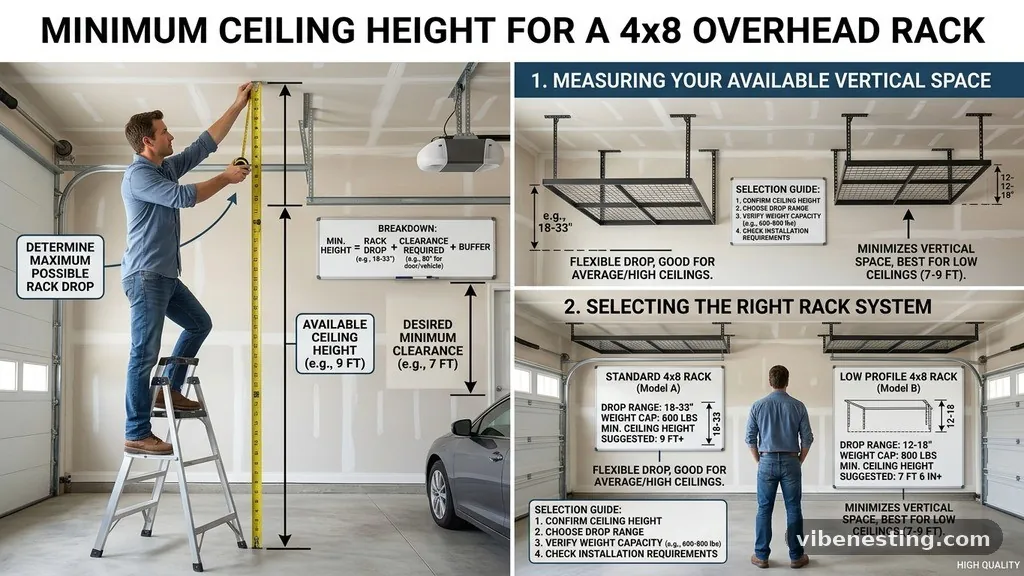
When choosing an overhead unit, look for systems that offer adjustable height settings. Adjustable racks allow you to fine-tune the clearance based on your specific needs, which is invaluable if your garage ceiling height is on the lower end of the spectrum.
Some systems use a threaded rod or heavy-duty chain, while others use a fixed-length bracket. Adjustable options are generally superior for homeowners who might change their storage needs over time.
Consider the material strength of the rack you choose. Powder-coated steel is the standard for durability and resistance to rust, which is important in unconditioned garage environments.
Check the weight capacity specifications provided by the manufacturer to ensure they meet your storage requirements. You can find detailed guidance on structural safety for home projects by visiting the International Association of Certified Home Inspectors for professional building standards.
Installation Strategy for Tight Spaces
If your ceiling height is tight, you must be strategic about where you place the rack. Installing the rack over the hood of your car is usually the most efficient use of space, as the hood is typically lower than the roof of the vehicle.
By aligning the rack with the front of the garage, you utilize space that is often wasted. Avoid placing the rack over the trunk or rear of the vehicle if your garage door tracks are located in that area.
Another strategy for low-ceiling garages is to use lower-profile storage bins. Instead of deep 20-inch totes, consider using 12-inch or 14-inch bins that provide more clearance between the items and the garage door.
While this reduces the total volume of storage, it allows you to install the rack in a space that would otherwise be unusable. Always prioritize the ability to open the garage door without obstruction.
Common Mistakes to Avoid
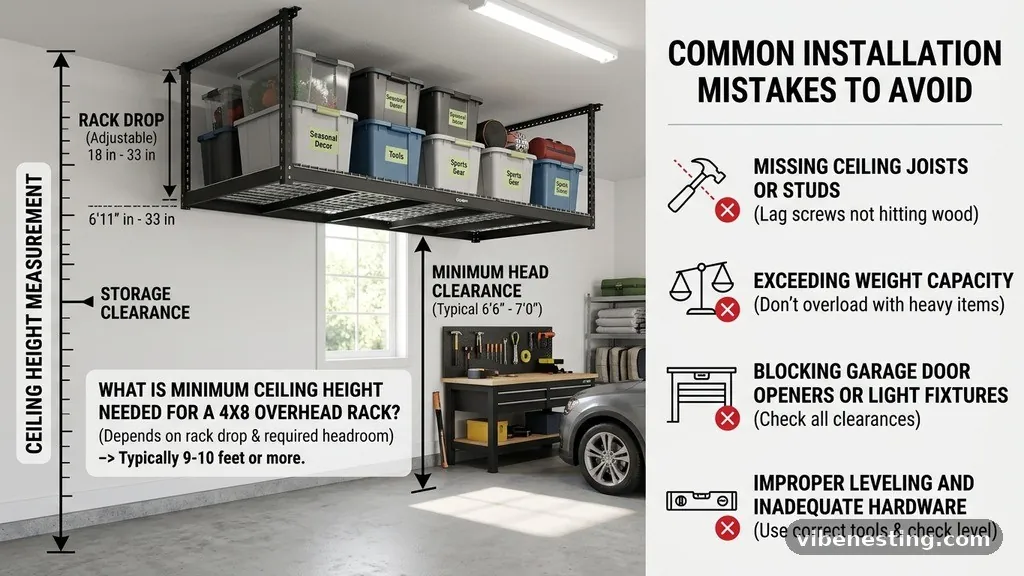
Many DIYers fail to account for the thickness of the items they are storing. If you plan to store seasonal tires, remember that they add significant height to the rack.
A rack that seems to have plenty of clearance when empty can quickly become an obstacle once loaded with bulky items. Always measure your largest items and add a 2-inch buffer to the total height of the rack system.
Another common mistake is neglecting to check for obstructions like lighting fixtures, garage door openers, or electrical conduit. If you have a ceiling-mounted light, you will need to relocate it or choose a rack that avoids the fixture entirely.
Never assume that the ceiling is perfectly flat or that the joists are perfectly level. Use a laser level to ensure that your rack is mounted evenly, which prevents items from sliding or falling off.
Organising Your Overhead Storage
Once you have determined the minimum ceiling height needed for a 4×8 overhead storage rack and completed the installation, the next step is efficient organization. Group items by category to make retrieval easier.
Use clear plastic bins so you can identify the contents without needing to pull every container down. Labeling the ends of each bin is also a highly effective practice for long-term organization.
* Store rarely used seasonal items like holiday decorations in the back of the rack.
* Place frequently accessed items, such as camping gear or sports equipment, near the front.
* Use lightweight, bulky items like sleeping bags or cushions to fill gaps between bins.
* Avoid storing heavy liquids, such as paints or chemicals, in overhead racks to prevent spills.
* Keep a step ladder nearby, but ensure it doesn’t block the path of your garage door.
Maintenance and Long-Term Care
Overhead storage racks require periodic maintenance to ensure they remain safe. Every six months, inspect the bolts and hardware to ensure they have not loosened due to vibration or weight.
If you notice any signs of bending or warping in the metal frame, remove the load immediately and inspect the ceiling joists for damage. Garage environments can be humid, so keep an eye out for any signs of rust on the rack components.
If you find that the rack has shifted, re-tighten the hardware and consider adding locking washers to prevent future loosening. Never exceed the weight limit specified by the manufacturer, even if the system appears sturdy. By maintaining your storage system, you protect your vehicle and ensure that your overhead space remains a reliable part of your home organization plan.
Frequently Asked Questions
How much weight can a standard 4×8 overhead rack hold?
Most high-quality 4×8 overhead storage racks are rated to hold between 500 and 600 pounds. Always check the specific weight capacity listed by the manufacturer on the packaging or manual. Distributing the weight evenly is essential to maintaining the structural integrity of the unit.
Can I install an overhead rack if I have a garage door opener?
Yes, but you must be careful with placement. The garage door opener motor and the rail often occupy the center of the ceiling. You can usually mount two smaller racks on either side of the opener, or place a single 4×8 rack further back in the garage where the door tracks are less of an issue.
What is the safest way to load heavy items onto an overhead rack?
The safest method is to use a sturdy, stable ladder that reaches the rack height comfortably. Never attempt to stand on your vehicle or on boxes to reach the rack. Always use two people when lifting heavy, awkward items to ensure that the load is balanced and that the rack does not shift during the process.
Is it better to use wire or solid shelving for overhead storage?
Wire shelving is generally preferred for overhead storage because it allows for better airflow and prevents moisture buildup. It is also lighter than solid shelving, which reduces the total weight load on your ceiling joists. Many people find that wire racks make it easier to see what is stored on the shelves from the floor below.
What if my garage ceiling has drywall?
You must locate the ceiling joists through the drywall using a stud finder. The rack brackets must be securely bolted into these wood joists, not just the drywall. If the drywall is preventing you from seeing the joist layout, you may need to use a magnetic stud finder to locate the screws holding the drywall to the joists.
Summary of Requirements
Successfully installing an overhead storage system requires a clear understanding of the minimum ceiling height needed for a 4×8 overhead storage rack. By ensuring you have at least 8 feet of ceiling height and accounting for the path of your garage door, you can safely expand your storage capacity. Remember that the rack depth, the height of your storage bins, and the structural integrity of your ceiling joists are all part of the planning process.
Carefully measuring your space before you purchase a system will save you time and prevent unnecessary complications. Once installed, periodic maintenance and smart loading habits will keep your garage organized and safe for years to come. If you follow these guidelines, you will find that your garage becomes a far more versatile and usable area of your home.