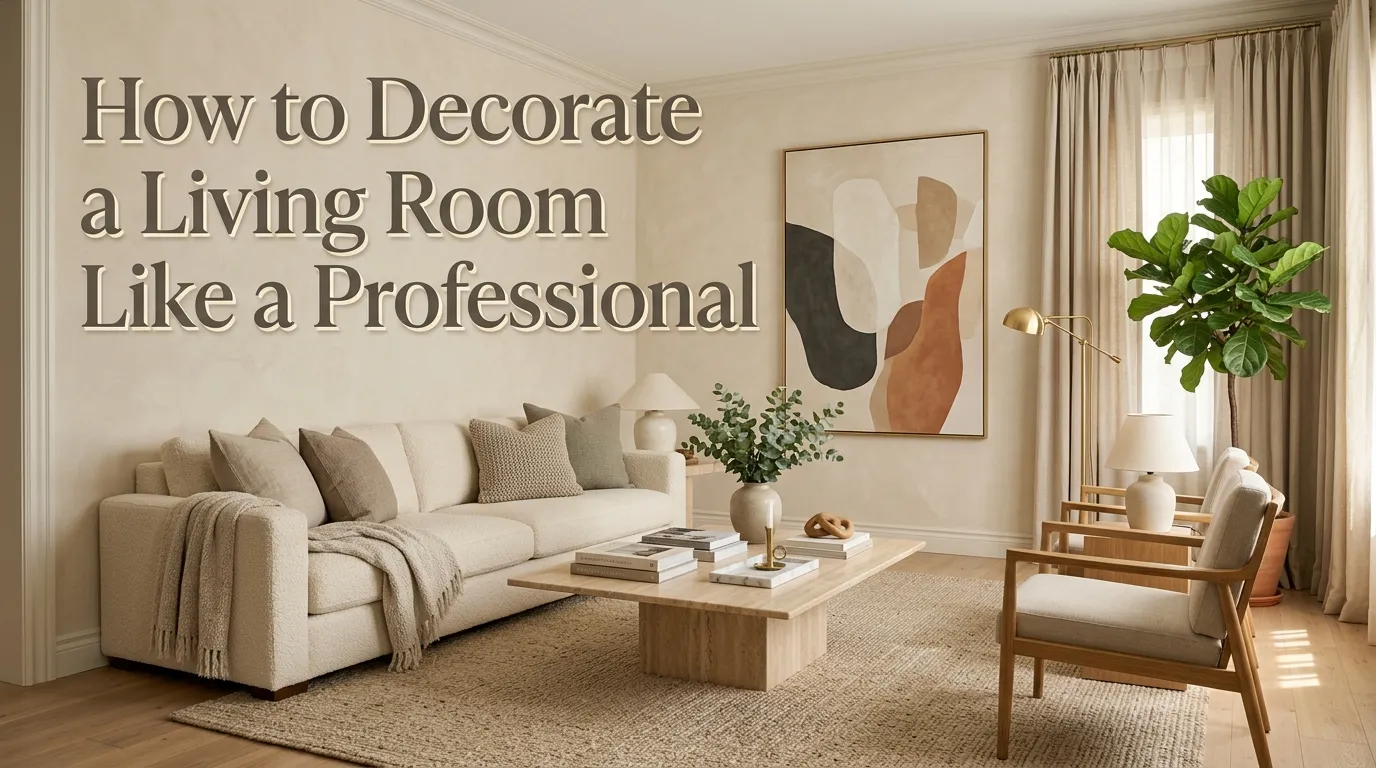
How to Decorate a Living Room Like a Professional
Decorating a living room can feel surprisingly difficult. You may have beautiful furniture, a few favorite accessories, and plenty of inspiration saved on Pinterest, yet the finished room can still feel unfinished, crowded, or somehow “off.”
The good news is that professional-looking rooms aren’t necessarily filled with expensive furniture or designer-only pieces. More often, they come down to a handful of decisions made in the right order: getting the layout right, choosing a cohesive color palette, mixing textures, balancing furniture sizes, and leaving enough breathing room.
One thing I’ve noticed is that many decorating mistakes happen because we start with the small details. We buy pillows, artwork, lamps, and decorative objects before deciding how the room should actually function. Once the major pieces are positioned correctly, decorating becomes much easier.
Professional decorators also tend to think about the room as a whole. The sofa isn’t considered separately from the rug. The rug relates to the coffee table, the coffee table relates to the seating, and the lighting supports the mood of everything around it.
You don’t have to copy a showroom to create this effect. In fact, the most inviting living rooms usually have some personality. Family photos, books, collected objects, favorite colors, and comfortable furniture are what make a room feel lived in.
Whether you’re starting with an empty room or trying to refresh a space you already have, these practical steps can help you create a living room that feels polished, balanced, comfortable, and genuinely yours.
Table of Contents
1. Plan the Layout
Start with furniture placement and comfortable movement through the room.
2. Choose a Color Palette
Create visual harmony by limiting and coordinating the main colors.
3. Anchor With a Rug
Use an appropriately sized rug to connect the seating arrangement.
4. Layer the Lighting
Combine different light sources to make the room feel warmer and more dimensional.
5. Balance Furniture
Mix furniture sizes and shapes so the room feels proportionate.
6. Mix Textures
Combine fabrics and natural materials to add depth and comfort.
7. Style the Walls
Use artwork and wall decor to give the room personality and scale.
8. Add Window Treatments
Frame windows in a way that enhances both the architecture and the room.
9. Create Focal Points
Give the eye a clear place to land when entering the room.
10. Finish With Accessories
Use carefully selected objects to make the space feel personal and complete.
1. Plan the Layout
Quick Benefits
- Improves everyday functionality
- Makes furniture feel intentional
- Creates better walking paths
- Helps the room feel more spacious
- Prevents expensive decorating mistakes
Why It Works
A beautiful living room starts with a good floor plan.
Before choosing decorative accessories, determine how people will actually use the room. Where will they sit? Where will they walk? Is the television important, or is conversation the main purpose? Do you need space for children, pets, entertaining, or occasional work?
Professional-looking rooms generally don’t feel like furniture was pushed against every wall simply because there was nowhere else to put it. Instead, seating is often arranged around a clear purpose.
A common mistake is choosing furniture based only on how attractive it looks individually. A sofa can be beautiful in a showroom and completely wrong for your room if its proportions don’t work.
How To Style It
Begin by measuring the room and the major furniture pieces.
Use painter’s tape on the floor to mark potential furniture footprints before moving heavy pieces.
Try creating a conversation area rather than automatically pushing the sofa against the wall.
Leave comfortable pathways between major furniture pieces and doorways.
If the room is large, divide it into functional zones rather than allowing furniture to float randomly throughout the space.
Before buying anything new, test several arrangements with the furniture you already own.
2. Choose a Color Palette
Quick Benefits
- Creates visual cohesion
- Makes decorating easier
- Helps furniture coordinate
- Prevents the room from feeling chaotic
- Makes accent colors more effective
Why It Works
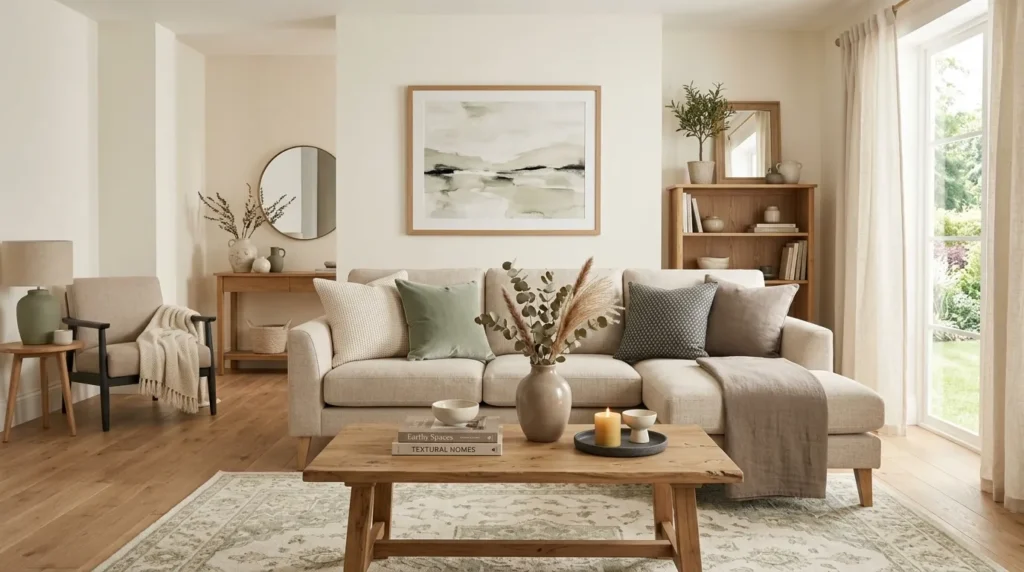
Professional-looking rooms usually have a clear color story.
That doesn’t mean everything needs to match. In fact, matching every color can make a room feel flat. Instead, choose a few colors that repeat throughout the space in different proportions.
A simple approach is to select a dominant neutral, a secondary color, and one or two accent shades.
For example, a warm white sofa could work with taupe furniture, natural wood, muted green textiles, and small black accents.
The colors don’t need to appear in identical amounts. Repetition is what creates the connection.
How To Style It
Start with something you already love—a rug, artwork, sofa, or even a fabric swatch.
Pull two or three supporting colors from that piece.
Use the dominant color for the largest surfaces, the secondary color for furniture or textiles, and accent colors in smaller accessories.
Pay attention to undertones. Warm beige can clash with very cool gray, even though both are technically neutrals.
Repeat your accent color in at least a few areas of the room so it feels intentional.
3. Anchor With a Rug
Quick Benefits
- Defines the seating area
- Adds warmth and texture
- Connects furniture visually
- Makes the room feel finished
- Provides an opportunity for pattern
Why It Works
A rug can make a dramatic difference to how a living room feels.
Without one, furniture can look disconnected, especially when the room is large or has hard flooring.
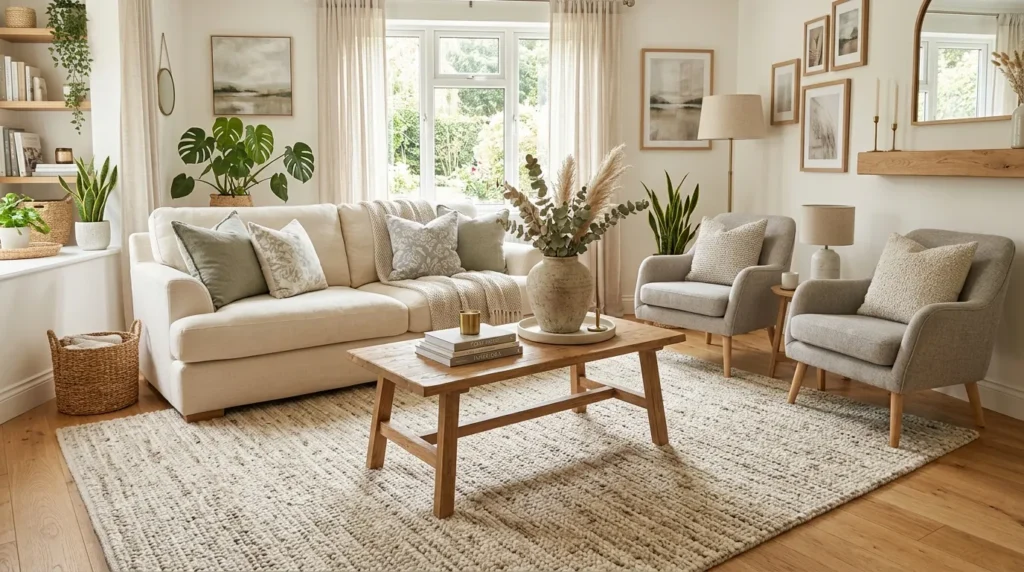
The right rug visually gathers the seating arrangement into one cohesive zone.
One common decorating mistake is choosing a rug that’s too small. A tiny rug floating underneath the coffee table can make the surrounding furniture feel disconnected.
A larger rug often creates a more substantial and intentional appearance.
How To Style It
Choose the rug size based on the room and furniture arrangement rather than buying solely according to price or pattern.
Ideally, the rug should relate clearly to the major seating pieces.
For a large seating arrangement, consider a size that allows at least the front legs of major furniture to sit on the rug when appropriate.
Use the rug to reinforce your color palette.
If your furniture is mostly solid-colored, a subtle pattern can add interest. If the room already has several patterns, choose a quieter rug.
4. Layer the Lighting
Quick Benefits
- Creates a warmer atmosphere
- Makes the room feel more sophisticated
- Improves functionality
- Highlights artwork and furniture
- Adds depth
Why It Works
One ceiling light rarely makes a living room feel professionally decorated.
Instead, think in layers.
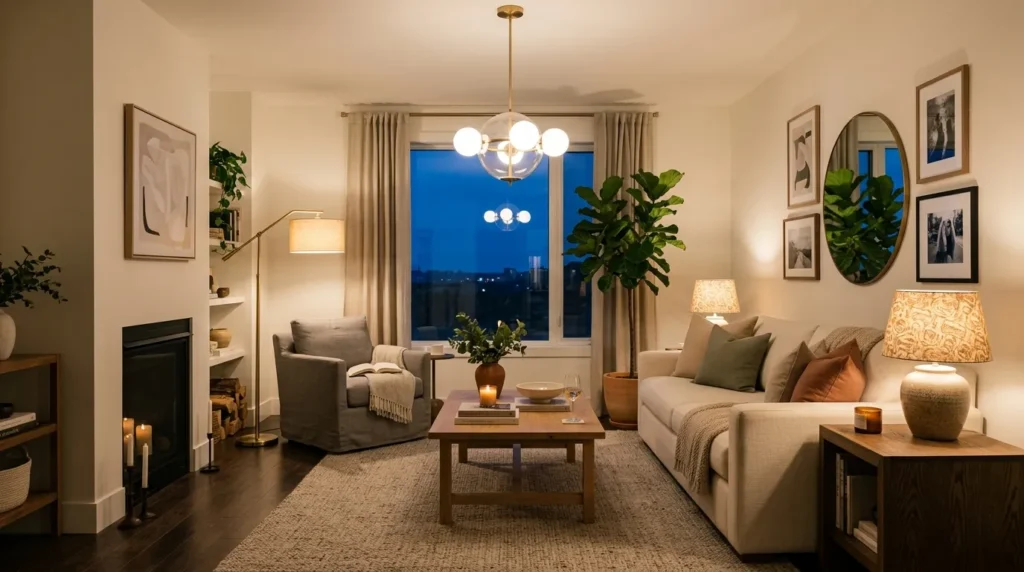
Ambient lighting provides general illumination. Task lighting supports activities such as reading. Accent lighting highlights artwork, plants, architectural details, or decorative objects.
Using multiple sources also allows you to change the mood throughout the day.
A living room can feel bright and energetic in the afternoon and warm and relaxing in the evening simply by adjusting the lighting.
How To Style It
Combine overhead lighting with floor lamps, table lamps, wall sconces, or accent lighting where appropriate.
Place a floor lamp beside a reading chair.
Add a table lamp to a console or side table.
Use warm-toned bulbs where appropriate for a comfortable evening atmosphere.
Make sure lamps are proportionate to the furniture they’re placed on.
Don’t forget natural light. Keep windows as open as possible during the day if privacy and room function allow.
5. Balance Furniture
Quick Benefits
- Improves visual proportion
- Creates a more polished appearance
- Prevents oversized pieces from dominating
- Makes seating more comfortable
- Helps the room feel balanced
Why It Works
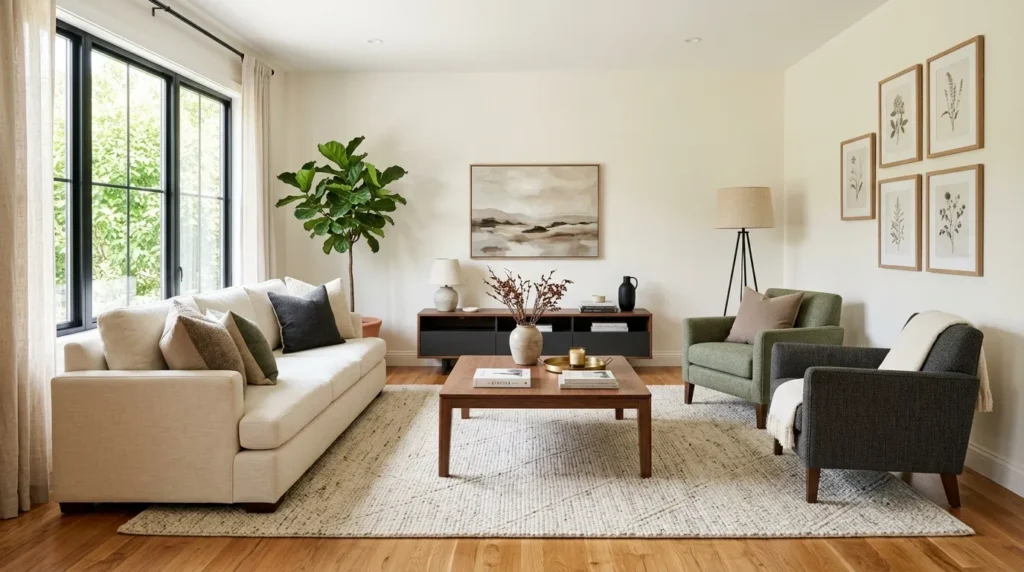
Furniture scale is one of the biggest differences between a room that feels professionally designed and one that feels randomly assembled.
Imagine a huge sectional paired with a tiny coffee table and delicate side chairs. Each piece may look attractive individually, but the proportions won’t feel right together.
The opposite can also happen: delicate furniture surrounded by oversized pieces can make everything feel visually crowded.
Balance doesn’t mean everything must be the same size. It means the pieces should relate to each other.
How To Style It
Consider the scale of the sofa first because it is often the largest piece.
Choose a coffee table with enough visual weight to relate to the sofa.
Balance heavy furniture with lighter-looking pieces such as open-leg chairs, glass tables, or slim consoles when appropriate.
Mix heights throughout the room.
Avoid placing every large object on one side, which can make the room feel visually lopsided.
6. Mix Textures
Quick Benefits
- Adds visual depth
- Makes neutral rooms more interesting
- Creates a comfortable atmosphere
- Prevents flat-looking decor
- Makes the space feel layered
Why It Works
A room doesn’t need dozens of colors to feel interesting.
Texture can do much of the work.
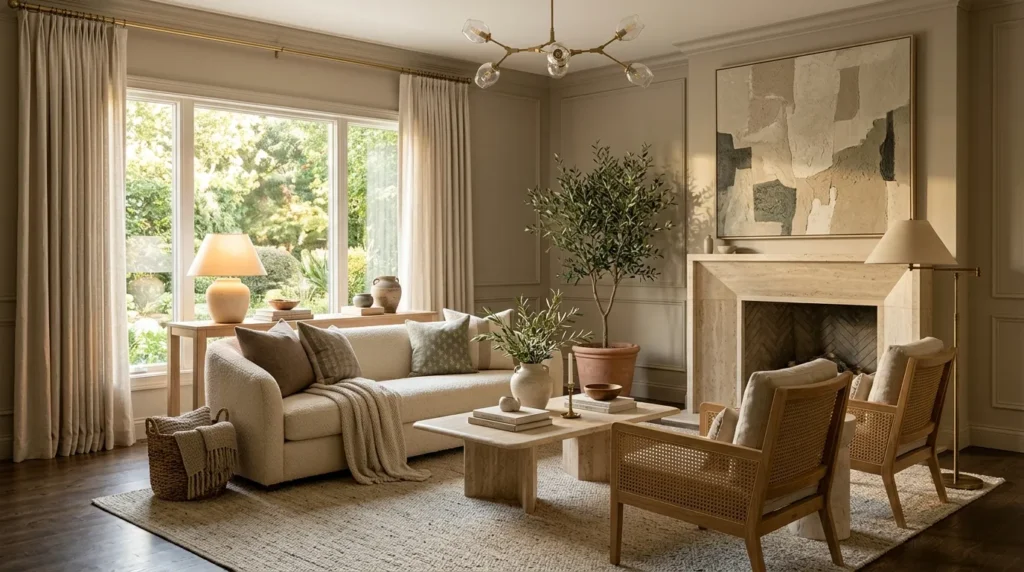
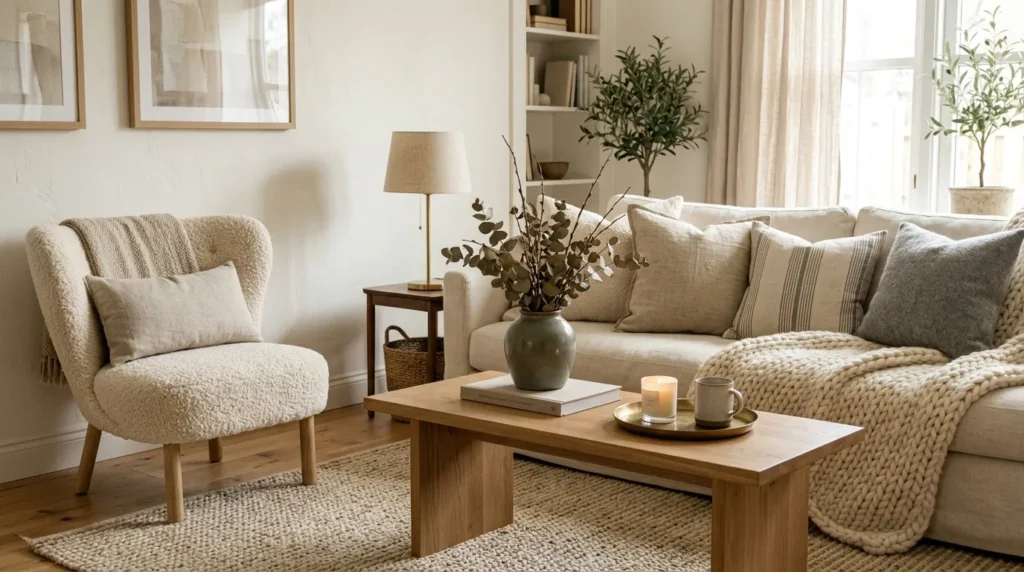
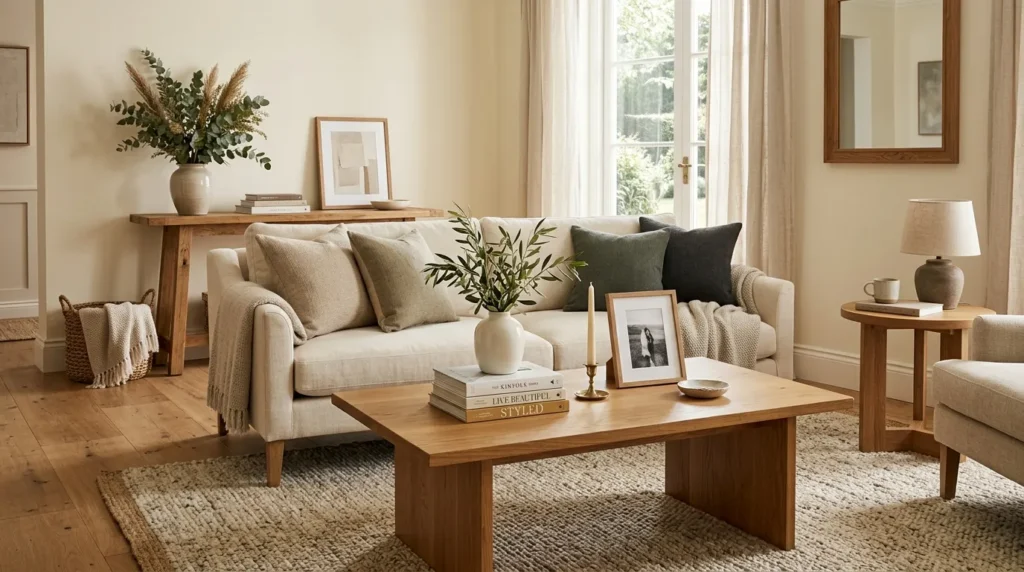
Imagine a neutral living room containing linen cushions, a woven rug, a smooth wood coffee table, a soft boucle chair, a ceramic vase, and a metal lamp. The colors may be relatively restrained, but the different surfaces keep the room visually engaging.
This is particularly useful when decorating with neutrals.
The goal is contrast without chaos.
How To Style It
Mix several materials across the room.
Combine soft textiles with hard surfaces.
Use wood for warmth, metal for structure, glass for lightness, and woven materials for natural texture.
Layer cushions in different fabrics rather than buying every pillow in the same material.
Add a throw to a sofa or chair.
Use ceramics and natural materials on shelves and tables to introduce tactile variation.
7. Style the Walls
Quick Benefits
- Gives the room personality
- Creates visual height
- Makes blank walls feel intentional
- Establishes focal points
- Reflects personal style
Why It Works
Bare walls can make even a beautifully furnished living room feel unfinished.
But filling every wall with artwork isn’t necessarily the solution.
Professional-looking wall decor is usually chosen with the scale and architecture of the room in mind.
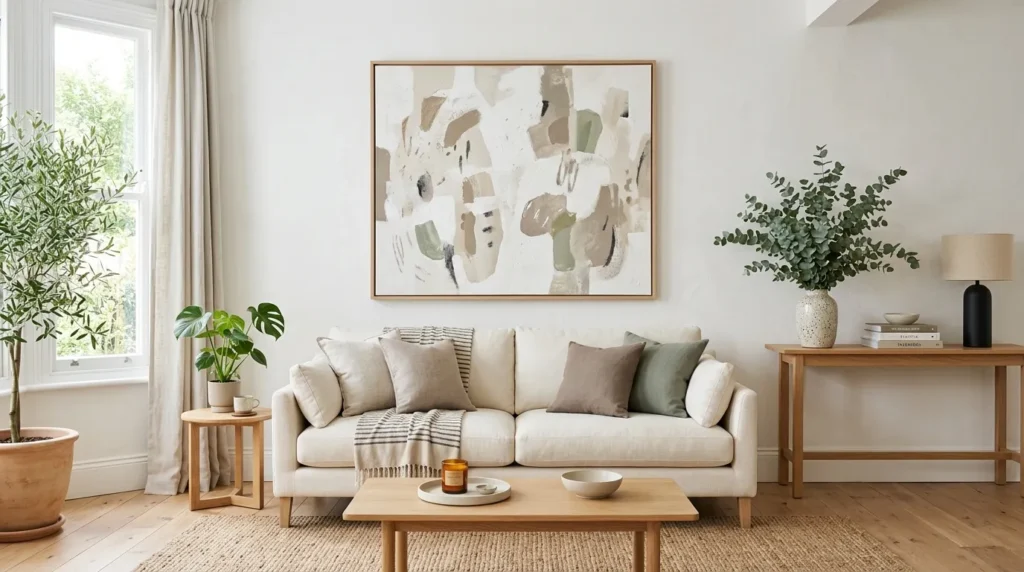
One large artwork can often have more impact than several tiny pieces scattered across a wall.
Gallery walls can work beautifully too, but they need enough visual structure to feel intentional.
How To Style It
Start with the largest wall or the wall that naturally attracts attention.
Choose artwork that complements the room’s color palette without matching every object exactly.
Hang artwork at a comfortable viewing height rather than placing it extremely high.
When hanging art above a sofa, make sure the piece is appropriately scaled to the furniture.
For a gallery wall, lay the arrangement out on the floor first and experiment with spacing.
8. Add Window Treatments
Quick Benefits
- Softens hard architectural lines
- Adds height
- Provides privacy
- Makes windows feel more substantial
- Completes the room
Why It Works
Window treatments are often overlooked, yet they can dramatically change the proportions of a living room.
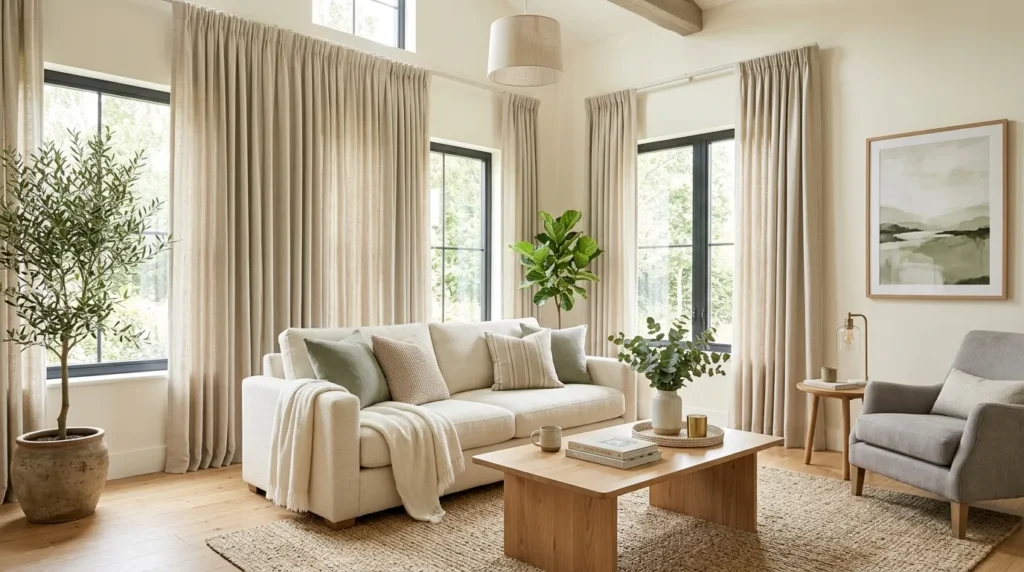
Curtains can visually frame a window and make the ceiling feel taller when installed thoughtfully.
They also add another layer of texture and color.
A common mistake is installing curtain rods too low and too close to the window frame, which can make the window appear smaller.
How To Style It
Where appropriate, install curtain hardware higher and wider than the window frame to create a more generous appearance.
Choose curtain panels long enough to reach the floor for a tailored look.
Use linen or linen-look fabrics for an airy appearance.
Choose heavier fabrics when you need more privacy or visual weight.
Keep the curtain color connected to the room’s palette rather than introducing a completely unrelated shade.
9. Create Focal Points
Quick Benefits
- Gives the room visual direction
- Makes furniture placement easier
- Highlights architectural features
- Creates a memorable impression
- Prevents visual clutter
Why It Works
Every living room benefits from somewhere for the eye to land.
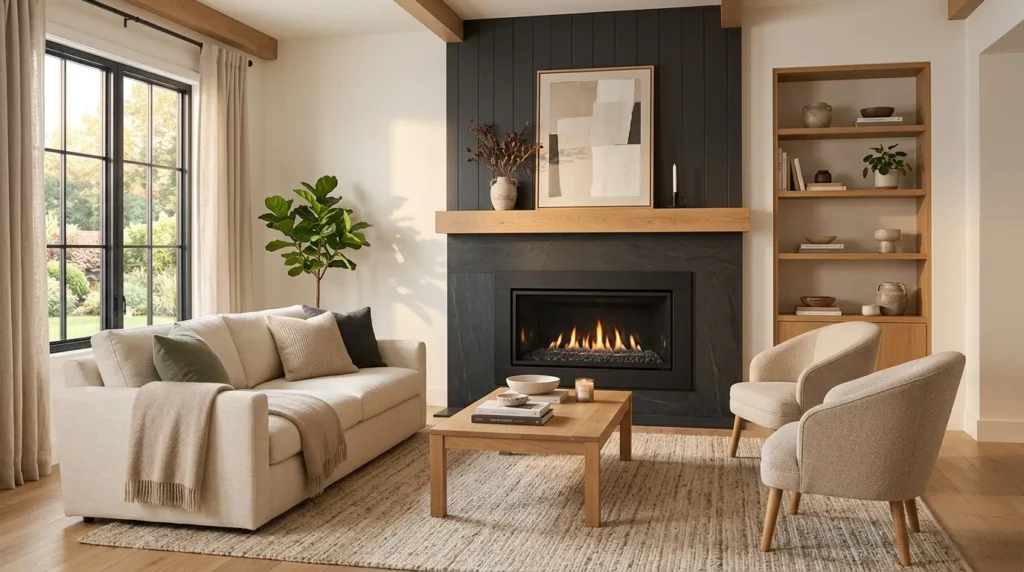
That might be a fireplace, large window, artwork, built-in shelving, statement lighting fixture, or beautiful view.
If the room doesn’t have an obvious architectural focal point, you can create one with furniture or decor.
The important thing is not to create five competing focal points.
When everything is designed to grab attention, nothing feels particularly special.
How To Style It
Identify the feature you want people to notice first.
Arrange furniture so it acknowledges that feature.
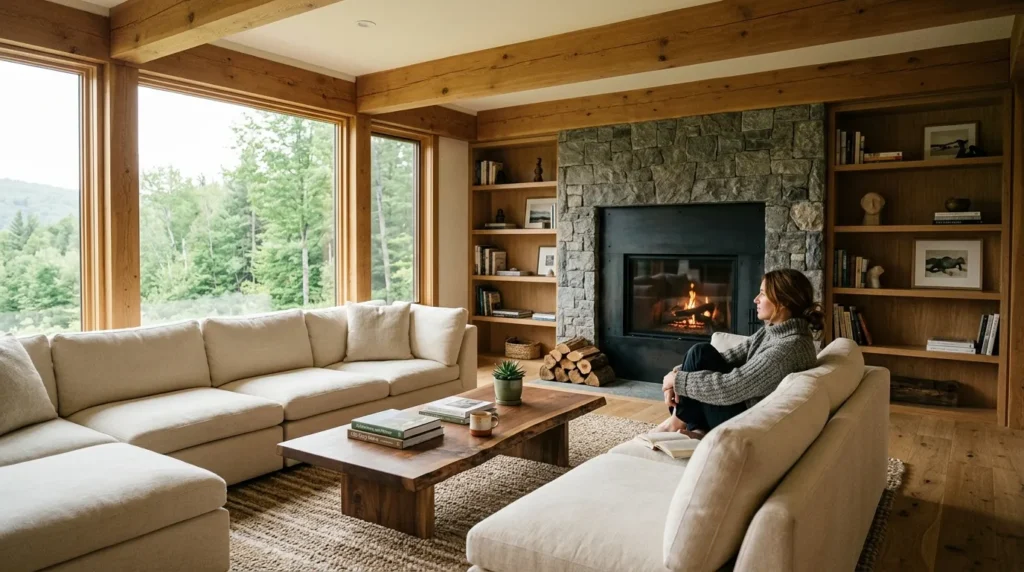
For a fireplace, orient seating toward it.
For a large window, avoid blocking the view with oversized furniture.
If the room lacks architectural interest, use a large piece of artwork or an interesting console arrangement as the focal point.
Keep surrounding decor quieter so the main feature can breathe.
10. Finish With Accessories
Quick Benefits
- Adds personality
- Creates a lived-in atmosphere
- Connects colors
- Makes the room feel finished
- Allows easy seasonal changes
Why It Works
Accessories are the finishing layer of a living room—not the foundation.
Books, candles, vases, bowls, plants, baskets, framed photographs, and collected objects can make a room feel personal.
But too many accessories can quickly create visual clutter.
Professional styling often relies on editing. A few carefully chosen pieces can have more impact than filling every available surface.
How To Style It
Start with the largest surfaces: coffee table, console, bookshelves, and side tables.
Create small groupings rather than spreading individual objects everywhere.
Vary the height of objects to create visual interest.
Use books as platforms for smaller decorative pieces.
Include something organic, such as flowers, branches, or a houseplant.
Step back after styling each area and remove anything that doesn’t contribute to the overall room.
Related Articles
- Cozy Living Room Ideas
- Small Living Room Ideas
- Modern Living Room Decor Ideas
- Neutral Living Room Ideas
- Living Room Wall Decor Ideas
Frequently Asked Questions
How do I make my living room look professionally decorated?
Start with the layout, furniture proportions, and color palette before adding accessories. Then layer a properly sized rug, multiple lighting sources, varied textures, wall decor, window treatments, and carefully edited accessories. The goal isn’t to make everything match; it’s to create visual balance and repetition.
What should I decorate first in a living room?
Begin with the room’s function and furniture layout. Decide where the sofa, chairs, coffee table, and major storage pieces should go before buying decorative accessories. Once the major elements are working, choose your rug, lighting, textiles, artwork, and smaller decor.
How many colors should a living room have?
There isn’t a strict rule, but limiting the room to a small group of coordinated colors can make decorating easier. Start with a dominant neutral, add a secondary color, and use one or two accent shades. Repeat those colors throughout the room in different materials and proportions.
How can I make a living room look expensive without spending a lot?
Focus on proportion, editing, and presentation. A correctly sized rug, well-positioned curtains, layered lighting, coordinated colors, and uncluttered surfaces can make a room feel considerably more polished. You can also mix affordable pieces with one or two distinctive focal elements.
Should the living room furniture match?
No. Matching furniture sets can sometimes make a room feel predictable. Instead, choose pieces that share something visually—such as color, material, shape, or overall style. Mixing complementary furniture can create a more collected and personal appearance.
How do I decorate a living room with neutral colors?
Use texture rather than relying on lots of color. Combine materials such as linen, wool, wood, woven fibers, ceramic, glass, and metal. Vary the shades of your neutrals as well. Cream, beige, taupe, warm white, and soft gray can create depth when layered thoughtfully.
How do I avoid making my living room look cluttered?
Edit your accessories regularly and leave some surfaces intentionally empty. Group decorative objects instead of scattering them throughout the room. Keep walking paths clear and avoid filling every shelf or tabletop simply because there is available space.
Conclusion
Decorating a living room like a professional isn’t about following a rigid formula or buying expensive designer furniture.
It’s about making thoughtful decisions in the right order.
Start with how you want the room to function. Arrange the major furniture pieces so conversation and movement feel natural, then establish a cohesive color palette. From there, use a properly scaled rug, layered lighting, varied textures, artwork, and window treatments to build depth.
The final layer should be personal.
Bring in books you actually read, photographs you love, plants, meaningful objects, and pieces collected over time. Those details are what keep a professionally styled room from feeling like a furniture showroom.
And don’t be afraid to edit. If a room feels crowded, removing one or two objects may improve it more than buying something new.
Take your time, work with what you already have where possible, and focus on proportion and balance before trends.
A beautiful living room doesn’t have to be perfect. It simply needs to feel intentional, comfortable, and like a place where you genuinely want to spend time.