10 French Style Kitchen Ideas With Cozy Details
French-inspired kitchens have a way of feeling collected rather than decorated. They can look elegant without becoming formal, warm without feeling rustic, and timeless without looking stuck in another era.
That balance is what makes the style so appealing.
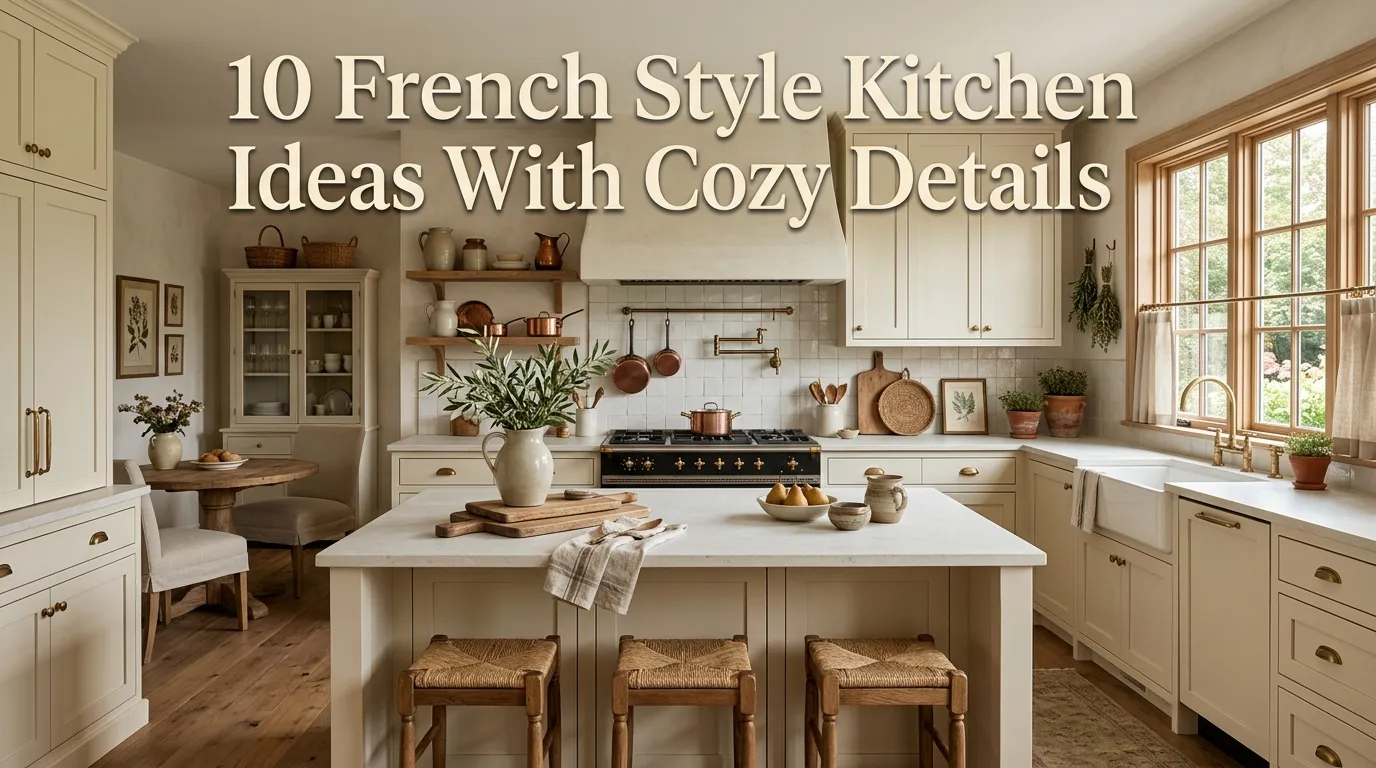
A French-style kitchen often combines classic architectural details with comfortable, everyday elements: natural wood, creamy cabinetry, aged-looking hardware, stone surfaces, open shelving, linen textiles, vintage-inspired lighting, and a few decorative pieces that make the space feel lived in.
You don’t need a historic European home to achieve the look. A standard American kitchen can take on French character through relatively small changes. Swapping modern hardware, adding a wooden cutting board, introducing a vintage-style pendant, or displaying everyday dishes can shift the atmosphere considerably.
I’ve noticed that the most successful French-inspired kitchens aren’t overly themed. They don’t rely on fleur-de-lis decorations or matching antique accessories. Instead, the feeling comes from materials, proportions, texture, and restraint.
Warm whites and soft creams are popular starting points, but muted sage, dusty blue, warm gray, and natural wood can add depth. A little patina can also make a kitchen feel more authentic because perfectly matching surfaces can sometimes look too new.
The goal is a kitchen that feels beautiful enough to inspire you but comfortable enough for breakfast, baking, family dinners, and everyday messes.
These French-style kitchen ideas focus on the details that create that cozy balance. Whether you’re planning a renovation or simply looking for inexpensive ways to warm up your existing kitchen, these ideas can help you build a space with relaxed European character.
Table of Contents
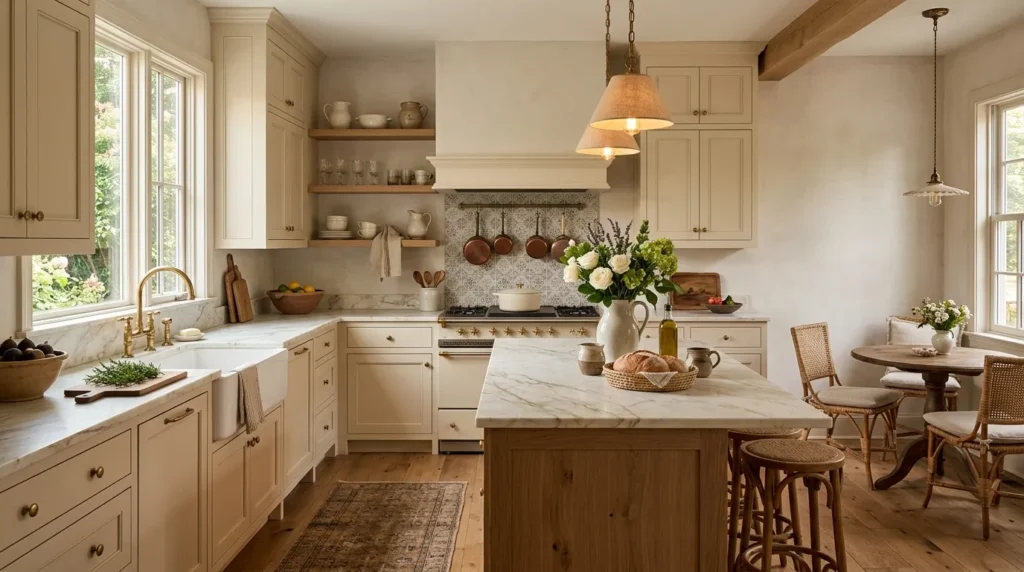
1. Creamy Cabinetry
Create a warm foundation with soft cream and ivory kitchen cabinets.
2. Natural Wood Accents
Bring warmth and texture into the kitchen with natural wood.
3. Vintage Pendant Lights
Add character overhead with classic French-inspired lighting.
4. Open Dish Shelving
Display everyday dishes for a relaxed, collected appearance.
5. Stone Countertops
Use natural-looking surfaces to create timeless texture.
6. Aged Metal Hardware
Introduce subtle character with antique-inspired finishes.
7. Linen Kitchen Textiles
Soften hard surfaces with casual linen fabrics.
8. Rustic Kitchen Island
Create a welcoming focal point with a substantial wood or painted island.
9. Decorative Range Hood
Make the cooking area a distinctive architectural feature.
10. Collected Decor Details
Finish the kitchen with thoughtful vintage-inspired accessories.
1. Creamy Cabinetry
Quick Benefits
- Creates a warm atmosphere
- Works with traditional architecture
- Makes kitchens feel inviting
- Pairs well with natural materials
- Provides a timeless foundation
Why It Works
Color has a major influence on how a kitchen feels.
Bright white cabinets can look crisp and contemporary, while warm cream and ivory cabinetry tends to create a softer, more relaxed appearance.
French-inspired interiors often benefit from this warmth because it allows other natural materials to stand out without creating harsh contrast.
Cream cabinets also work well with stone, wood, brass, linen, and muted greens.
You don’t need every cabinet to be ornate. Simple Shaker-style doors or subtly detailed cabinetry can provide enough traditional character.
How To Style It
Choose warm white, ivory, cream, or light beige cabinetry.
Pair it with natural or lightly stained wood.
Use aged brass, bronze, or another warm-toned hardware finish.
Add a stone or stone-look countertop.
For a two-tone kitchen, consider a deeper muted color on the island.
Keep the backsplash relatively understated so the cabinetry and materials remain the focus.
2. Natural Wood Accents
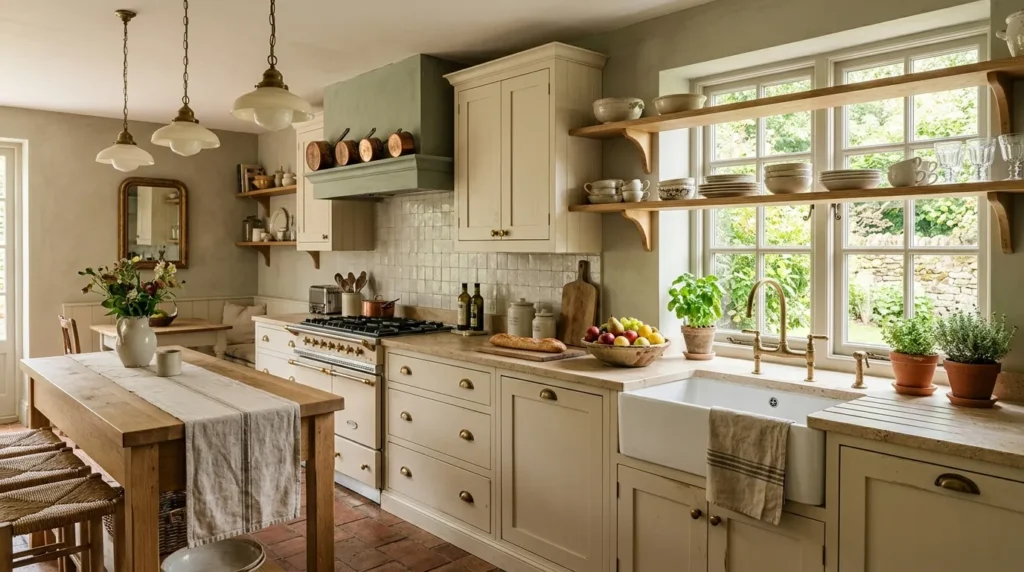
Quick Benefits
- Adds warmth
- Introduces natural texture
- Softens painted cabinetry
- Works with rustic and refined styles
- Makes the kitchen feel lived-in
Why It Works
Natural wood is one of the easiest ways to prevent a light kitchen from feeling too uniform.
A wooden cutting board, stool, open shelf, island, ceiling beam, or dining table can introduce warmth without requiring a major renovation.
French-inspired kitchens often benefit from visible natural materials because they create the relaxed, slightly imperfect quality associated with older European interiors.
The wood doesn’t need to match perfectly.
Different wood tones can work together when the overall palette remains cohesive.
How To Style It
Use a large wooden cutting board against the backsplash.
Add a simple oak or walnut stool.
Consider a reclaimed-style wood shelf.
Use a natural wood island if the layout allows.
Bring in a wooden dining table for a kitchen with an eating area.
Pair wood with cream cabinetry and warm metal hardware for an especially inviting combination.
3. Vintage Pendant Lights
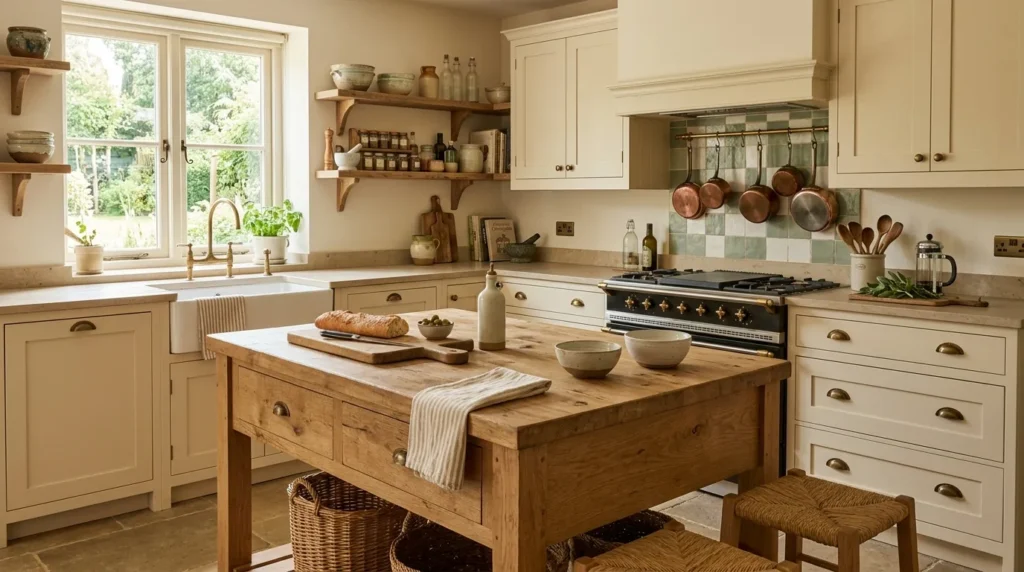
Quick Benefits
- Creates a focal point
- Adds architectural character
- Improves task lighting
- Enhances cozy atmosphere
- Can update a kitchen quickly
Why It Works
Lighting can change the entire personality of a kitchen.
A vintage-inspired pendant above an island can introduce the feeling of an old European kitchen without requiring architectural changes.
Glass, aged metal, ceramic, and traditional lantern-inspired fixtures can all work.
The key is choosing a fixture with enough presence to relate to the size of the island or dining area.
How To Style It
Use one large pendant over a smaller island or two appropriately scaled fixtures over a larger island.
Look for aged brass, bronze, blackened metal, or warm ceramic finishes.
Clear or lightly textured glass can create an airy appearance.
Choose warm, comfortable illumination for evening use.
Coordinate the finish with cabinet hardware or other metal details.
Always follow appropriate electrical installation and safety requirements.
4. Open Dish Shelving
Quick Benefits
- Creates visual warmth
- Makes everyday dishes accessible
- Adds personality
- Breaks up cabinetry
- Encourages practical styling
Why It Works
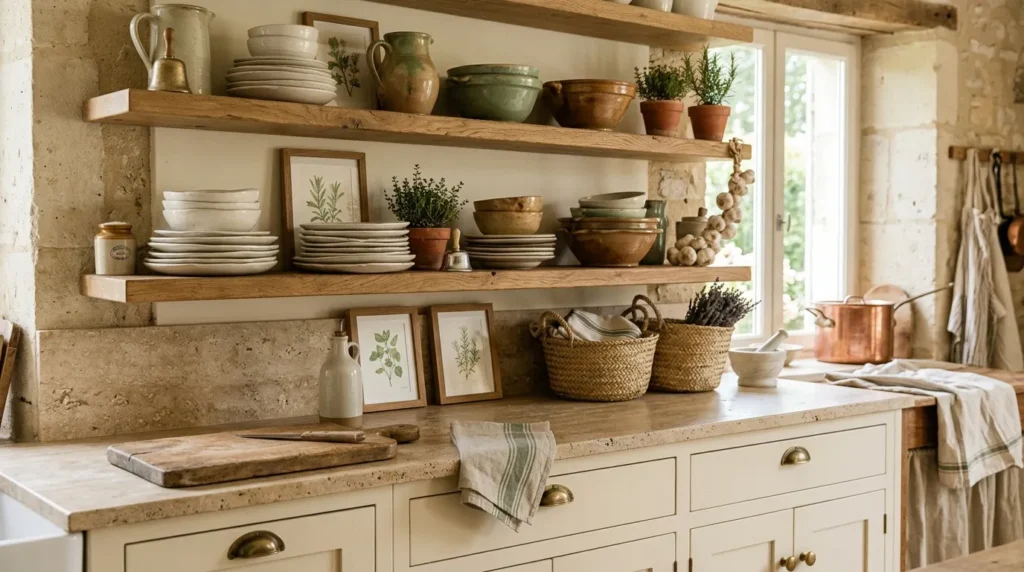
Open shelving can give a kitchen a more relaxed, collected appearance.
Instead of hiding every plate and cup behind cabinet doors, a few shelves allow you to display objects that are both beautiful and useful.
The trick is avoiding overcrowding.
French-inspired styling usually looks more natural when shelves contain a mixture of everyday pieces rather than perfectly coordinated decorative objects.
How To Style It
Use wooden shelves for a warmer appearance.
Display stacks of white or cream plates.
Add ceramic bowls and mugs.
Include one or two small pieces of artwork or vintage-inspired pottery.
Leave some empty space between groups.
Rotate seasonal pieces when desired.
Keep frequently used dishes within easy reach.
5. Stone Countertops
Quick Benefits
- Adds natural texture
- Creates timeless appeal
- Complements warm cabinetry
- Works with traditional kitchens
- Provides a substantial visual foundation
Why It Works
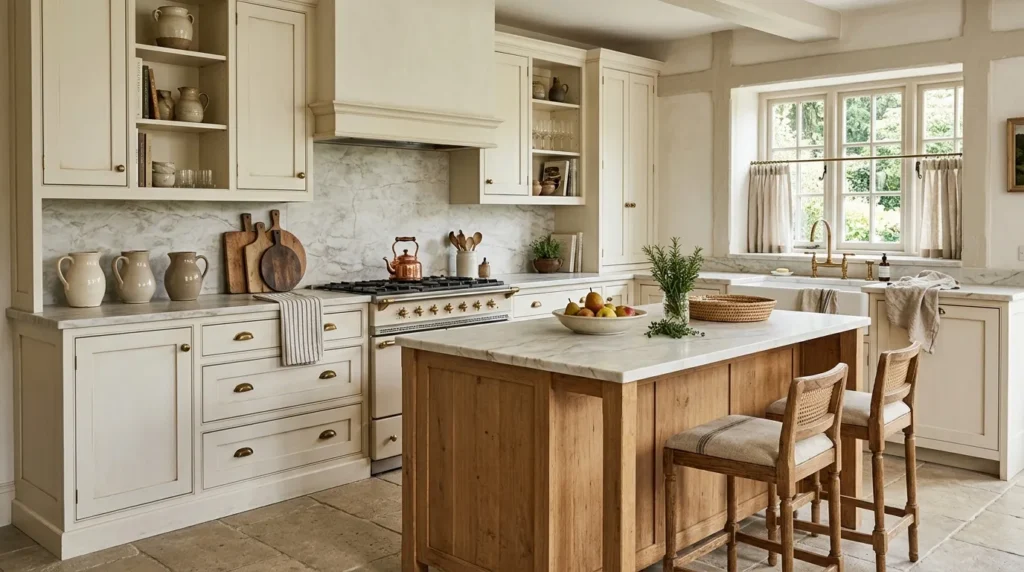
Natural stone or appropriately selected stone-look surfaces can give a French-inspired kitchen a sense of permanence.
Marble is a classic option, but it isn’t the only possibility.
Limestone-inspired finishes, soapstone, quartzite, and other materials can create different interpretations of the style.
The important consideration is how the countertop interacts with the cabinets, backsplash, flooring, and lighting.
How To Style It
Choose a countertop with subtle movement rather than an extremely busy pattern if you want a relaxed appearance.
Pair light stone with cream cabinetry.
Use warm wood to balance cooler surfaces.
Display wooden cutting boards and simple ceramic vessels.
Consider a thicker-looking island edge if the overall kitchen architecture supports it.
For natural stone, understand the care and sealing requirements before choosing the material.
6. Aged Metal Hardware
Quick Benefits
- Adds character
- Creates subtle contrast
- Complements traditional cabinetry
- Makes new kitchens feel less sterile
- Easy to update
Why It Works
Hardware is a small detail, but it can strongly influence the overall appearance of cabinetry.
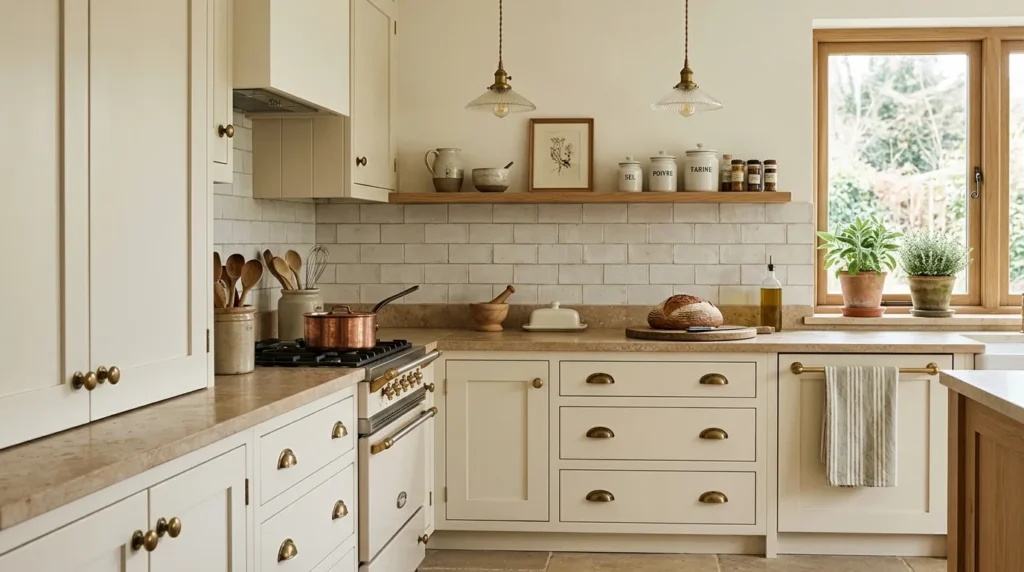
Aged brass, antique brass, bronze, and other warm finishes can give a new kitchen a more established quality.
This works particularly well when the rest of the kitchen is relatively simple.
Instead of adding lots of decorative objects, use hardware to introduce character.
How To Style It
Choose one primary metal finish.
Use matching or complementary knobs and pulls throughout the main cabinetry.
Coordinate the finish with lighting when possible.
Avoid forcing every metal in the room to match exactly.
A little variation can look natural, particularly in a collected interior.
Choose hardware based on comfort and durability as well as appearance.
7. Linen Kitchen Textiles
Quick Benefits
- Adds softness
- Introduces natural texture
- Creates a relaxed feel
- Easy to change seasonally
- Works with neutral palettes
Why It Works
Kitchens contain many hard surfaces, including cabinets, counters, appliances, flooring, and backsplashes.
Textiles introduce softness.
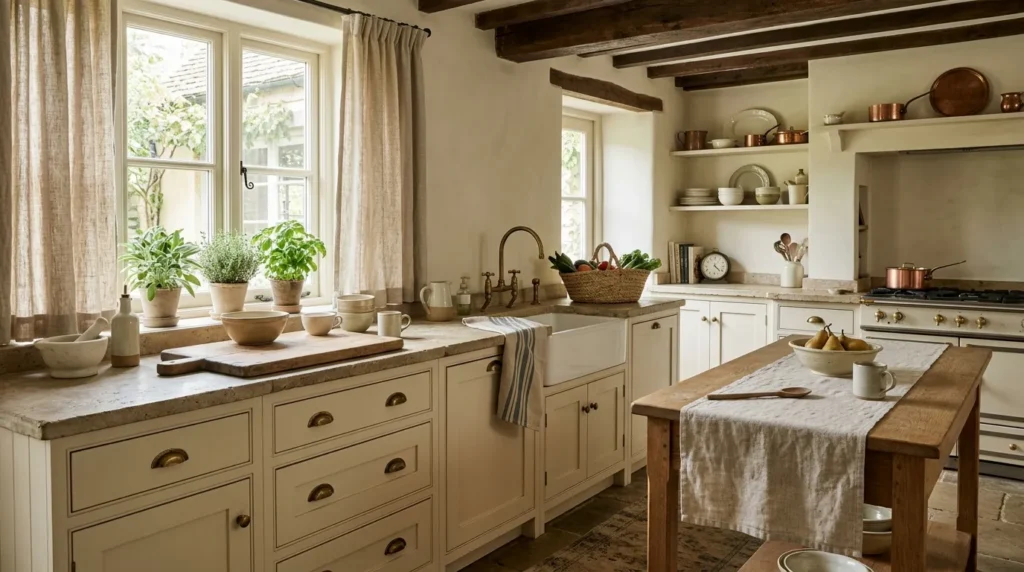
Linen curtains, tea towels, seat cushions, table runners, and simple fabric shades can make a kitchen feel warmer without adding visual clutter.
Natural textiles also complement the understated quality of French-inspired interiors.
How To Style It
Choose natural linen or linen-look fabrics.
Use cream, oatmeal, muted blue, soft sage, or warm beige.
Add a simple runner to a farmhouse-style table.
Use linen tea towels on a rail or oven handle where appropriate.
Choose washable fabrics for areas exposed to cooking.
Keep patterns subtle.
Small stripes, checks, or understated botanical motifs can work beautifully.
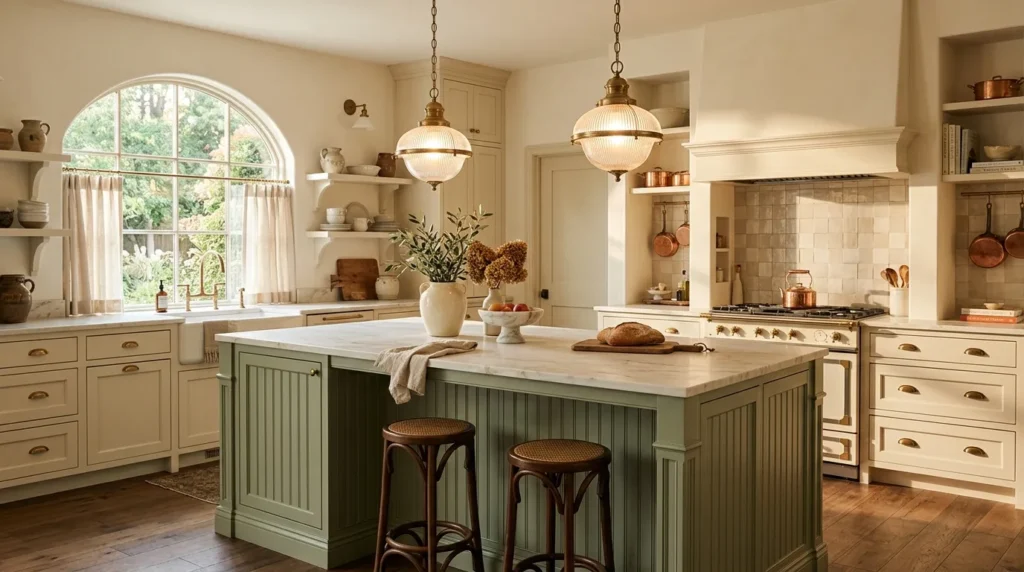
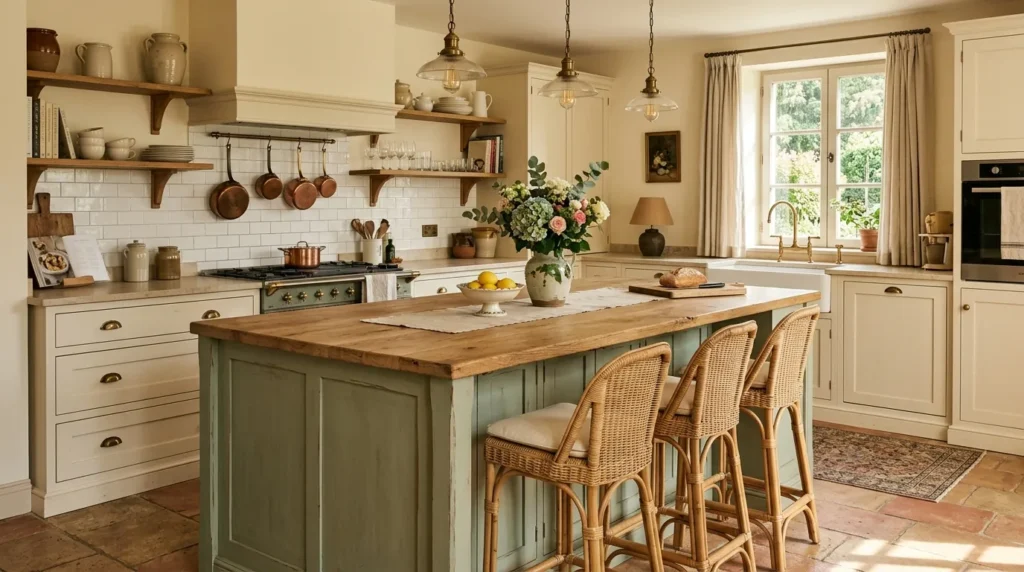
8. Rustic Kitchen Island
Quick Benefits
- Creates a central gathering point
- Adds storage
- Introduces natural material
- Makes the kitchen feel welcoming
- Works with traditional architecture
Why It Works
A substantial island can become the heart of a kitchen.
French-inspired designs often benefit from islands that look useful rather than overly sleek.
A painted island with a wood countertop, a reclaimed-style worktable, or a classic cabinet island can provide this feeling.
The island should still suit the scale and circulation of the kitchen.
How To Style It
Use a muted painted finish such as sage, blue-gray, warm taupe, or cream.
Consider a natural wood top where appropriate.
Add simple stools with woven or upholstered seats.
Keep countertop decor limited.
A bowl of seasonal produce, a wooden cutting board, or a ceramic vessel can be enough.
Make sure walking clearances are comfortable before choosing the island size.
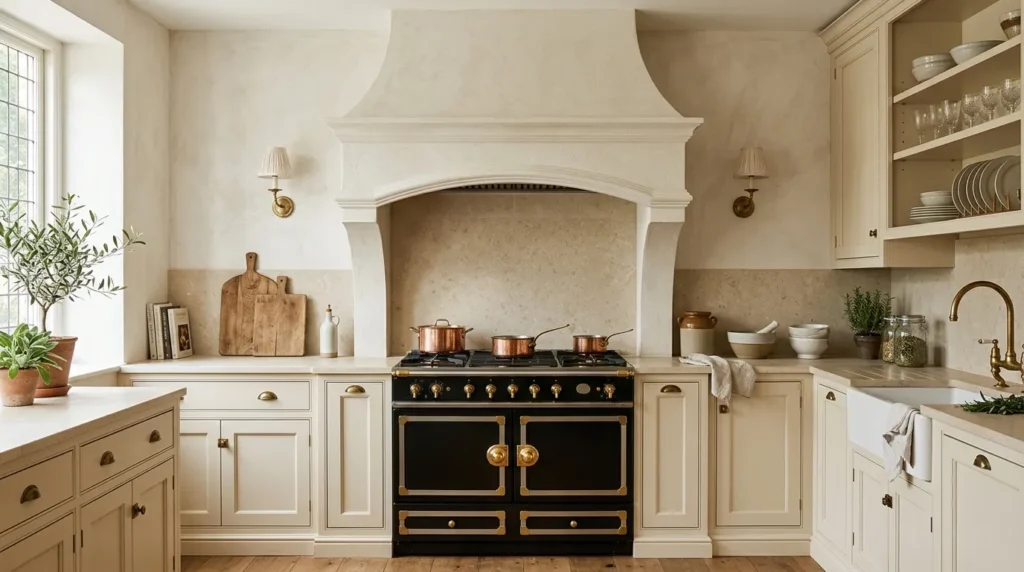
9. Decorative Range Hood
Quick Benefits
- Creates a strong focal point
- Adds architectural character
- Makes the cooking area feel custom
- Works with traditional cabinetry
- Can visually anchor the kitchen
Why It Works
The range hood occupies a prominent position, so treating it as an architectural element can dramatically change the character of a kitchen.
A plaster-look, painted, wood-trimmed, or custom-shaped hood can create a more traditional appearance than a highly industrial stainless-steel design.
However, ventilation performance should come before decorative considerations.
A beautiful hood still needs to function appropriately for the cooking setup.
How To Style It
Use a hood shape that complements the home’s architecture.
Paint it to coordinate with the cabinets or create subtle contrast.
Add simple wood trim if it suits the room.
Keep the surrounding backsplash understated.
Use sconces or carefully selected lighting to frame the cooking area.
Avoid adding decorative items too close to heat-producing cooking surfaces.
10. Collected Decor Details
Quick Benefits
- Adds personality
- Makes the kitchen feel lived-in
- Creates visual interest
- Supports vintage character
- Easy to change
Why It Works
The final layer is often what separates a kitchen that looks styled from one that feels genuinely lived in.
A French-inspired kitchen doesn’t need dozens of themed decorations.
Instead, select a few pieces that look as though they have a purpose.
Ceramic pitchers, wooden boards, vintage-style clocks, woven baskets, simple artwork, pottery, and fresh flowers can all contribute.
The goal is to create a collected appearance rather than a perfectly coordinated display.
How To Style It
Place a ceramic pitcher on an open shelf.
Lean a wooden cutting board against the backsplash.
Add a small framed botanical print.
Use a woven basket for practical storage.
Display a bowl of seasonal fruit.
Add fresh flowers when available.
Leave enough empty space around accessories so the kitchen remains functional.
What Makes a Kitchen Look French?
French-inspired kitchens usually combine classic details with relaxed materials.
Think:
- Warm neutral colors
- Natural wood
- Stone surfaces
- Aged metal
- Traditional lighting
- Simple cabinetry
- Linen textiles
- Handmade-looking ceramics
- Open shelving
- Architectural details
- Comfortable seating
The style doesn’t require everything to look old.
A new kitchen can still feel French when modern conveniences are balanced with warm, traditional materials.
The biggest mistake is making the room too themed.
You don’t need decorative signs, excessive antique reproductions, or multiple matching French motifs.
Instead, focus on the atmosphere.
A kitchen should feel comfortable, practical, and naturally collected.
How To Add French Style to a Modern Kitchen
You don’t have to replace your cabinets or countertops.
Start with the smaller elements.
Change cabinet hardware to an aged brass or bronze finish.
Replace a contemporary light fixture with a vintage-inspired pendant.
Add a wooden cutting board and ceramic vessels.
Introduce linen textiles.
Display a few attractive dishes on open shelves.
Add a simple botanical print.
Use warm bulbs where appropriate.
These changes can soften a very modern kitchen without making it look artificially old.
If you are planning a larger renovation, consider cream cabinetry, natural stone, wood accents, traditional molding, and a statement range hood.
French Kitchen Colors to Consider
A French-inspired palette doesn’t have to be entirely white.
Cream: Soft and warm.
Ivory: Light without looking stark.
Sage green: Natural and relaxed.
Dusty blue: Classic and understated.
Warm gray: Sophisticated without being cold.
Taupe: Excellent for cabinetry and textiles.
Natural wood: Adds warmth and texture.
Muted terracotta: Useful as a small accent.
The best palette usually combines two or three dominant tones with natural materials.
How To Make a French-Style Kitchen Feel Cozy
Cozy doesn’t mean filling every surface.
Instead, focus on texture and usability.
Add a wooden cutting board that you actually use.
Keep a bowl of fresh fruit on the counter.
Display everyday dishes on an accessible shelf.
Use a washable runner to soften the floor.
Add comfortable stools around the island.
Choose warm lighting for evenings.
Keep a few meaningful objects visible.
A kitchen feels cozy when it looks like someone genuinely lives and cooks there.
French Kitchen Mistakes to Avoid
Overdecorating: Too many accessories can make the kitchen feel themed.
Using only one texture: Combine wood, stone, metal, ceramic, and fabric.
Making everything perfectly matching: A collected look benefits from subtle variation.
Ignoring function: Decorative elements should not interfere with cooking.
Choosing hardware only for appearance: Comfort and durability matter.
Overusing distressed finishes: A little patina can add character; too much can feel artificial.
Ignoring lighting: Even beautiful cabinetry can feel flat without good illumination.
Forgetting scale: Large islands and oversized lighting can overwhelm smaller kitchens.
FAQ
What colors are best for a French-style kitchen?
Cream, ivory, warm white, taupe, muted sage, dusty blue, and warm gray are excellent choices. Natural wood can provide additional warmth, while muted terracotta or aged brass can be used as smaller accents. The most successful palettes generally feel soft and restrained rather than highly saturated.
How can I make my kitchen look French without remodeling?
Start with hardware, lighting, textiles, and accessories. Replace modern cabinet pulls with an aged-looking finish, add a vintage-inspired pendant, introduce linen towels or curtains, and display simple ceramic dishes or wooden cutting boards. These smaller changes can create French-inspired character without replacing major kitchen components.
What countertops look French?
Natural stone and stone-look surfaces can both work. Marble is a traditional option, while limestone-inspired finishes, quartzite, soapstone, and other materials can create different interpretations. Consider the maintenance requirements and how the countertop’s color and pattern work with your cabinetry before choosing.
Should French kitchen cabinets be white?
They don’t have to be. Warm cream, ivory, taupe, muted sage, dusty blue, and soft gray can all work beautifully. White and cream are popular because they create a light foundation, but introducing color through the island or lower cabinets can add depth while maintaining a classic appearance.
What type of lighting works in a French-style kitchen?
Vintage-inspired pendants, lantern-style fixtures, ceramic lights, aged metal fixtures, and traditional sconces can complement the style. Use multiple layers of lighting for practical cooking and evening ambience. Fixture placement and electrical installation should be handled according to appropriate safety requirements.
How do I make a modern kitchen feel more French?
Introduce warmth and traditional character rather than trying to make every element look old. Natural wood, cream textiles, aged metal hardware, vintage-style lighting, ceramic accessories, and traditional artwork can soften a contemporary kitchen. Keeping modern appliances while adding these details often creates a comfortable balance.
What decor should I put on a French kitchen counter?
Choose useful or naturally decorative pieces such as wooden cutting boards, ceramic pitchers, a fruit bowl, a vase of flowers, or a small collection of pottery. Keep enough clear workspace for cooking. A few substantial pieces usually look more intentional than many small decorations.
Conclusion
A French-style kitchen doesn’t have to look like a museum or a perfectly preserved European farmhouse.
The most appealing version is often a mixture of classic inspiration and everyday practicality.
Start with warmth.
Creamy cabinetry, natural wood, stone, aged metal, linen, and ceramic pieces create a foundation that feels comfortable and timeless.
Then add character gradually.
A vintage-inspired pendant can change the atmosphere of an entire island. Open shelving can make everyday dishes part of the decor. A wooden cutting board or ceramic pitcher can add the imperfect, collected quality that makes the room feel lived in.
Don’t feel pressured to change everything at once.
If your kitchen is already modern, start with hardware, lighting, textiles, and accessories.
If you’re planning a renovation, think about the larger architectural elements such as cabinetry, countertops, flooring, and the range hood.
Above all, keep the kitchen functional.
The best French-inspired spaces are beautiful because they look usable—not because they are filled with decoration.
Choose materials that age well, colors that you enjoy seeing every day, and details that make cooking and gathering more comfortable.
That combination of elegance, warmth, and practicality is what gives a French-style kitchen its enduring appeal.
Related Articles
- 10 Farmhouse Kitchen Ideas With Warm Country Details
- 10 Modern Kitchen Ideas With Timeless Style
- 10 Cozy Kitchen Decor Ideas for a Welcoming Home
- 10 Small Kitchen Ideas to Maximize Space
- 10 Kitchen Island Decor Ideas for Everyday Styling